
When choosing a photo frame, the frame’s colour, size, and design are not the only things that matter. The transparent front cover also affects how your photograph or artwork looks, how easy the frame is to handle, and how you maintain it over time.
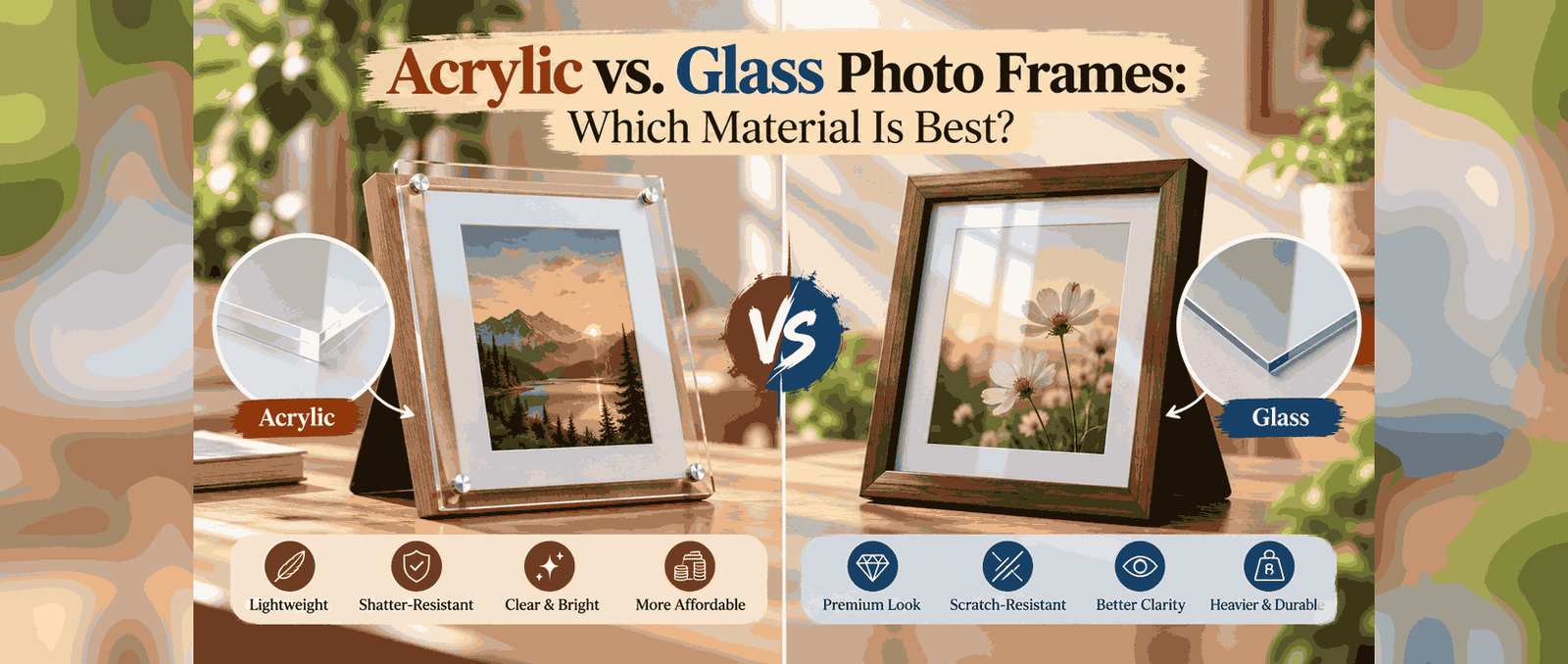
Two common materials used for this front cover are glass and acrylic. Glass is a traditional option with a hard, scratch-resistant surface, while acrylic is a lightweight transparent plastic that is less likely to shatter when impacted.
Both materials can be suitable for displaying family photographs, printed artwork, portraits, and decorative images. However, the better option depends on where you plan to display the frame, how large it is, and what matters most to you.
In this guide, we will explain the differences between acrylic and glass photo frames, their advantages and limitations, cleaning requirements, UV protection, and how to choose the right option for your home. We also have a complete guide to photo frames that will help you get an overall idea of photo frames and make a smart choice.
What Is Glass in a Photo Frame?
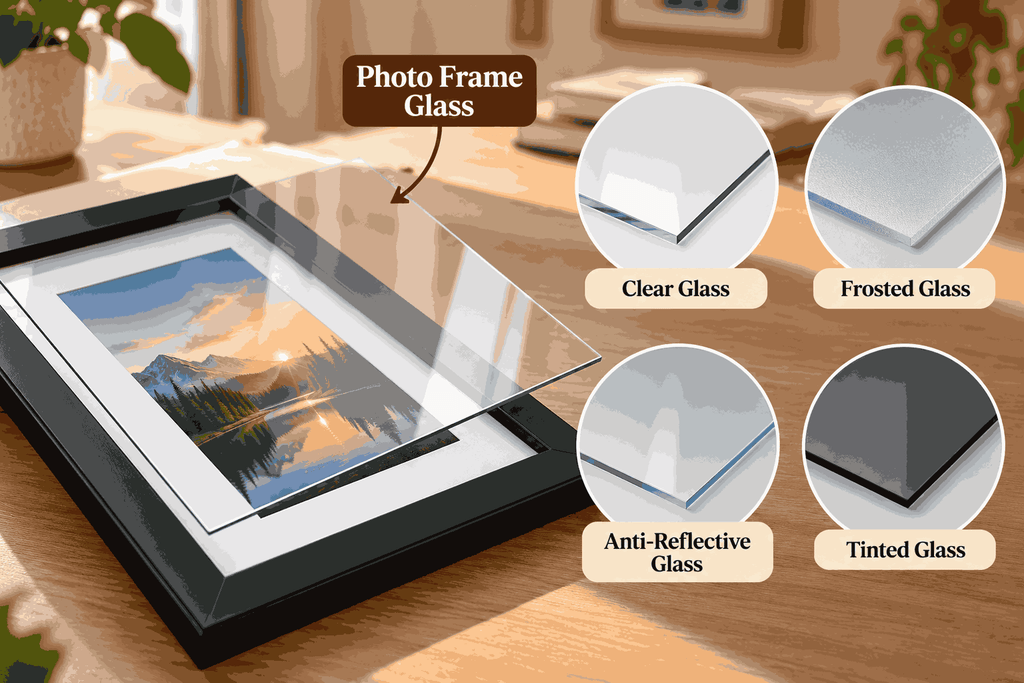
Glass is a transparent, rigid material used as the front cover of many traditional photo frames. It sits in front of the photograph or printed artwork, allowing the image to remain visible while creating a physical barrier against dust and everyday contact.
Glass is commonly used in tabletop photo frames, wall frames, certificates, and decorative artwork.
Benefits of glass photo frames
- Scratch resistance: Glass is generally more resistant to everyday surface scratches than standard, uncoated acrylic.
- Easy maintenance: It can usually be cleaned with an appropriate glass-cleaning product and a soft cloth.
- Rigid surface: Glass maintains a firm, flat surface under normal conditions.
- Clear presentation: Good-quality glass can provide an excellent view of the photograph or artwork.
- Traditional appearance: Glass is a familiar choice for framed photographs and decorative prints.
Limitations of glass
The main disadvantage of ordinary glass is its tendency to crack or break when dropped or struck. Broken glass can create sharp fragments, making careful handling important.
Glass is also heavier than acrylic of comparable dimensions. This additional weight may matter when moving a large frame or hanging it on a wall.
Standard glass does not automatically provide strong UV protection or glare reduction. Those features depend on the particular type of glass and any coatings it has.
What Is Acrylic in a Photo Frame?
Acrylic is a transparent plastic material used as an alternative to glass in many photo frames. It is also commonly called acrylic glass, and some people use the term Plexiglass when referring to this type of material.
Acrylic can provide a clear view of a photograph or printed image while weighing considerably less than conventional glass.
Benefits of acrylic photo frames
- Lightweight construction: Acrylic weighs less than comparable glass, making the complete frame easier to handle in many cases.
- Resistance to shattering: Acrylic is less likely than ordinary glass to break into sharp fragments when impacted.
- Practical for larger frames: Its lower weight can be useful when displaying larger photographs or artwork.
- Convenient handling: A lighter frame can be easier to move, reposition, and install.
- Clear image presentation: Good-quality acrylic can provide excellent transparency.
Limitations of acrylic
Standard acrylic is more susceptible to scratching than glass. Dust particles, rough cloths, abrasive cleaners, and unsuitable cleaning methods can damage its surface.
Acrylic may also attract dust through static electricity. Some acrylic products have special coatings or treatments that address particular issues, but these features should not be assumed to be present in every product.
Acrylic is shatter-resistant, not indestructible. It can still crack, chip, or become damaged under sufficient impact or unsuitable handling.
Acrylic vs. Glass Photo Frames: Key Differences
The main differences involve weight, resistance to impact, surface scratching, cleaning, and the availability of additional features.
| Feature | Acrylic photo frame | Glass photo frame |
|---|---|---|
| Weight | Lighter | Heavier |
| Impact behaviour | Generally resists shattering | Ordinary glass can crack or shatter |
| Scratch resistance | Standard acrylic scratches more easily | Generally more scratch-resistant |
| Clarity | Can provide excellent clarity | Can provide excellent clarity |
| Cleaning | Needs gentle, acrylic-safe care | Usually easier to clean with suitable glass cleaner |
| Static and dust | Can attract dust through static | Does not attract dust through static in the same way |
| Large frames | Lower glazing weight can be helpful | Additional weight becomes more significant |
| UV protection | Depends on the specific acrylic product | Depends on the specific glass product |
| Glare reduction | Available on selected products | Available on selected products |
| Best suited to | Situations where low weight and impact resistance matter | Situations where scratch resistance and a hard surface matter |
Neither material is automatically better in every situation. The right choice depends on the frame, the display location, and the features of the specific glazing product.

Weight: Is Acrylic Lighter Than Glass?
Yes. Acrylic is substantially lighter than ordinary glass of comparable dimensions and thickness. This difference becomes more noticeable as the frame gets larger.
Why does weight matter?
A lighter frame can be easier to carry, reposition, and hang. It can also reduce the total load placed on the frame’s structure and hanging hardware.
For example, if you want to display a large landscape print above a sofa, an acrylic front cover can help reduce the overall weight compared with a similar frame using glass.
For a small photo frame placed on a desk, the weight difference may be less important.
Which is better for large photo frames?
Acrylic is often a practical choice for large frames because it reduces the weight of the front covering.
However, the overall weight also depends on the frame material, backing, and dimensions. Always use suitable wall fasteners and check the frame’s hanging instructions.
Safety: Is Acrylic Safer Than Glass?
Acrylic is generally more resistant to shattering than ordinary glass, making it a useful option when the risk of impact is a concern.
Acrylic for homes with children and pets
In busy households, frames may be accidentally knocked, moved, or bumped. Acrylic can reduce the risk of sharp glass fragments if the front cover is struck.
It may therefore be worth considering for children’s rooms, frequently used hallways, and frames that need to be moved regularly.
However, acrylic can still crack or become damaged, so it should not be treated as completely unbreakable.
Glass safety considerations
Glass can work well in frames that remain in a stable position and are handled carefully. However, the possibility of breakage should be considered when choosing a location.
If a frame is likely to be knocked over or is positioned where broken glass could cause injury, consider the benefits of acrylic.
Practical tip: Whichever material you choose, make sure the frame is securely positioned and that its hanging hardware is appropriate for its weight and location.
Scratch Resistance: Which Material Lasts Better?
Scratch resistance is one of the most important differences between glass and standard acrylic.
Glass and everyday scratches
Glass has a harder surface and is generally more resistant to scratches caused by routine dusting and handling.
This can be useful for tabletop frames that are cleaned frequently or placed in areas where the front cover may be touched regularly.
However, glass is not completely scratch-proof. Abrasive materials and certain types of contact can still damage it.
Acrylic and surface care
Acrylic requires more careful cleaning because fine scratches can develop if dust is rubbed across the surface with a rough cloth.
To reduce scratching, remove loose dust gently before wiping the surface, and use a soft, clean microfibre cloth with a cleaner suitable for acrylic.
Avoid abrasive pads, rough paper towels, and unsuitable chemical cleaners.
Which is better if you want less maintenance?
Glass may be preferable if scratch resistance is your main priority.
Acrylic can still be a good everyday choice if you are willing to follow the recommended cleaning instructions and handle it carefully.
Clarity and Appearance: Does Acrylic Look as Clear as Glass?
Both glass and acrylic can provide excellent clarity. The final viewing experience depends on the quality of the material, its surface condition, reflections, and any coatings.
Glass clarity
Glass provides a hard, smooth surface that can present photographs and artwork clearly. Some ordinary glass may show a slight green tint around its edges, particularly when viewed through thicker sections.
Special glazing products are available with improved optical properties.
Acrylic clarity
Good-quality acrylic can also provide excellent transparency. Because it is lighter, it can be a practical choice for displaying larger prints without adding as much weight.
However, scratches, dust, surface damage, or unsuitable cleaning can affect the appearance of acrylic over time.
Which material should you choose for image quality?
Do not choose based on the material name alone. Consider the actual glazing quality and whether the product includes features designed to improve the viewing experience.
For everyday photographs and printed artwork, both materials can work well when the glazing is clear and properly maintained.
Glare and Reflections: What Should You Know?
Both glass and acrylic can reflect light. The amount of reflection depends on the material’s surface and any anti-reflective or glare-reducing treatment.
When can glare become a problem?
Reflections may make it harder to see a photograph when a frame is placed opposite a window, near bright lights, or in a room with strong illumination.
This can be noticeable when viewing the frame from an angle.
Can acrylic reduce glare?
Standard acrylic is not automatically glare-free. Some acrylic products have special surface treatments designed to reduce reflections.
Similar options are also available for glass.
If you want to display artwork in a brightly lit room, check the product specifications for reflection-control features rather than assuming one material will always perform better.
UV Protection: Does Acrylic or Glass Protect Photographs Better?
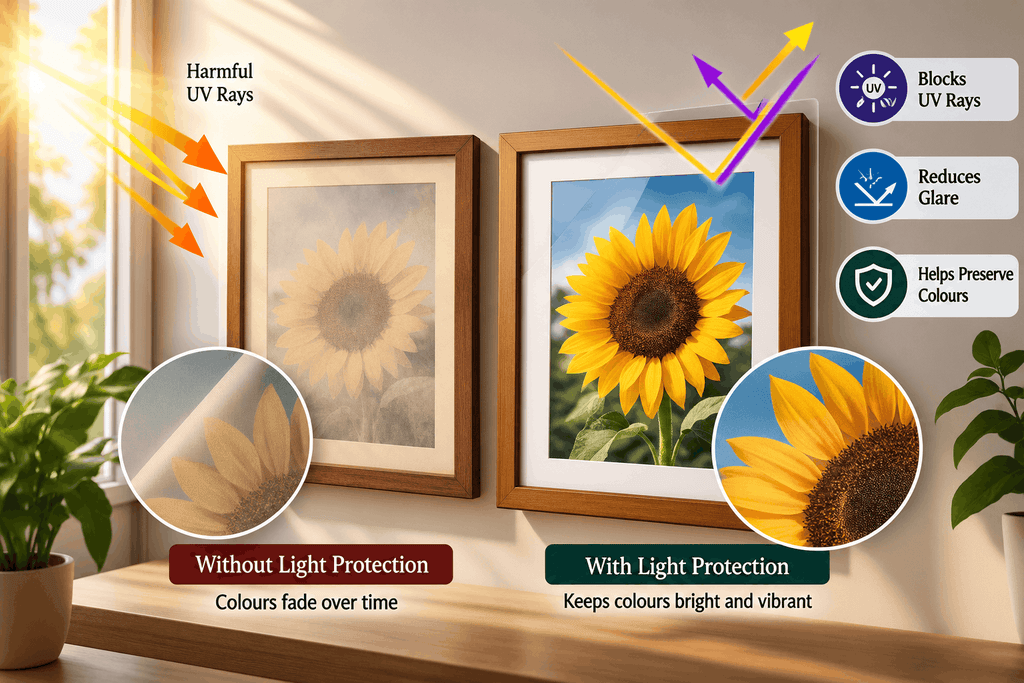
Ultraviolet radiation, commonly called UV, can contribute to fading and deterioration in photographs, printed artwork, and certain other materials over time.
However, the level of protection depends on the specific glazing product.
Standard glass and UV protection
Ordinary clear glass offers some UV filtering, but it should not be assumed to provide strong protection against all UV wavelengths that may affect photographs and artwork.
Special UV-filtering glass products are available.
Acrylic and UV protection
Some acrylic glazing products are designed to filter UV radiation. Other standard acrylic sheets may offer different levels of protection.
Therefore, acrylic should not automatically be treated as UV-protective simply because it is acrylic.
How can you help protect framed photographs?
Regardless of whether you choose glass or acrylic:
- Avoid displaying photographs in prolonged direct sunlight.
- Choose glazing with specified UV-filtering properties if protection is important.
- Follow suitable care instructions for the frame and artwork.
- Remember that UV-filtering glazing does not prevent every type of fading or damage.
If you are displaying a photograph with significant sentimental or monetary value, consider the complete display environment rather than relying on the front cover alone.
Cleaning and Maintenance: How to Care for Acrylic and Glass
The right cleaning method helps maintain the appearance of the frame’s transparent front cover. Explore our detailed photo frame cleaning article to get full information about the photo frame cleaning method.
How to clean acrylic glazing
- Check the manufacturer’s cleaning instructions.
- Remove loose dust gently before wiping.
- Use a clean, soft microfibre cloth.
- Use a cleaner specifically suitable for acrylic, or another method approved by the manufacturer.
- Avoid abrasive materials and harsh chemicals that may damage or cloud the surface.
Do not assume that a glass-cleaning spray is safe for acrylic. Some products contain chemicals that can damage particular acrylic surfaces.
How to clean glass glazing
- Remove loose dust using a soft cloth.
- Use a suitable glass cleaner or an approved cleaning solution.
- Apply the cleaner to the cloth rather than allowing liquid to run into the frame.
- Wipe gently and dry the surface with a clean cloth.
- Avoid excessive moisture around the frame’s edges and backing.
If the frame contains artwork that could be affected by moisture, take care to prevent liquid from reaching the inside.
Which material is easier to maintain?
Glass is generally more forgiving when it comes to everyday surface cleaning because it resists scratches better.
Acrylic requires a gentler approach, but it can remain clear and attractive when cleaned with suitable materials and products.
Cost: Is Acrylic More Expensive Than Glass?
The price difference depends on the frame size, the quality of the glazing, and the product’s additional features.
Standard glass may be less expensive than some acrylic alternatives, while premium acrylic with special coatings or UV protection can cost more.
Similarly, specialised glass with anti-reflective or UV-filtering features may cost more than ordinary glass.
What should you compare before buying?
Rather than comparing material names alone, look at the complete product:
- Frame size and outside dimensions.
- Frame material and finish.
- Type and quality of glazing.
- Whether UV protection or glare reduction is included.
- Included backing and display hardware.
- Care requirements and intended use.
The most suitable option is the one that meets your needs without paying for features you do not require.
Which Is Better for Different Rooms and Display Locations?
The right choice can vary depending on where the photo frame will be placed.
Living room
For a large framed print above a sofa, acrylic may be useful because of its lower weight and resistance to shattering.
Glass can also be suitable when the frame is securely mounted and scratch resistance is a priority.
Bedroom
Both materials can work well for framed photographs and decorative artwork. Consider the frame size, location, and likelihood of accidental contact.
Children’s room
Acrylic is worth considering because it is less likely than ordinary glass to shatter into sharp fragments.
Secure installation and appropriate placement remain important.
Office or study
Glass may suit a small desk frame that stays in one position and is cleaned regularly. Acrylic can be useful for larger framed photographs or displays that need to be moved.
Hallways and frequently used spaces
Acrylic may be preferable where frames are more likely to be bumped or handled. Glass may still be appropriate when securely positioned away from high-contact areas.
These are practical guidelines rather than strict rules. The frame’s construction and location matter as much as the glazing material.
Acrylic vs. Glass: Which Should You Choose?
Use the following guide to narrow down your choice.
Choose acrylic if:
- You want a lighter frame.
- You are displaying larger photographs or artwork.
- You want to reduce the risk of the front cover shattering.
- You expect to move or reposition the frame regularly.
- You are willing to follow careful cleaning instructions.
Choose glass if:
- You prioritise everyday scratch resistance.
- You prefer a hard, rigid front surface.
- The frame is relatively small and will remain in a stable position.
- You want a surface that is generally easier to clean.
- You have checked that the frame’s weight and installation are suitable.
If UV protection or reduced glare is important, compare the specifications of the actual glazing products. These features depend on the particular product rather than simply whether it is acrylic or glass.
Frequently Asked Questions
Is acrylic better than glass for photo frames?
Acrylic is often preferable when lower weight and resistance to shattering matter most. Glass may be preferable when scratch resistance and straightforward cleaning are priorities. Neither is universally better.
Does acrylic photo frame glazing break?
Acrylic is less likely than ordinary glass to shatter into sharp fragments, but it can still crack, chip, or become damaged under sufficient impact.
Does glass protect photographs from fading?
Ordinary glass provides some UV filtering, but it does not prevent all fading. Special UV-filtering glazing and avoiding prolonged direct sunlight can help reduce certain risks.
Is acrylic clearer than glass?
Both materials can provide excellent clarity. The specific product quality, surface condition, and any reflection-control treatments affect the viewing experience.
Can I use glass cleaner on acrylic?
Not all glass cleaners are suitable for acrylic. Some contain chemicals that can damage or cloud the surface. Use a cleaner approved for the specific acrylic product.
Does acrylic scratch more easily than glass?
Yes, standard acrylic generally scratches more easily than glass. Use a soft cloth and suitable cleaning products to reduce the risk of scratches.
Is acrylic suitable for large photo frames?
Yes. Acrylic is often practical for large frames because it weighs less than comparable glass. Make sure the frame construction and hanging hardware are suitable for the finished product.
Does every acrylic photo frame offer UV protection?
No. UV protection depends on the particular acrylic product and any treatments or coatings it includes. Check the specifications before purchasing if UV filtering matters to you.
What is the difference between acrylic and Plexiglass?
Acrylic is the general material name. Plexiglas is a brand-associated name commonly used when referring to acrylic sheet products. Product properties can vary, so check the actual specifications.
Conclusion
Acrylic and glass are both useful materials for the transparent front cover of a photo frame, but they offer different benefits.
Acrylic is lightweight and more resistant to shattering, making it practical for larger frames and locations where impact is a concern. Glass offers a harder surface with better everyday scratch resistance and is often easier to clean.
Before choosing, consider the frame’s size, where it will be displayed, how often it will be handled, and how much maintenance you are comfortable with. If you need UV protection or glare reduction, check the glazing specifications rather than assuming either material provides those features automatically.
By matching the glazing to your display needs, you can choose a photo frame that presents your photograph or artwork clearly and suits your everyday use.
Explore our social media platforms Pinterest, Instagram, and Facebook to watch video content of our Photo Frame product.






Comments (2)