
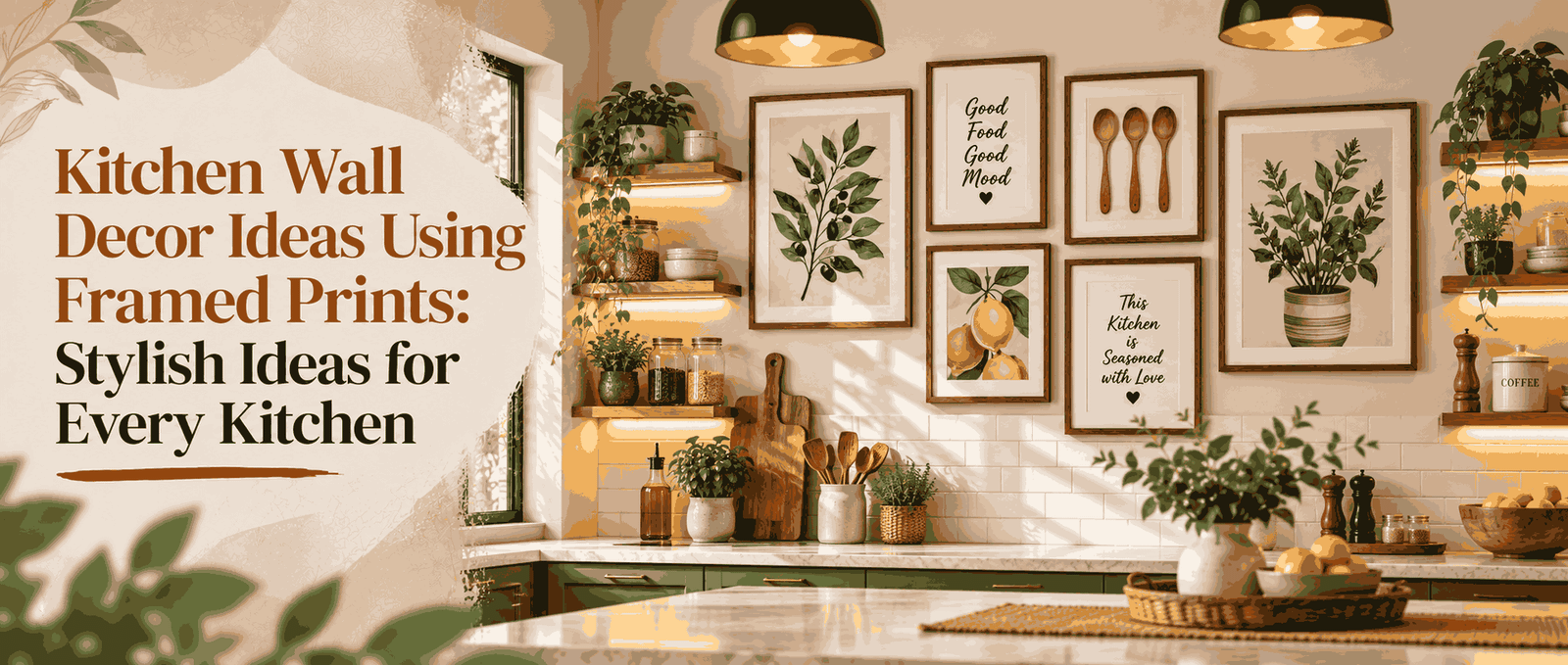
The kitchen is one of the most frequently used spaces in a home, but its decoration often receives less attention than the living room or bedroom. While cabinets, countertops, and appliances play an important role in the kitchen’s appearance, the walls also offer an opportunity to add personality and style.
Framed prints are a simple way to decorate kitchen walls without making major changes to the interior. From botanical illustrations and coffee-themed artwork to food photography and minimalist prints, the right artwork can complement your kitchen’s colours and create a more inviting atmosphere.
Whether you have a spacious kitchen, a compact apartment kitchen, or an open-plan cooking and dining area, this guide explores practical kitchen wall decor ideas using framed prints.
Why Use Framed Prints for Kitchen Wall Decor?
Framed prints can add visual interest to a kitchen while helping connect its design with the rest of your home.
Here are a few reasons to consider them:
- Add personality: Choose artwork that reflects your cooking interests, favourite foods, or preferred interior style.
- Complement existing colours: Coordinate prints with cabinets, countertops, tiles, and kitchen accessories.
- Decorate unused wall space: Make blank walls feel more considered without adding bulky furniture.
- Create a welcoming atmosphere: Artwork can make a kitchen feel warmer and more personal.
- Refresh the interior easily: Changing framed prints is often simpler than repainting walls or replacing fixtures.
For more ideas across different rooms, explore our guide to home decor with photo frames.
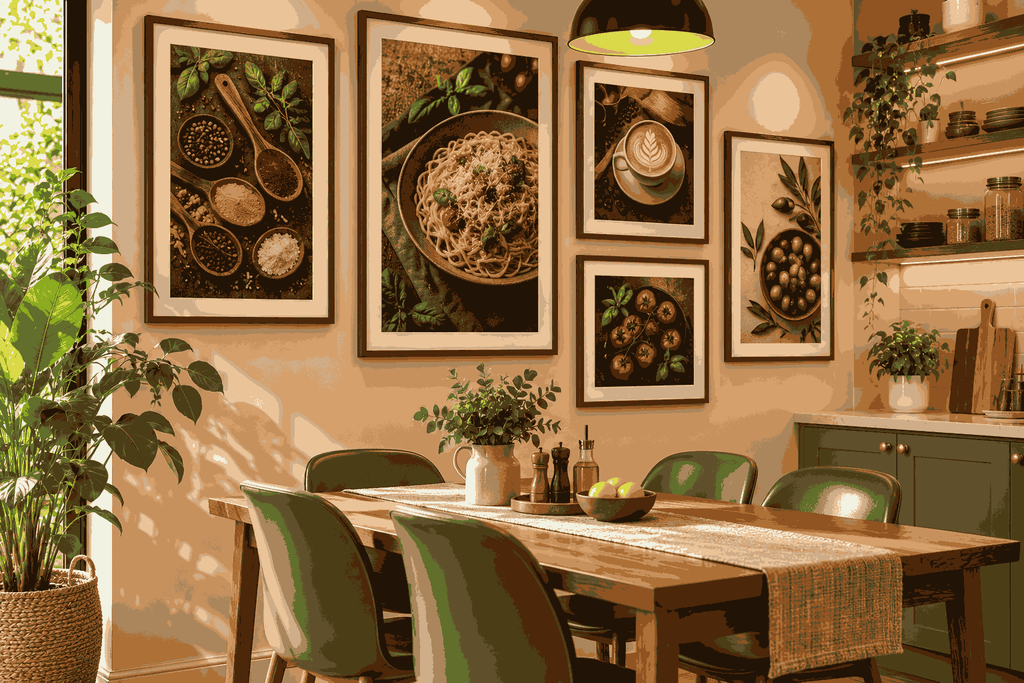
Decorate with Food-Themed Framed Prints
Food-themed artwork is a natural choice for kitchen walls. Prints featuring fruits, vegetables, herbs, bread, coffee, or other culinary subjects can complement the purpose of the room.
For a contemporary kitchen, consider simple illustrations of lemons, tomatoes, olives, or herbs. In a traditional kitchen, vintage-inspired food illustrations may create a warmer, classic appearance.
You can display a single framed print or combine two or three related designs.
Styling tip: Choose artwork with colours that already appear in your kitchen. Green herb illustrations, for example, can complement natural wood cabinets, while colourful fruit prints can add contrast to a neutral interior.
Create a Coffee or Tea-Themed Corner
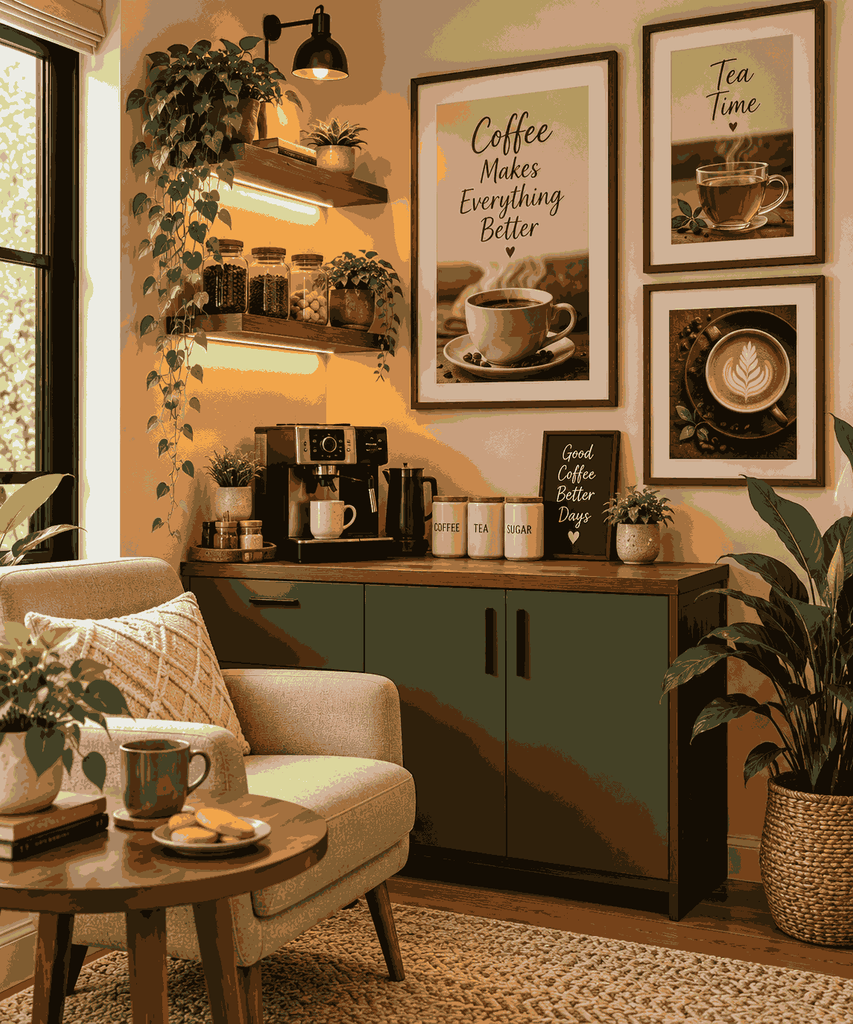
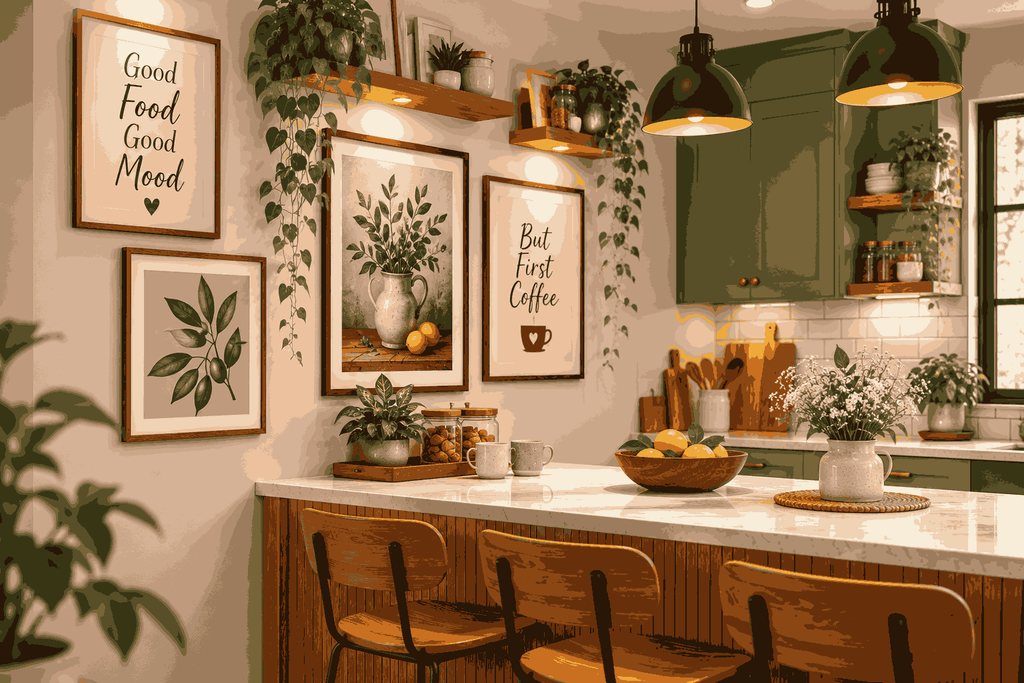
If your kitchen has a dedicated coffee machine, tea station, or breakfast counter, framed prints can help define that small area.
Coffee illustrations, tea-themed typography, espresso photography, or simple café-inspired artwork can make the corner feel more intentional.
Consider placing one medium-sized frame above the counter or displaying two smaller prints side by side. Keep the artwork away from direct steam, splashes, and hot appliances.
For a cohesive look, choose frames that complement nearby shelves, mugs, jars, or countertop accessories.
Use Botanical Prints for a Fresh Kitchen Look
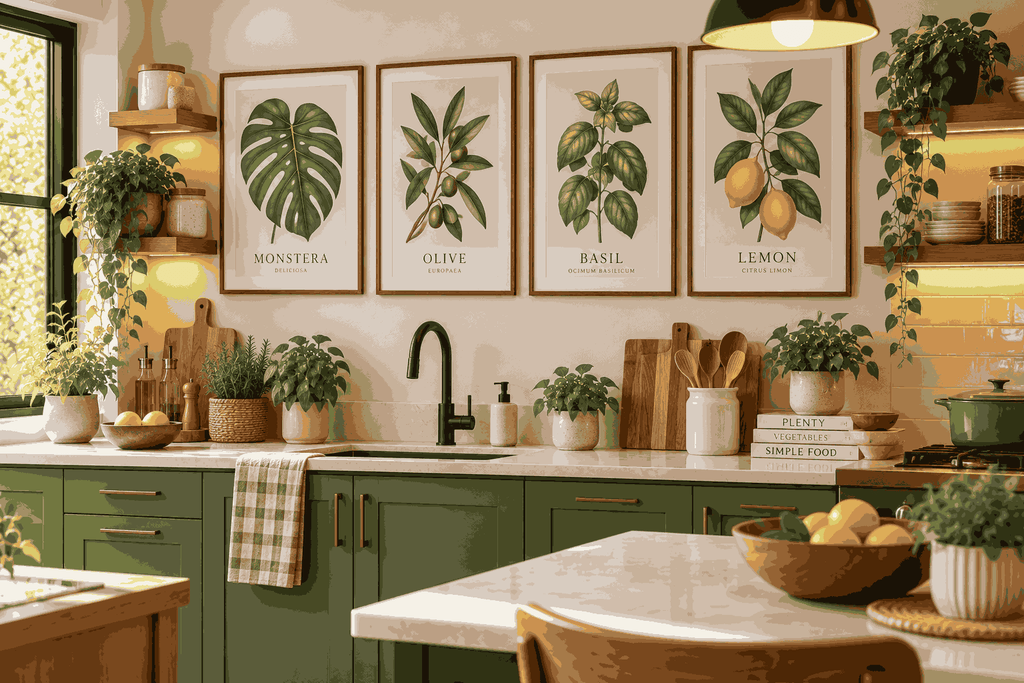
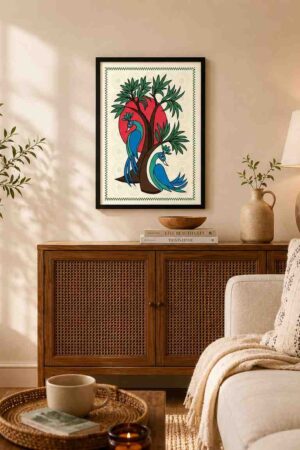
Botanical artwork can introduce a natural element into a kitchen, particularly when the space includes wooden finishes, indoor plants, or neutral colours.
Popular options include:
- Herb illustrations featuring basil, rosemary, or mint.
- Botanical drawings of leaves and flowers.
- Framed prints of olive branches or citrus leaves.
- Nature-inspired illustrations in muted green tones.
- Vintage-style plant studies.
You can use a single botanical print to create a subtle accent or combine several related illustrations for a coordinated display.
Light wooden frames often work well with natural materials, while black frames can provide contrast against pale walls.
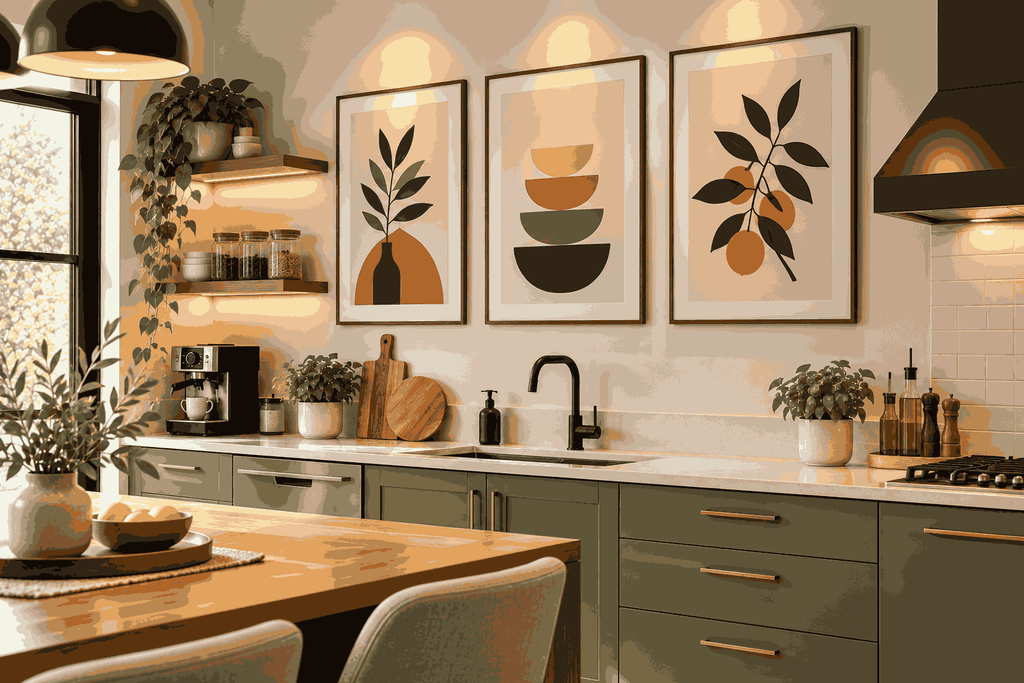
Choose Minimalist Framed Prints for Modern Kitchens
Modern kitchens often feature clean lines, simple cabinetry, and a limited colour palette. Minimalist framed prints can complement this style without making the walls feel busy.
Consider abstract shapes, simple line drawings, monochrome food photography, or understated geometric designs.
Black-and-white prints can work particularly well with white, grey, or black cabinetry. If your kitchen already contains strong colours, neutral artwork can help maintain visual balance.
Instead of filling the entire wall, choose one or two carefully selected pieces and leave enough empty space around them.
This approach is particularly useful in kitchens where cabinets, appliances, and countertops already occupy much of the visual space.
Add Vintage-Inspired Artwork to a Traditional Kitchen
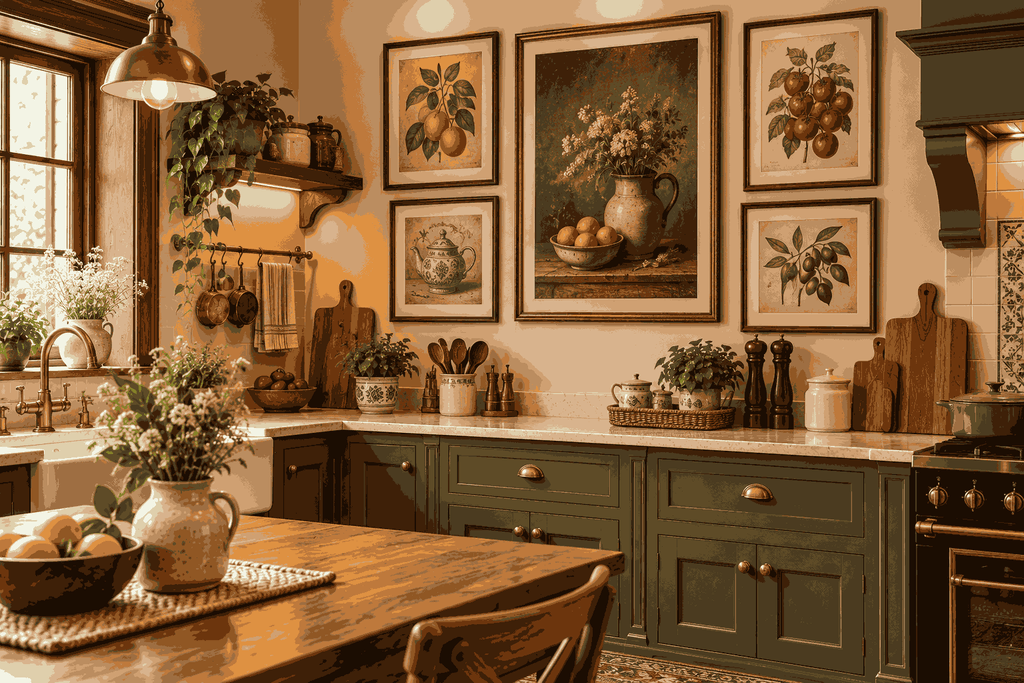
Vintage-inspired framed prints can complement kitchens with wooden cabinets, classic hardware, patterned tiles, or traditional furniture.
Suitable themes include old-fashioned botanical illustrations, vintage food advertisements, traditional café prints, and illustrations of cooking ingredients.
Choose artwork that suits the overall character of the kitchen rather than mixing too many unrelated vintage styles.
Wooden frames can create a warm appearance, while antique-inspired metallic finishes may work with certain traditional interiors.
For a balanced display, use similar frame finishes or repeat a common colour throughout the artwork.
Decorate a Small Kitchen with Framed Prints
A small kitchen does not need a large collection of artwork to look attractive. A few carefully placed prints can add character without overwhelming the space.
Try these ideas:
- Use one compact print on an empty wall.
- Choose a pair of coordinated prints for a narrow wall section.
- Select simple artwork with a limited colour palette.
- Coordinate the frames with cabinet handles or other finishes.
- Use vertical artwork when it suits the proportions of the available wall.
Avoid placing frames where they compete with open shelving, frequently used storage areas, or essential kitchen equipment.
If the kitchen is part of an open-plan living space, choose artwork that complements the nearby dining or living area.
Style a Kitchen Dining Nook with Framed Artwork
Some kitchens include a breakfast table, small dining corner, or built-in seating area. This can be an ideal location for framed prints because the artwork can help distinguish the dining zone from the cooking area.
Food illustrations, landscapes, botanical prints, and simple abstract artwork can all work well.
A single larger framed print may suit a small dining nook, while a pair of coordinated prints can work above a wider table or bench.
Consider the height of the seated viewer, the available wall space, and the position of nearby windows before choosing the placement.
For an open-plan kitchen and dining area, repeating a frame colour or artwork theme can help the two spaces feel connected.
Use Colourful Prints to Brighten Neutral Kitchens
If your kitchen features white cabinets, grey countertops, or neutral walls, colourful framed prints can introduce a focal point.
Consider artwork featuring citrus fruits, colourful vegetables, flowers, or abstract compositions. You can select prints that introduce a new accent colour or repeat a shade already present in kitchen accessories.
For example, artwork featuring muted yellow tones may complement a neutral kitchen with warm wooden details. Green prints can work well alongside plants or natural materials.
The goal is to introduce colour without creating unnecessary visual clutter. A small, coordinated collection often works better than many unrelated designs.
Coordinate Frame Colours with Kitchen Cabinets and Finishes
The frame finish can influence how the artwork connects with the rest of your kitchen.
Here are some combinations to consider:
- White cabinets: Black, natural wood, or white frames can create different levels of contrast.
- Wooden cabinets: Natural wood frames can reinforce the warm, organic appearance.
- Black or dark cabinets: Light wood or white frames can stand out against darker surfaces.
- Stainless-steel appliances: Simple black or neutral frames can complement a contemporary look.
- Colourful cabinets: Choose artwork that repeats or balances the existing cabinet colour.
You do not need to match the frames exactly to every kitchen finish. Repeating one or two colours or materials is usually enough to create a cohesive appearance.
Make Use of Empty Walls Near the Breakfast Counter
The wall near a breakfast counter can be a suitable place for framed prints, provided it is away from cooking splashes, steam, and direct heat.
A pair of food illustrations, a coffee-themed print, or a simple botanical artwork can add interest to this area.
If the counter is used for food preparation, make sure the frames are positioned where they will not interfere with daily activities or become difficult to clean around.
In a kitchen with limited wall space, one well-chosen print can create a clear focal point without adding more objects to the countertop.
Choose Suitable Frame Materials for Kitchen Conditions
Kitchens experience changing temperatures, moisture, grease, and occasional splashes. Therefore, choosing an appropriate frame and location is just as important as selecting attractive artwork.
Consider these practical points:
- Frame finish: Choose a finish that is easy to wipe clean and suits the surrounding decor.
- Protective covering: Glass or suitable clear acrylic can help protect the print from dust and minor splashes, depending on the frame’s construction.
- Print protection: Keep artwork away from direct steam, persistent moisture, and cooking grease.
- Frame material: Select materials suitable for the conditions in your kitchen; some materials may warp or deteriorate when repeatedly exposed to moisture.
- Cleaning access: Avoid placing artwork where it is difficult to inspect or clean around.
A protective covering does not make every frame waterproof. Avoid installing framed prints immediately beside a sink, directly above a stove, or in another location exposed to frequent heat, grease, or splashes.
Where Should You Hang Framed Prints in a Kitchen?
The right location helps artwork remain visible while reducing exposure to everyday kitchen conditions.
Potential locations include:
- An empty wall near the dining nook.
- A wall beside the breakfast counter.
- A suitable wall near a coffee or tea station.
- An open wall away from the stove and sink.
- A kitchen wall that visually connects with an adjoining dining area.
Before hanging a frame, consider the wall’s proximity to appliances, cooking surfaces, windows, and water sources. Make sure the artwork does not obstruct cabinets, storage, or movement through the kitchen.
When in doubt, choose a wall that is easy to reach for cleaning but far enough from heat and moisture to help preserve the artwork.
Common Mistakes to Avoid When Decorating Kitchen Walls
Hanging artwork too close to the stove: Heat, grease, and cooking vapours can damage prints and frame finishes. Choose a safer location away from direct exposure.
Using too many different styles: Mixing unrelated themes, frame colours, and sizes can make the kitchen look cluttered. Repeat a few visual elements to create consistency.
Ignoring the kitchen’s existing colours: Artwork that strongly conflicts with cabinets, countertops, or tiles may look disconnected from the space.
Choosing frames that are difficult to maintain: Kitchens require regular cleaning, so consider how easily you can wipe the frame and clean around it.
Blocking useful wall space: Avoid placing frames where they interfere with cabinets, shelves, switches, or everyday tasks.
Forgetting about moisture: Persistent steam and dampness can affect some frame materials and artwork. Keep prints in well-ventilated areas away from direct exposure.
How to Decorate Your Kitchen with Framed Prints
Follow these steps to create a coordinated kitchen wall display.
- Identify a suitable wall: Look for an empty area away from direct heat, steam, grease, and water splashes.
- Choose an artwork theme: Consider food illustrations, botanical prints, minimalist artwork, or vintage-inspired designs.
- Review your colour palette: Select prints and frames that complement the cabinets, countertops, and surrounding decor.
- Choose the right frame size: Make sure the artwork suits the available wall space.
- Plan the arrangement: Test the placement before drilling holes or installing wall fixings.
- Install securely: Use suitable fixings and ensure the frame will remain stable.
- Maintain the display: Clean the frames as appropriate and check periodically for signs of moisture or damage.
A simple plan can help you decorate your kitchen without compromising its practical use.
Frequently Asked Questions
What type of framed prints are best for kitchen walls?
Food illustrations, botanical prints, coffee-themed artwork, minimalist designs, and vintage-inspired prints are popular choices. Select artwork that complements your kitchen’s style and colour palette.
Can I hang framed art above a kitchen stove?
It is generally better to avoid hanging framed art directly above a stove. Heat, grease, and cooking vapours can damage artwork and frame materials. Choose a location away from direct heat and splashes instead.
Which frame colours work best in a kitchen?
Black, white, natural wood, and other neutral finishes are versatile options. The best choice depends on your cabinets, countertops, wall colour, and preferred interior style.
How can I decorate a small kitchen wall with framed prints?
Choose one or two appropriately sized prints and keep the arrangement simple. Coordinate the frame colours with the kitchen’s existing finishes and avoid overcrowding narrow wall sections.
Are framed prints suitable for kitchens with high humidity?
They can be suitable when placed in a well-ventilated area away from persistent moisture and steam. Choose appropriate frame materials and protective coverings, and remember that not all frames are waterproof.
How do I clean framed prints in a kitchen?
Follow the manufacturer’s cleaning instructions. Wipe suitable frame surfaces gently with an appropriate cloth, and avoid allowing cleaning liquids or moisture to enter the frame. Remove dust and grease carefully without damaging the print or protective covering.
Can framed prints match an open-plan kitchen and dining area?
Yes. Repeating frame colours, artwork themes, or accent colours can create a visual connection between the kitchen and dining area. Choose artwork that complements both spaces without making them look identical.
Conclusion
Kitchen wall decor does not need to be complicated or expensive. Framed prints offer a simple way to introduce colour, personality, and visual interest into a kitchen while complementing its existing design.
From food-themed illustrations and botanical prints to minimalist artwork and coffee-inspired designs, the right choice depends on your kitchen’s size, colours, and interior style.
Focus on a suitable wall, coordinated frames, and artwork that can be protected from heat and moisture. With thoughtful placement, framed prints can help create a kitchen that feels more welcoming and visually complete.
For more inspiration, explore our home decor guide for photo frames and discover ideas for decorating other areas of your home.
Explore our social media platforms Pinterest, Instagram, and Facebook to watch video content of our Photo Frame product.



Comment (1)