
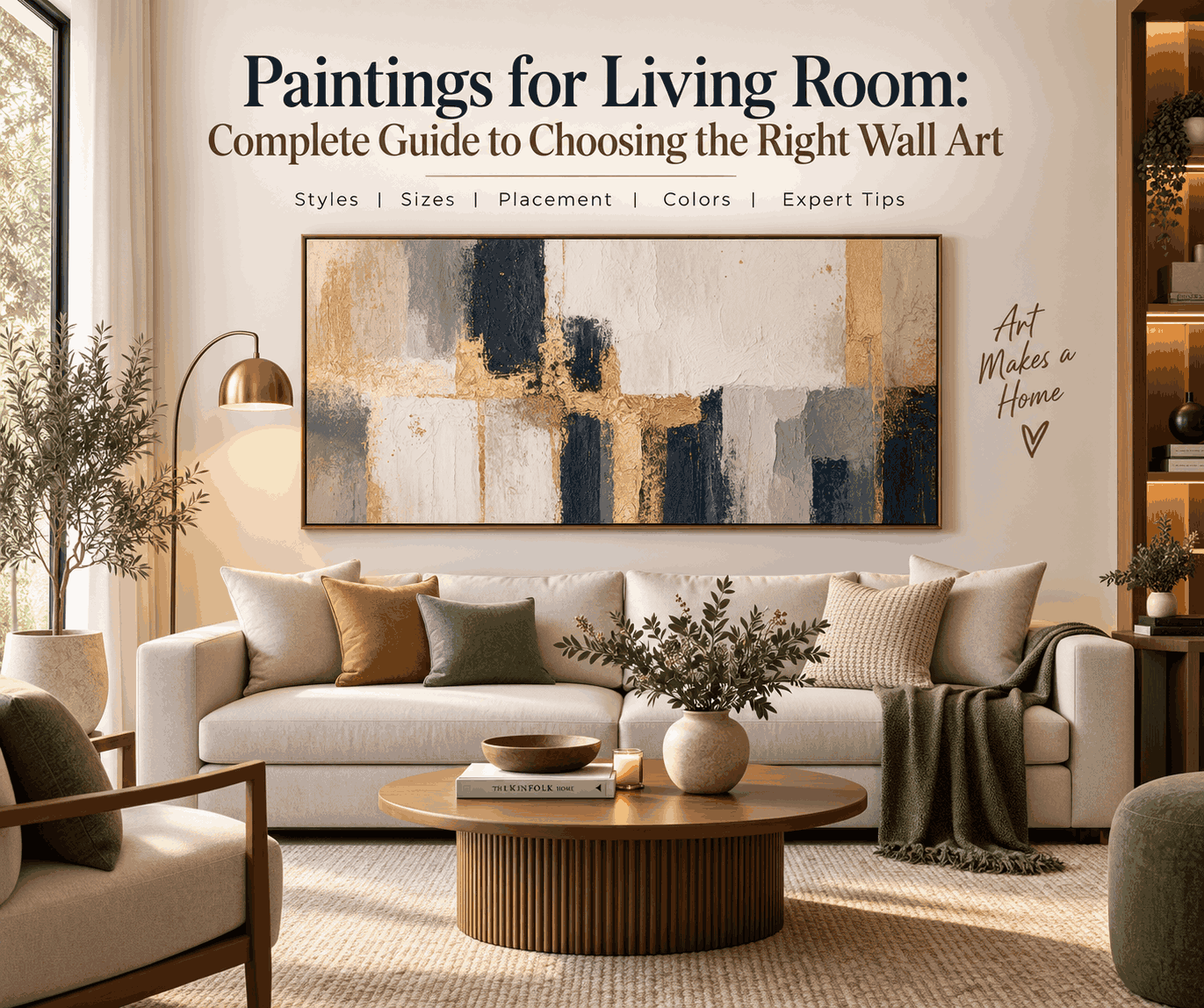
Your living room is often the first space people notice when they enter your home. The right painting can make the room feel warmer, more sophisticated, more creative, or more personal. But choosing artwork is not simply about finding a beautiful painting. You also need to consider the size of the wall, furniture, sofa, colors, lighting, interior style, and the overall mood you want to create.
With so many options available, from abstract canvas art and minimalist paintings to traditional Indian artwork and large statement pieces, it can be difficult to know where to begin.
This guide explains how to choose the right paintings for your living room, including the best styles, sizes, colors, placement ideas, and ways to combine multiple artworks.
Why Paintings Matter in Living Room Décor
A living room can have beautiful furniture, flooring, lighting, and accessories, but the walls may still feel incomplete. Artwork helps bring these individual elements together.
A well-chosen painting can:
- Create a focal point
- Add personality to the room
- Complement your furniture
- Introduce new colors
- Make an empty wall feel complete
- Create a particular mood
- Add visual interest
- Reflect your personal taste
- Make the room feel more sophisticated
Think of a painting as more than wall decoration. It can become the visual element that connects your sofa, rug, curtains, lighting, and other decorative pieces.
For example, a neutral living room with a beige sofa and wooden furniture might benefit from an earthy landscape painting. A contemporary room with minimal furniture might look better with an abstract or geometric artwork.
The goal is not simply to fill an empty wall; it is to create balance.
Consider Your Living Room Style First
Before choosing a painting, look at the existing style of your living room.
Your artwork should complement the interior rather than compete with it.
Modern Living Room
Modern interiors generally work well with:
- Abstract paintings
- Geometric artwork
- Minimalist art
- Contemporary canvas paintings
- Neutral-toned artwork
- Large statement pieces
Traditional Living Room
Traditional interiors can accommodate:
- Landscape paintings
- Floral artwork
- Classical artwork
- Traditional Indian paintings
- Detailed framed artwork
Minimalist Living Room
If your room has clean lines and limited decoration, choose artwork that follows the same principle.
A single large painting with a simple composition can often work better than filling the wall with numerous small pieces.
Bohemian Living Room
Bohemian spaces can accommodate:
- Botanical artwork
- Colorful paintings
- Eclectic gallery walls
- Nature-inspired artwork
- Handmade paintings
Indian or Traditional Interior
Indian-inspired interiors can look especially attractive with:
- Madhubani artwork
- Warli art
- Rajasthani paintings
- Tanjore-inspired artwork
- Traditional Indian landscapes
- Spiritual artwork
The important thing is consistency. If your living room has a very calm and minimalist appearance, an extremely busy painting may feel out of place.
Choose the Right Painting Style
One of the biggest decisions is selecting the type of artwork you want.
There is no single “best” painting for every living room. The right choice depends on your interior design and personal preferences.
Abstract Paintings
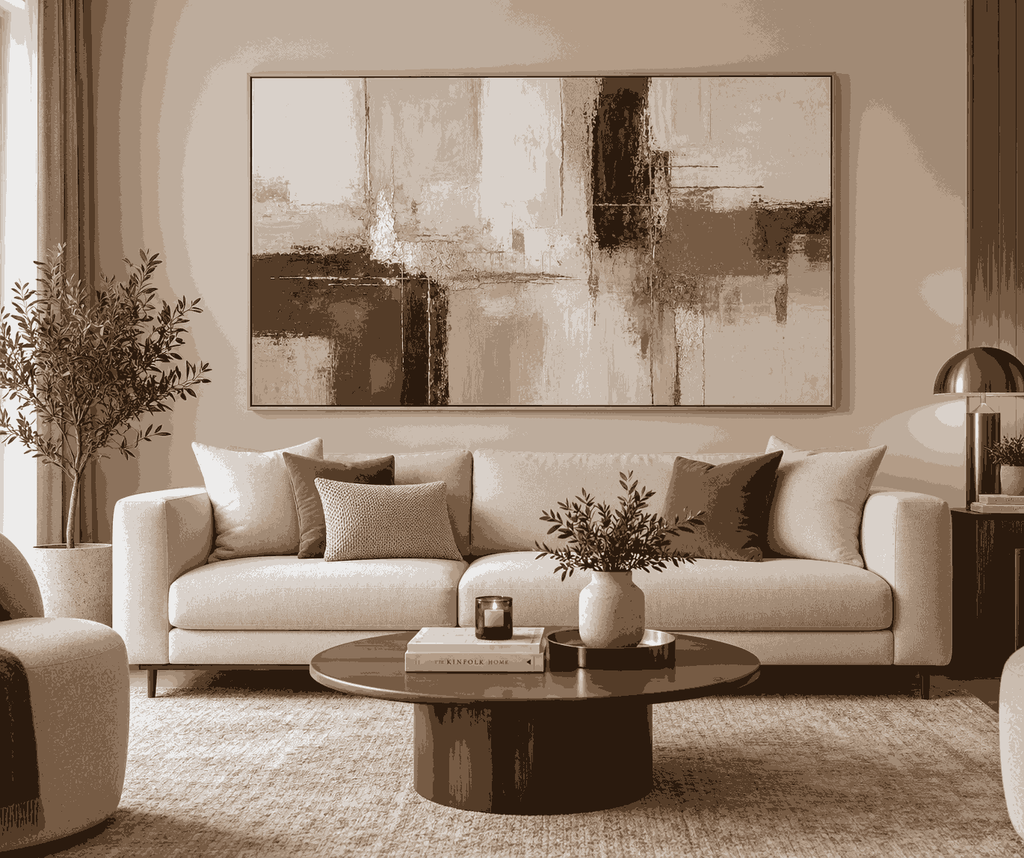
Abstract art is one of the most versatile choices for contemporary interiors. It does not necessarily represent a recognizable object or scene, allowing you to focus on colors, shapes, textures, and composition.
If you want inspiration, you can explore our guide to abstract paintings for the living room.
Abstract artwork works particularly well when you want your wall art to become a statement piece.
For example, a large abstract canvas featuring beige, brown, white, and muted gold can complement a neutral interior without overwhelming it.
Modern Paintings
Modern artwork is ideal for homeowners who prefer contemporary interiors.
You can explore more examples in our guide to modern paintings for living room walls.
Modern paintings can include:
- Abstract compositions
- Geometric designs
- Minimalist artwork
- Contemporary landscapes
- Textured paintings
- Color-block artwork
The advantage of modern artwork is its flexibility. You can choose something bold and colorful or something subtle and neutral depending on your room.
Landscape Paintings
Landscape paintings can introduce nature into your living room.
Popular subjects include:
- Mountains
- Forests
- Beaches
- Lakes
- Countryside
- Sunsets
- Trees
- Waterfalls
Landscape artwork works particularly well in rooms where you want to create a peaceful and relaxing atmosphere.
A landscape painting with green, blue, and earthy tones can also complement wooden furniture and natural materials.
Floral and Botanical Paintings
Flowers and botanical artwork are excellent options for creating a fresh and welcoming atmosphere.
They work particularly well with:
- Neutral interiors
- Scandinavian interiors
- Bohemian décor
- Feminine interiors
- Nature-inspired spaces
You can choose between realistic floral paintings, loose watercolor-style artwork, or modern botanical compositions.
Think About the Wall Where the Painting Will Go
The location of the artwork is just as important as the artwork itself.
A painting that looks perfect in a gallery may not look right when placed on a particular wall in your home.
The most common locations include:
- Above the sofa
- Above a console table
- On an accent wall
- Beside the TV
- Above a fireplace
- On an empty feature wall
- Behind an accent chair
The wall should have enough visual space for the painting to breathe.
Avoid placing a large painting in a location where it is surrounded by too many competing decorative elements.
How to Choose Paintings Above the Sofa
The wall above the sofa is one of the most popular locations for living room artwork.
However, simply hanging a painting above the sofa is not enough. Proportion matters.
For a detailed explanation, see our guide on paintings above the sofa.
As a general design principle, the artwork should relate visually to the width of the sofa. A very small painting above a large sofa can look disconnected, while an oversized piece may dominate the entire room.
You can choose:
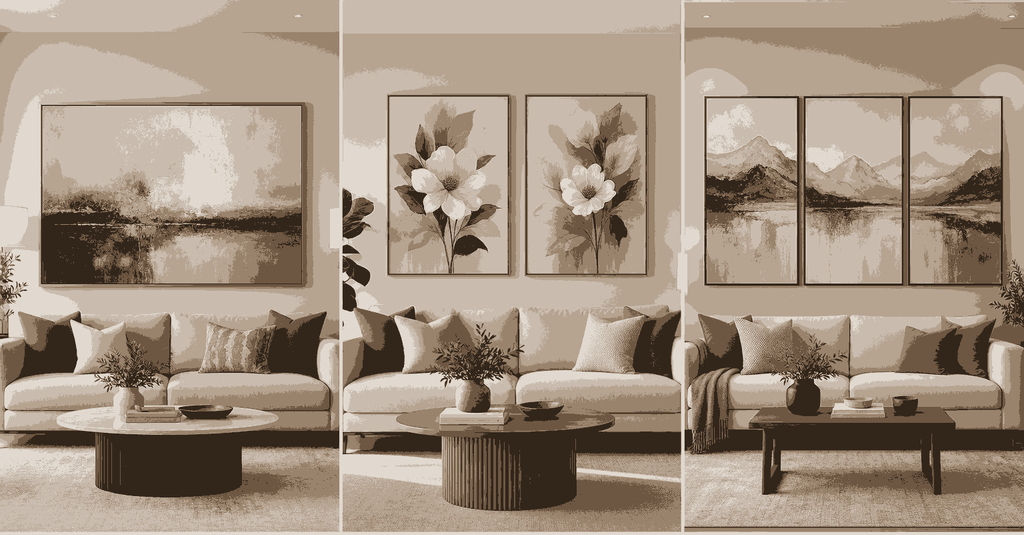
One Large Painting
A single large canvas creates a strong focal point.
Two Coordinated Paintings
Two artworks with similar colors or themes can create symmetry.
Three-Piece Artwork
A triptych or three-panel artwork can spread across the wall while maintaining a unified visual theme.
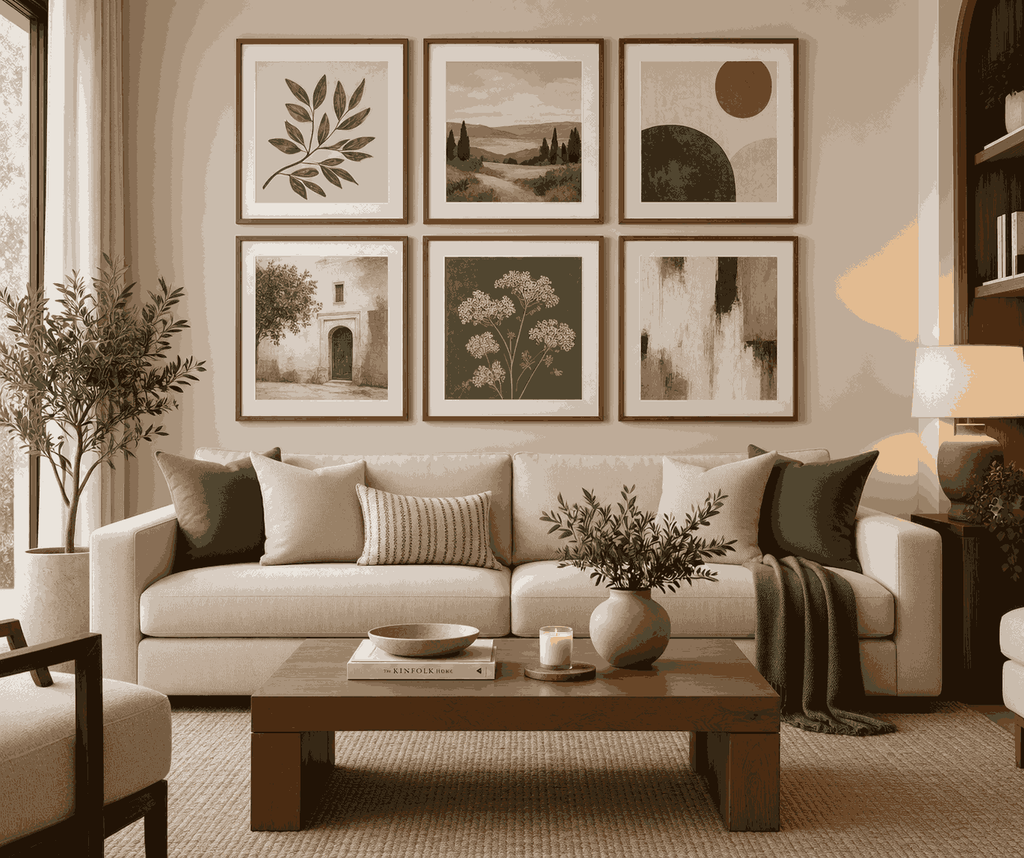
Gallery Wall
Several smaller paintings can be arranged together to create an artistic display.
Select the Right Painting Size
Size is one of the most important factors when selecting paintings for living room walls.
A beautiful painting can still look wrong if its proportions are unsuitable for the wall.
Consider:
- Wall width
- Wall height
- Sofa width
- Ceiling height
- Furniture placement
- Distance between furniture and artwork
For a more detailed discussion, link to choose the right painting size for your living room.
Small Living Rooms
Smaller rooms generally benefit from appropriately scaled artwork.
You don’t necessarily need tiny paintings. One moderately sized piece can sometimes make the room feel more organized than several small decorative items.
Large Living Rooms
Large rooms often have larger walls that require artwork with enough visual weight.
A small painting placed in the middle of a huge empty wall can make the artwork appear insignificant.
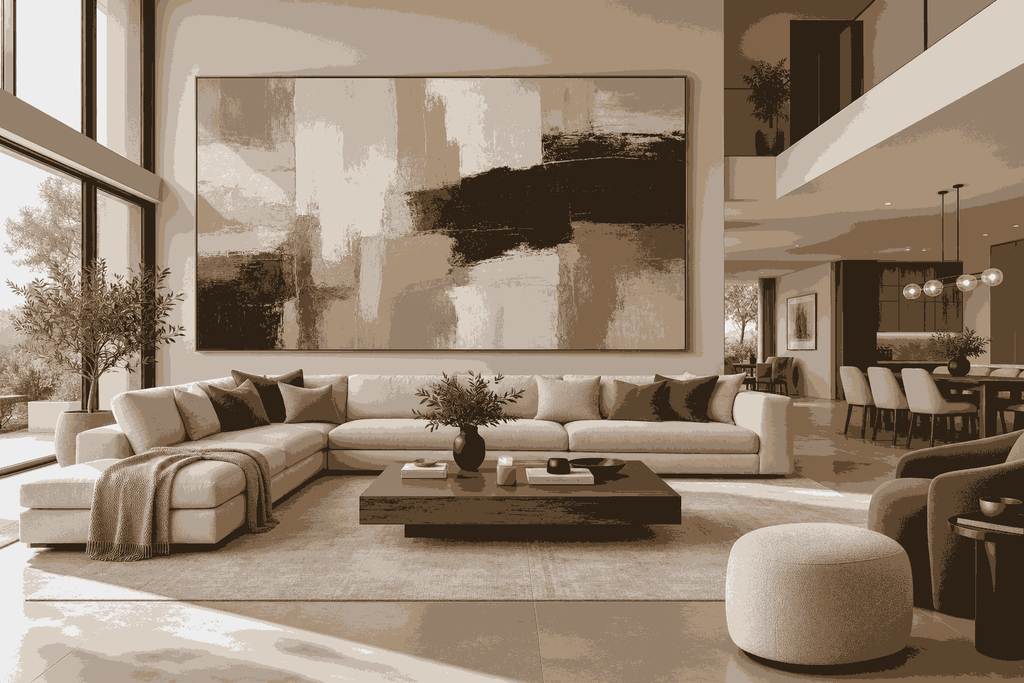
This is where large wall art for living rooms can be particularly useful.
Large artwork can create a focal point while reducing the feeling of an empty wall.
Match the Painting With Your Color Scheme
Color is another major consideration.
Your painting does not need to match every color in your room exactly. In fact, exact matching can sometimes make the design feel too predictable.
Instead, look for colors that complement your existing interior.
For example:
Beige Living Room
Consider:
- Brown
- Cream
- Terracotta
- Olive green
- Soft gold
- Warm neutrals
Grey Living Room
Consider:
- Blue
- Black
- White
- Silver
- Green
- Muted yellow
White Living Room
A white interior gives you greater freedom. You can choose:
- Colorful artwork
- Black-and-white paintings
- Abstract art
- Botanical artwork
- Neutral artwork
Colorful Living Room
If your furniture and accessories already contain strong colors, a neutral painting may provide balance.
For more inspiration, you can internally link the phrase painting colors for living room interiors to your dedicated article.
Use Painting as a Focal Point
A painting can act as the focal point of your living room.
A focal point is the element that naturally attracts attention when someone enters the room.
To make your artwork the focal point:
- Choose a strong composition
- Give it enough wall space
- Avoid surrounding it with too many competing objects
- Use appropriate lighting
- Consider a larger artwork
- Position it where people naturally look
For example, placing a large abstract canvas above the main sofa can immediately establish the visual identity of the room.
However, not every painting needs to be dramatic. A subtle landscape or botanical painting can also create a focal point through color and composition.
Consider Large Wall Art for Empty Walls
Large empty walls can be difficult to decorate.
Adding multiple small paintings is one option, but a single oversized artwork can sometimes create a cleaner and more sophisticated result.
When considering large wall art for living rooms, think about:
- The width of the wall
- Ceiling height
- Furniture below the wall
- Viewing distance
- Artwork orientation
- Frame thickness
- Overall room style
Horizontal paintings are often suitable for walls above sofas because their shape complements the horizontal furniture.
Vertical artwork can work well on narrower walls or areas with tall ceilings.
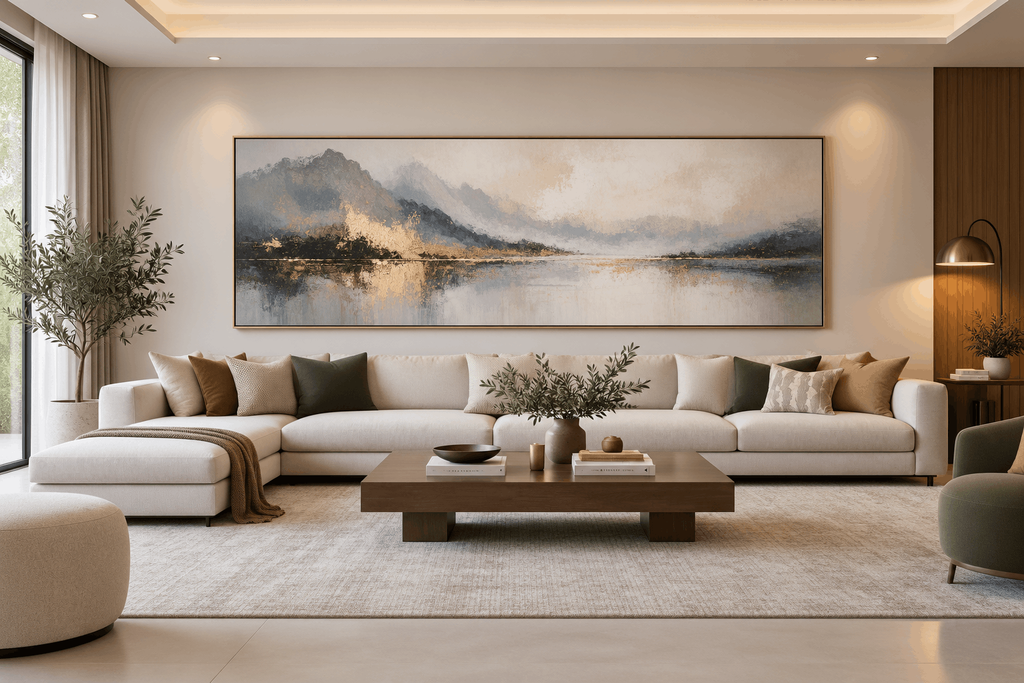
Canvas Paintings: A Versatile Choice
Canvas is one of the most popular materials for living room artwork.
Canvas paintings for living room décor are available in a wide range of styles, sizes, and prices.
Canvas can work particularly well for:
- Abstract artwork
- Modern paintings
- Landscape paintings
- Floral artwork
- Textured paintings
- Contemporary artwork
One advantage of canvas is that it can create a more substantial visual presence than a small paper print.
You can also choose between:
- Stretched canvas
- Framed canvas
- Gallery-wrapped canvas
- Multi-panel canvas
The best option depends on your room’s style.
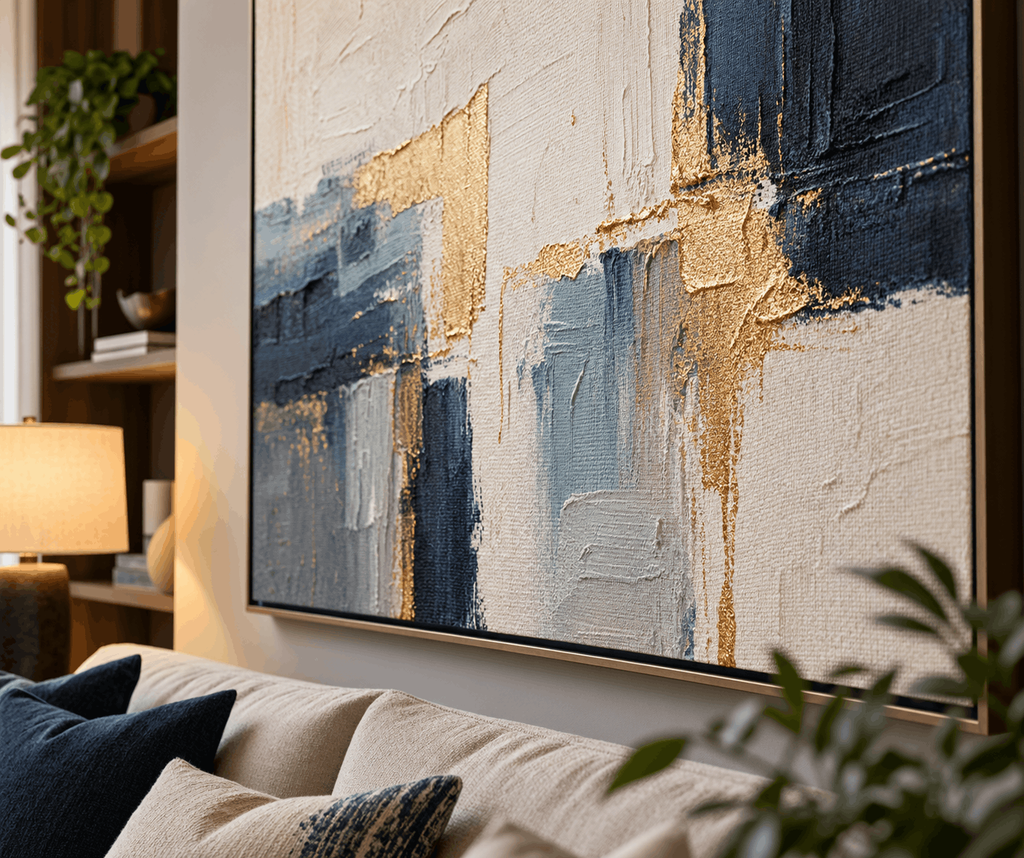
Explore Indian Painting Styles
If you want artwork with cultural character and traditional detail, Indian paintings can be an excellent choice.
There are many artistic traditions that can bring a distinctive personality to a living room.
For example, you can explore:
- Madhubani
- Warli
- Rajasthani miniature-inspired artwork
- Tanjore-inspired art
- Folk art
- Traditional Indian landscapes
- Contemporary Indian art
Our detailed guide to Indian paintings for living room décor can cover these styles individually.
Indian artwork can work especially well when combined with:
- Wooden furniture
- Brass décor
- Handcrafted accessories
- Traditional textiles
- Earthy colors
- Neutral walls
The key is to choose artwork that complements the overall room rather than making the space feel visually crowded.
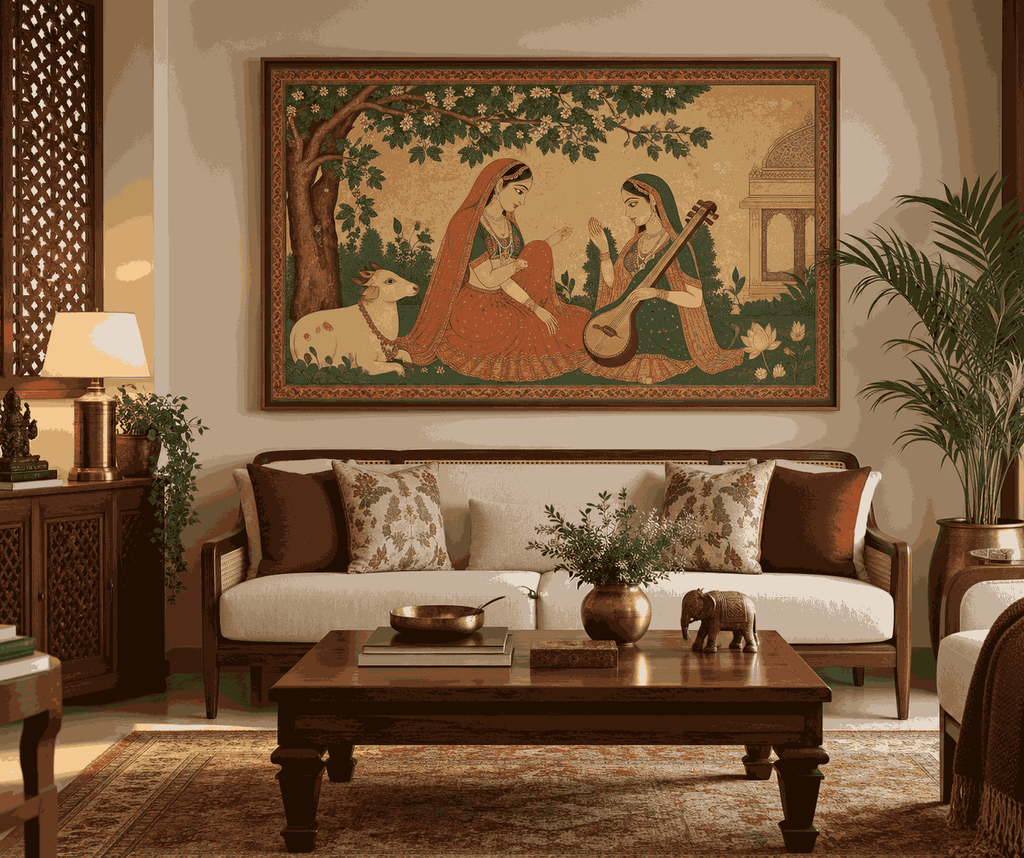
Minimalist Paintings for a Clean Interior
Minimalist artwork is ideal if you prefer a clean and uncluttered home.
Instead of complicated compositions, minimalist paintings often use:
- Simple shapes
- Limited colors
- Negative space
- Subtle textures
- Clean lines
- Simple subjects
For additional ideas, link to minimalist wall art for living rooms.
Minimalist artwork can be especially effective in:
- Modern apartments
- Scandinavian interiors
- Contemporary homes
- Small living rooms
- Neutral interiors
For example, a simple black-and-white line-art painting can add personality without disrupting the room’s calm appearance.
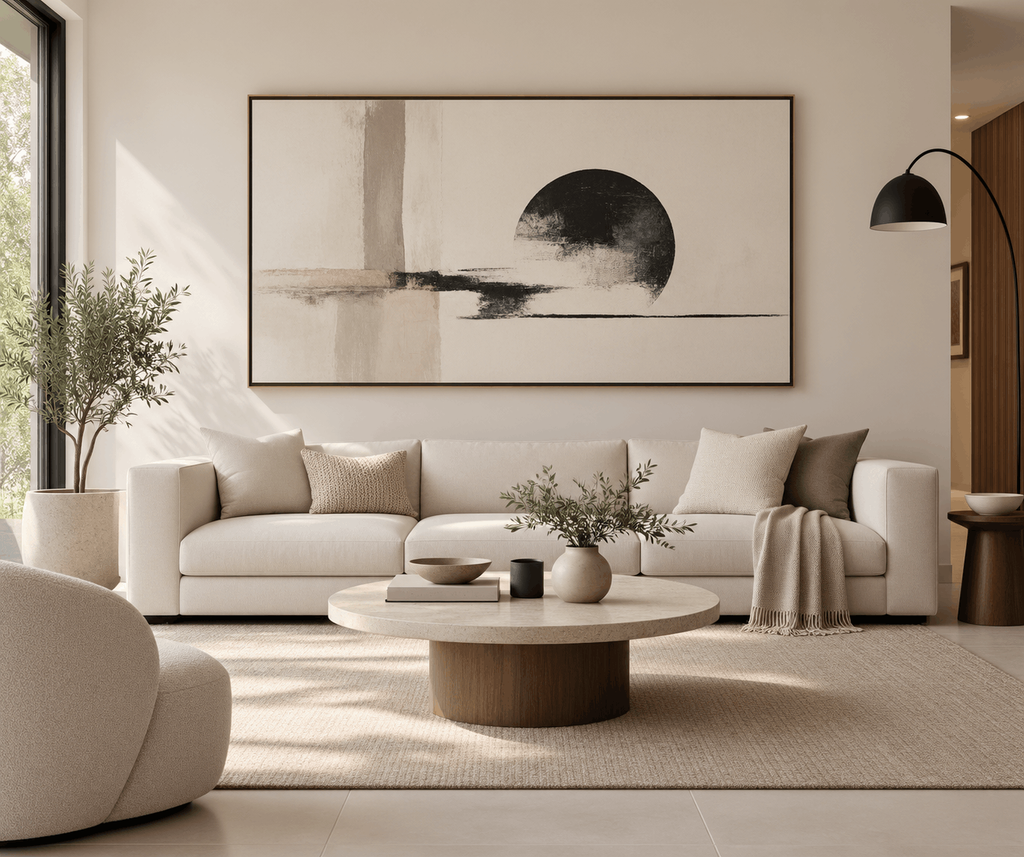
Decide Between One Painting and Multiple Paintings
You don’t always need to choose a single painting.
Multiple artworks can create a gallery-like appearance, but the arrangement needs to feel intentional.
You can combine paintings using:
- Similar colors
- Similar frames
- Similar themes
- Different sizes
- Matching subjects
- A consistent visual style
For example, three botanical paintings with similar backgrounds can create a cohesive arrangement.
On the other hand, three completely unrelated artworks with different colors and frames may make the wall appear chaotic.
The solution is to find at least one connecting element—such as color, theme, frame style, or artistic technique.
How to Arrange Multiple Paintings
If you have several paintings, arrangement becomes important.
Common arrangements include:
Symmetrical Arrangement
Two or more artworks are positioned evenly around a central point.
This creates a formal and organized appearance.
Grid Arrangement
Several paintings of similar size are placed in rows and columns.
This works well for minimalist and contemporary interiors.
Salon-Style Gallery Wall
Different sizes and artwork styles are arranged together.
This approach creates a more creative and personal look.
Horizontal Arrangement
Paintings are arranged from left to right, making this particularly suitable for long walls.
For a dedicated guide, you can internally link to arrange paintings on a living room wall.
Think About the Frame
The frame is part of the overall design.
Even a beautiful painting can look different depending on the frame.
Common choices include:
- Black frames
- White frames
- Natural wood frames
- Gold frames
- Metallic frames
- Minimal frameless canvas
Black Frames
Work well with contemporary and minimalist interiors.
Wooden Frames
Suitable for natural, rustic, traditional, and earthy interiors.
Gold Frames
Can add a more luxurious or traditional appearance.
White Frames
Work well in clean, bright interiors.
Frameless Canvas
A gallery-wrapped canvas can create a modern appearance without introducing another visual border.
Choose the frame based on the painting and the furniture around it.
Don’t Ignore Lighting
Lighting can completely change how artwork looks.
Natural light can make colors appear brighter during the day, while warm artificial lighting can create a different atmosphere at night.
If the painting is an important focal point, consider:
- Ceiling spotlights
- Picture lights
- Wall-mounted lighting
- Directional lighting
- Ambient lighting
Avoid placing artwork where strong direct sunlight can cause long-term fading, particularly if the artwork uses sensitive pigments or materials.
You should also make sure that lighting does not create distracting reflections on glass-framed artwork.
Choose Artwork Based on the Mood You Want
Before buying a painting, ask:
What should this room feel like?
For a Calm Atmosphere
Consider:
- Landscapes
- Botanical artwork
- Soft abstract art
- Blue and green tones
- Neutral colors
For Energy
Consider:
- Bold abstract artwork
- Bright colors
- Strong geometric patterns
- Dynamic compositions
For Luxury
Consider:
- Sophisticated abstract artwork
- Metallic accents
- Deep colors
- Large statement paintings
- High-quality frames
For Warmth
Consider:
- Earth tones
- Floral artwork
- Landscapes
- Warm abstract paintings
- Natural textures
The emotional effect of artwork can be just as important as its visual appearance.
Don’t Make These Common Mistakes
Choosing living room artwork can be exciting, but there are several common mistakes to avoid.
Choosing Artwork That Is Too Small
One tiny painting on a large empty wall may look disconnected.
Ignoring the Furniture
Your painting should relate to the furniture below it, particularly when positioned above a sofa or console.
Using Too Many Colors
If the room already has many strong colors, adding extremely colorful artwork can make the space feel overwhelming.
Hanging Artwork Too High
Artwork should feel visually connected to the furniture rather than floating near the ceiling.
Choosing Art Only Because It Is Trendy
Trends change. Choose artwork that you genuinely enjoy looking at.
Overcrowding the Wall
Not every empty space needs decoration. Negative space can actually make artwork look more valuable and intentional.
Ignoring the Room’s Existing Style
A traditional painting can look beautiful in a modern room, but the combination needs to feel intentional.
How to Choose Paintings Based on Room Size
The size of your living room should influence your artwork selection.
Small Living Room
Prioritize:
- Moderate-sized artwork
- Simple compositions
- Light or neutral colors
- Minimalist designs
- One strong focal point
Avoid filling every available wall.
Medium Living Room
You have greater flexibility.
You can use:
- One large canvas
- Two coordinated paintings
- A three-piece arrangement
- A small gallery wall
Large Living Room
Large spaces can accommodate:
- Oversized paintings
- Large abstract canvases
- Multiple artwork groupings
- Large gallery walls
- Statement pieces
The important thing is visual proportion.
How to Coordinate Painting With Your Sofa
Your sofa is often the largest piece of furniture in the living room, so it naturally influences the artwork.
For a neutral sofa, you can introduce color through artwork.
For a colorful sofa, you might choose artwork containing one or two related colors.
For example:
Beige sofa + earthy abstract painting
Creates a warm and sophisticated appearance.
Grey sofa + blue landscape painting
Creates a cool and relaxing atmosphere.
White sofa + colorful modern artwork
Creates a stronger visual focal point.
Brown leather sofa + traditional or landscape artwork
Creates a classic and warm interior.
You don’t need an exact color match. Instead, look for visual harmony.
How to Create a Cohesive Living Room Art Collection
If you want to use several paintings, think of the wall as a collection rather than a group of random objects.
Choose a common element.
For example:
Common color: All paintings include shades of blue.
Common subject: All paintings feature botanical subjects.
Common frame: All artwork uses natural wood frames.
Common style: All paintings use minimalist compositions.
Common mood: All pieces have soft, neutral colors.
This creates consistency even when the artwork itself is different.
Should You Choose Original, Handmade, or Printed Artwork?
Your choice depends on your budget, preferences, and purpose.
Original Paintings
An original painting is a unique artwork created as a single piece.
It can be appropriate if you value originality and artistic individuality.
Handmade Paintings
Handmade artwork can provide texture, character, and a more personal appearance.
Art Prints
Prints can be a more accessible option when you want a particular visual style at a lower price.
Canvas Reproductions
These can provide the appearance of canvas artwork while reproducing an existing design.
There is no universally correct choice. The most important consideration is whether the artwork suits your space and whether you enjoy it.
A Simple Formula for Choosing the Right Painting
If you’re still unsure, use this simple process:
Step 1: Look at Your Room
Identify your interior style, furniture, wall color, and existing décor.
Step 2: Choose the Mood
Decide whether you want the room to feel calm, energetic, luxurious, natural, traditional, or minimalist.
Step 3: Select the Style
Choose between abstract, modern, landscape, floral, Indian, minimalist, or another style.
Step 4: Measure the Wall
Measure the available wall area before purchasing artwork.
Step 5: Consider Furniture
Pay particular attention to the sofa, console, TV unit, or other furniture beneath the painting.
Step 6: Select the Color Palette
Choose colors that complement your existing interior.
Step 7: Decide on One or Multiple Pieces
Determine whether one statement painting or a collection will work better.
Step 8: Think About the Frame
Choose a frame that complements both the artwork and the room.
Step 9: Consider Lighting
Make sure the artwork can be seen clearly without distracting glare.
Step 10: Choose Something You Love
Most importantly, don’t forget that you’re going to see the painting every day.
Frequently Asked Questions About Paintings for Living Room
Which type of painting is best for a living room?
There is no single best type. Abstract, modern, landscape, botanical, minimalist, and traditional paintings can all work well. The best choice depends on your room’s style, colors, size, and your personal preference.
What size painting is best above a sofa?
The artwork should generally have enough visual width to relate to the sofa without overwhelming it. Always consider the sofa width, wall dimensions, ceiling height, and surrounding furniture before choosing a size.
Should the painting match the sofa?
It does not need to match exactly. Instead, choose colors that complement the sofa and broader room palette. Using one or two colors from the furniture elsewhere in the artwork can help create visual harmony.
Are canvas paintings good for living rooms?
Yes. Canvas is versatile and works particularly well for abstract, modern, landscape, floral, and contemporary artwork.
Can I put multiple paintings on one living room wall?
Absolutely. Multiple paintings can create a gallery wall or coordinated artwork arrangement. Use a common color, theme, frame, or style to keep the collection cohesive.
Should living room paintings be framed?
Not always. Framed paintings can provide a traditional or polished appearance, while frameless gallery-wrapped canvas can create a contemporary look.
Conclusion
Choosing the right paintings for living room décor is ultimately about creating balance between artwork and the rest of your interior. The best painting is not necessarily the most expensive, the largest, or the trendiest. It is the one that fits your space, complements your décor, creates the mood you want, and reflects your personality.
Start by considering your living room style, wall size, sofa, color palette, artwork style, and placement. From there, decide whether you want a single statement painting, several coordinated pieces, a minimalist design, a large canvas, or traditional artwork.
If you’re decorating a modern home, abstract and contemporary artwork can create a strong focal point. If you prefer a calm atmosphere, landscapes and botanical paintings can work beautifully. For a culturally inspired interior, Indian painting styles can add character and heritage.
Most importantly, don’t treat your living room wall as simply a space that needs to be filled. Think of it as an opportunity to tell a visual story. Explore more on our social media platform Pinterest, Instagram, Facebook.
3 Replies to