
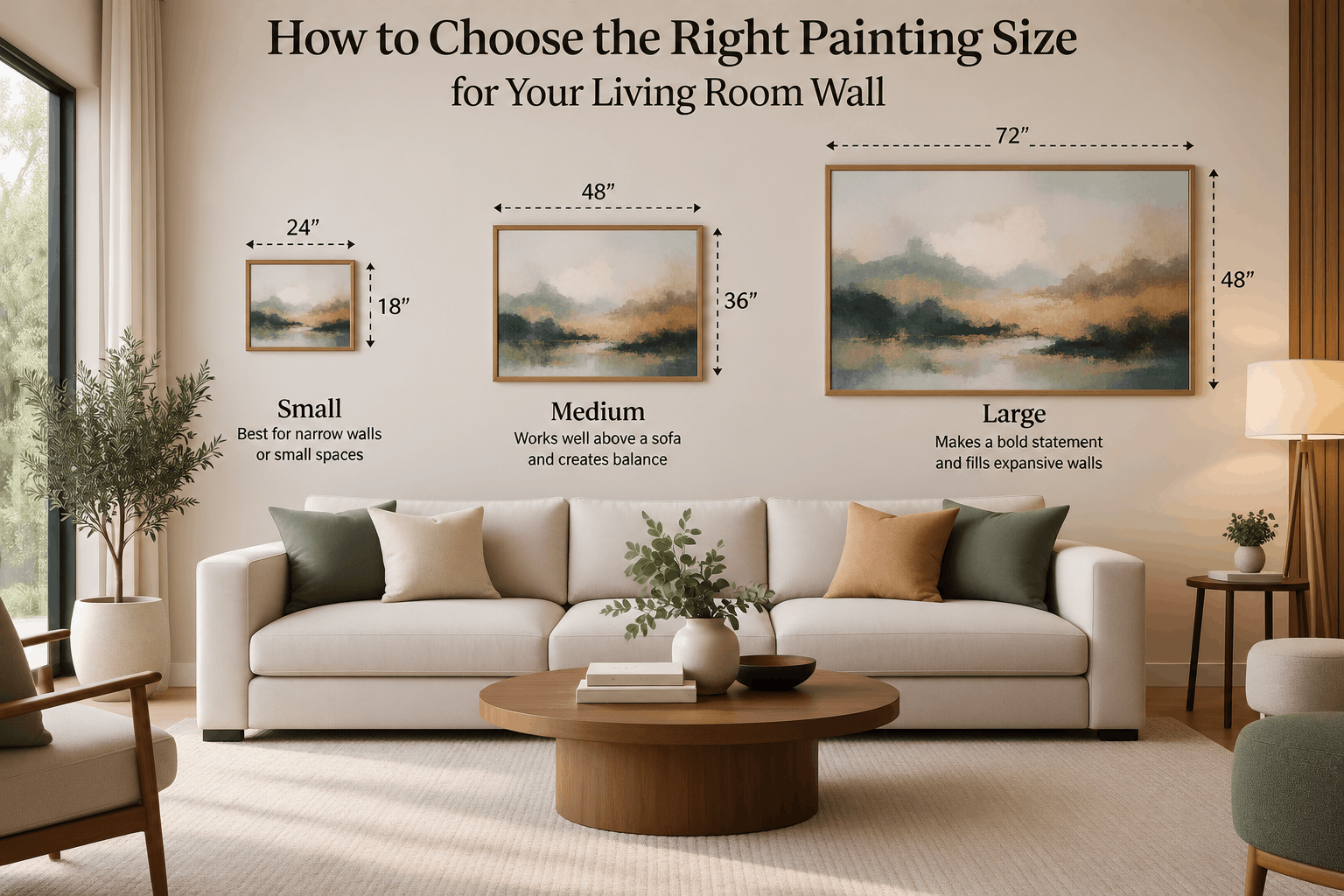
Choosing the right painting for your living room is about more than finding an artwork you love. The size of the painting can determine whether your wall feels balanced, spacious, crowded, or unfinished.
A painting that is too small may look disconnected from the furniture, while an oversized artwork can dominate the entire room. The goal is to find the right combination of scale, proportion, wall space, furniture, and visual balance.
Whether you’re decorating a compact apartment or a spacious living room, this guide will help you understand how to choose the right painting size for your living room wall.
Start With the Width of Your Wall
Before choosing artwork, measure the wall where you plan to hang it. The available wall space is one of the most important factors when determining the appropriate painting size.
For a large empty wall, a large horizontal canvas can create a strong focal point. For a narrow wall, a vertical painting may work better.
As a general rule, avoid choosing artwork that is so small that it gets visually lost on the wall. At the same time, leave enough surrounding space so the artwork doesn’t make the room feel crowded.
Think of the wall as a frame around your artwork. The painting should have enough breathing room to stand out.
Use the Sofa as a Size Guide
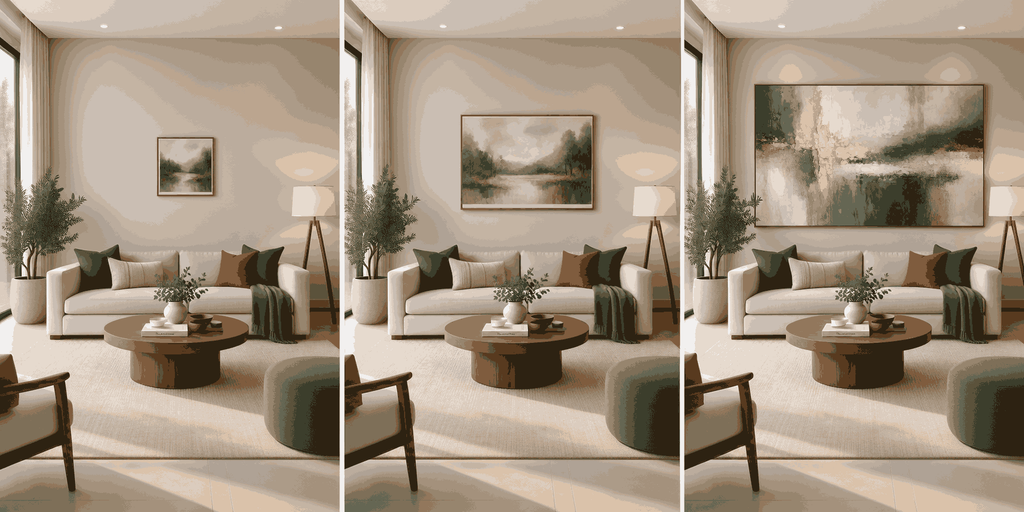
If you’re hanging a painting above a sofa, the sofa itself provides an excellent reference point.
A commonly used interior-design guideline is to choose artwork that is approximately two-thirds to three-quarters the width of the sofa. This creates a visual relationship between the furniture and the artwork without making either element feel disproportionate.
For example, if your sofa is approximately 90 inches wide, artwork around 60–68 inches wide may create a balanced appearance.
This doesn’t mean you must follow the measurement exactly. The style of the room, shape of the artwork, and surrounding décor should also influence your decision.
For more guidance on selecting artwork based on your room’s style, color, and furniture, explore our Paintings for Living Room: Complete Guide.
Choose a Large Painting for a Spacious Wall
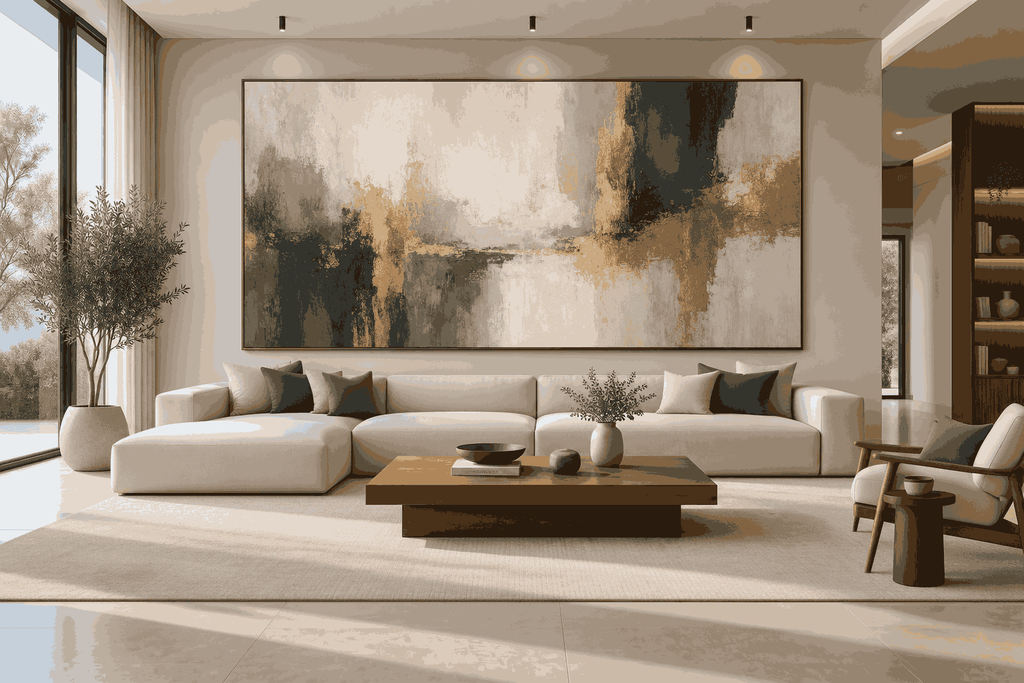
Large living rooms often have expansive walls that can make small artwork appear insignificant.
A large statement painting can solve this problem by creating a strong visual anchor. Oversized abstract paintings, landscapes, botanical artwork, and contemporary canvases can work especially well on large feature walls.
Instead of filling a large wall with numerous unrelated decorative pieces, one substantial painting can create a cleaner and more sophisticated appearance.
Large artwork is particularly effective when the rest of the room uses relatively simple furniture and neutral colors.
Consider Two or Three Medium-Sized Paintings
You don’t always need one large canvas to fill a wall.
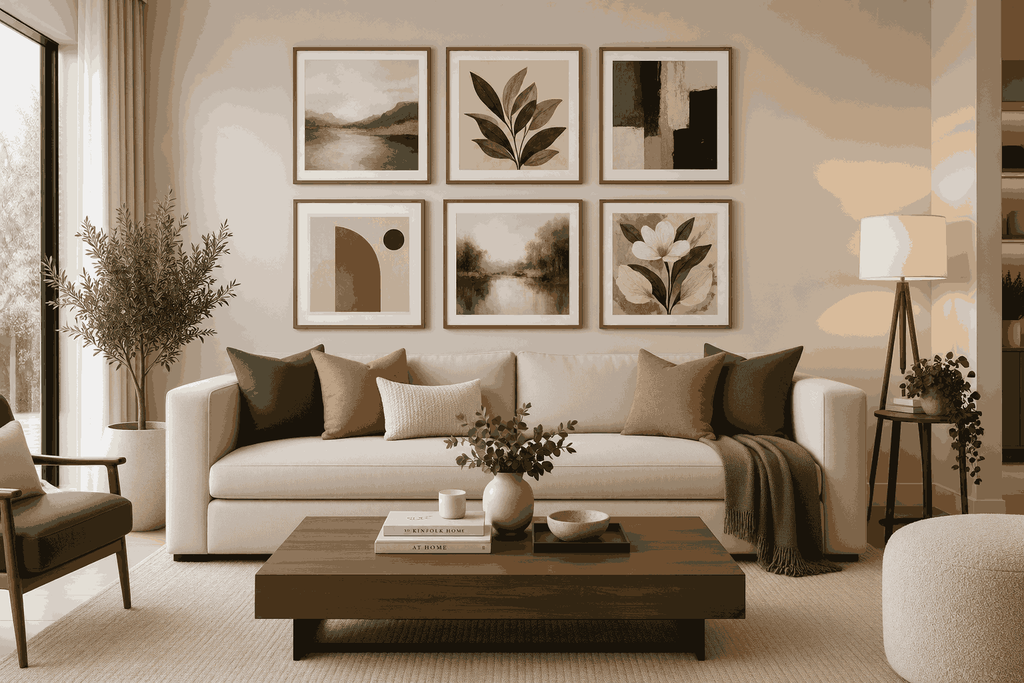
Two or three medium-sized paintings can create an attractive arrangement, especially when the individual artworks share a common color palette, theme, or frame style.
For example, three botanical paintings can be placed side by side above a sofa. Alternatively, two complementary abstract artworks can be positioned with equal spacing between them.
When using multiple paintings, consider the combined width of the entire arrangement, rather than looking at each painting individually.
The group should have a visual relationship with the furniture underneath it.
Use Smaller Paintings for Narrow Walls
Small paintings can be ideal for narrow or overlooked spaces.
Consider using smaller artwork:
- Beside a window
- Above a side table
- Above a console
- Near an entrance
- Between two architectural features
- On a narrow wall beside a doorway
A vertically oriented painting can be especially effective in a narrow area because its proportions naturally complement the wall.
Small artwork can also be grouped together to create a gallery wall instead of displaying one tiny piece by itself.
Think About the Height of the Artwork
Size isn’t only about width and height. Where you position the painting vertically also affects how large it appears.
When hanging artwork above a sofa, leave a comfortable amount of space between the top of the sofa and the bottom of the artwork. Around 6–10 inches can be a useful starting point, depending on the furniture and room proportions.
For artwork displayed without furniture underneath it, positioning the center of the painting around 57–60 inches from the floor is often used as an eye-level guideline.
However, these are starting points rather than strict rules. Ceiling height, furniture dimensions, and the viewing distance should all be considered.
Match the Orientation to the Wall
The shape of your wall should influence the shape of your painting.
Horizontal Paintings
Horizontal artwork works well above:
- Sofas
- TV consoles
- Long cabinets
- Sideboards
- Wide accent walls
Its wider proportions help visually connect the artwork with long pieces of furniture.
Vertical Paintings
Vertical artwork is useful for:
- Narrow walls
- Corners
- Spaces between windows
- Entry areas
- Tall architectural spaces
Square Paintings
Square artwork provides a versatile option and can work particularly well as part of a gallery wall or when displayed above a compact piece of furniture.
Consider Multiple Paintings as One Composition
If you’re creating a gallery wall, don’t calculate the size of each painting independently.
Instead, consider the entire arrangement as one visual composition.
For example, six small framed paintings may collectively occupy a large section of wall. Their combined width and height should feel proportional to the sofa or furniture below them.
Keep the spacing relatively consistent to create a cohesive appearance. A grid arrangement can provide a structured, contemporary look, while an organic arrangement can feel more relaxed.
Match Painting Size With Your Interior Style
The ideal painting size also depends on the overall design style of your living room.
A minimalist interior may benefit from one large artwork with plenty of negative space around it. A more eclectic interior might work better with a collection of smaller paintings.
For contemporary and modern interiors, large abstract artwork can create a dramatic focal point. Browse our Abstract Art collection for inspiration if you’re considering bold shapes, textures, or expressive compositions.
For a home office or professional environment, the same principles of proportion and scale apply. Explore Workplace Art for artwork ideas designed for professional spaces.
You can also maintain a consistent design language throughout your home by coordinating your living room artwork with Bedroom Art Decor and other rooms.
Don’t Forget the Surrounding Décor
Your painting shouldn’t be considered in isolation.
Look at the sofa, rug, curtains, lighting, coffee table, cushions, plants, and other decorative elements surrounding the artwork.
A large painting may need more visual space around it, while a smaller painting can be supported by nearby décor.
Color is also important. If your furniture already contains strong colors and patterns, a simpler painting may create balance. If your room has neutral furniture, a colorful statement artwork can become the focal point.
You can explore complementary pieces through our Living Room Decor collection to create a coordinated overall look.
How to Find the Right Painting Size: A Simple Checklist
Before purchasing your artwork, ask yourself:
1. How wide is the wall?
Measure the available wall space.
2. What furniture will be underneath it?
Use the sofa, console, or cabinet as a scale reference.
3. Is the wall wide or narrow?
Choose horizontal artwork for wider spaces and vertical artwork for narrow areas.
4. Will you use one painting or several?
Think about the combined dimensions of a gallery wall.
5. Does the artwork complement the room?
Consider colors, furniture, décor, and interior style.
6. Does it have enough breathing room?
Avoid overcrowding the wall.
Conclusion
Choosing the right painting size for your living room wall comes down to proportion, balance, and the relationship between artwork and furniture.
For a painting above a sofa, using roughly two-thirds to three-quarters of the sofa’s width can provide a useful starting point. Large walls may benefit from oversized artwork, while narrow spaces often work better with vertical or smaller pieces.
If you’re unsure, use painter’s tape to mark the approximate dimensions of the artwork on your wall. Step back and view the space from different angles before making your final decision.
Once you’ve determined the right size, the next step is choosing the artwork’s style, color, subject, and orientation. Our Paintings for Living Room: Complete Guide to Choosing the Right Wall Art provides a broader guide to help you make that decision.
The right painting doesn’t simply fill an empty wall; it creates proportion, personality, and a visual focal point that can bring the entire living room together.
For more inspiration, explore our social media platform Pinterest and our Instagram page.
One Reply to