

Choosing a beautiful painting is only half the process of decorating your living room. Where you hang the artwork can dramatically change how the entire space looks and feels. The right placement can create a focal point, make furniture feel more connected, and bring balance to an otherwise empty wall.
Whether you have a large abstract canvas, a traditional painting, or a collection of smaller artworks, understanding the basics of living room painting placement, height, and arrangement can help you create a polished interior.
In this guide, you’ll learn where to hang paintings in a living room, how high artwork should be placed, how to position paintings above a sofa, and how to arrange multiple pieces for a balanced look.
Hang a Painting Above the Sofa
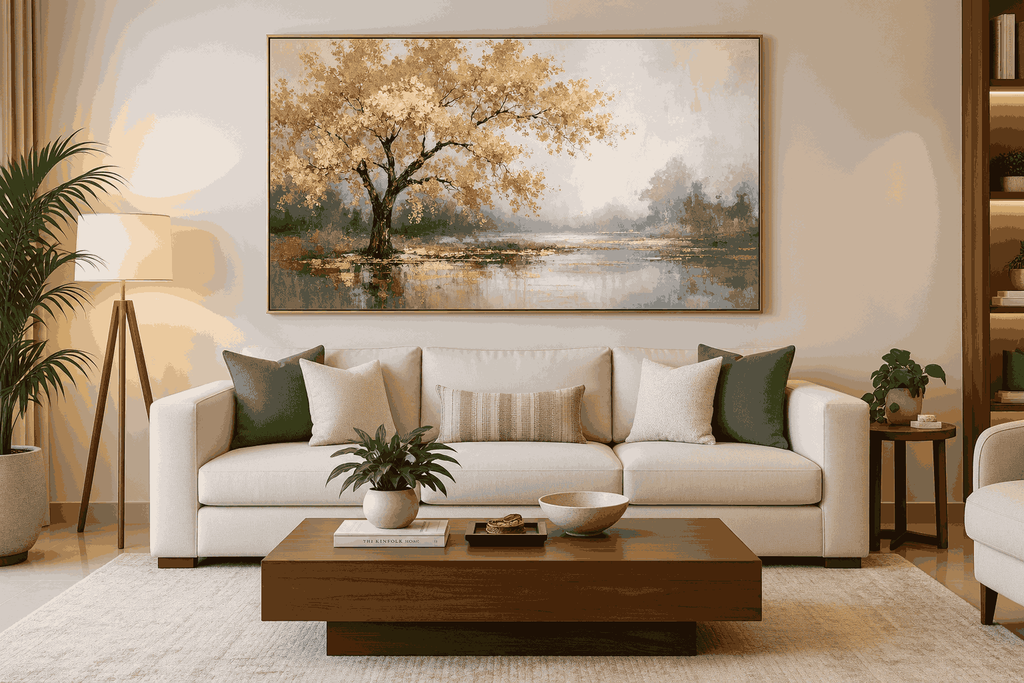
The wall above the sofa is one of the most popular locations for living room artwork. Because the sofa is usually one of the largest pieces of furniture in the room, placing a painting above it creates a natural visual connection.
For the best result, choose artwork that is approximately two-thirds to three-quarters the width of the sofa. A single large canvas can work particularly well, while several smaller paintings can be arranged as a gallery wall.
Leave some space between the top of the sofa and the bottom of the artwork. As a general starting point, around 6–10 inches of space often works well, although the exact distance depends on the furniture and room proportions.
Follow the Right Artwork Height
One of the most common mistakes when hanging paintings is positioning them too high. Artwork should generally be placed at a comfortable viewing height rather than close to the ceiling.
A useful guideline is to position the center of the artwork around eye level, often approximately 57–60 inches from the floor to the center of the piece. However, furniture should also influence the final position.
When hanging a painting above a sofa, console table, or cabinet, think about the relationship between the artwork and the furniture underneath it. The painting should feel connected to the furniture rather than floating independently on the wall.
Before making holes in the wall, use painter’s tape to mark the approximate dimensions. Step back and view the arrangement from different parts of the room.
Create a Focal Point With a Large Painting
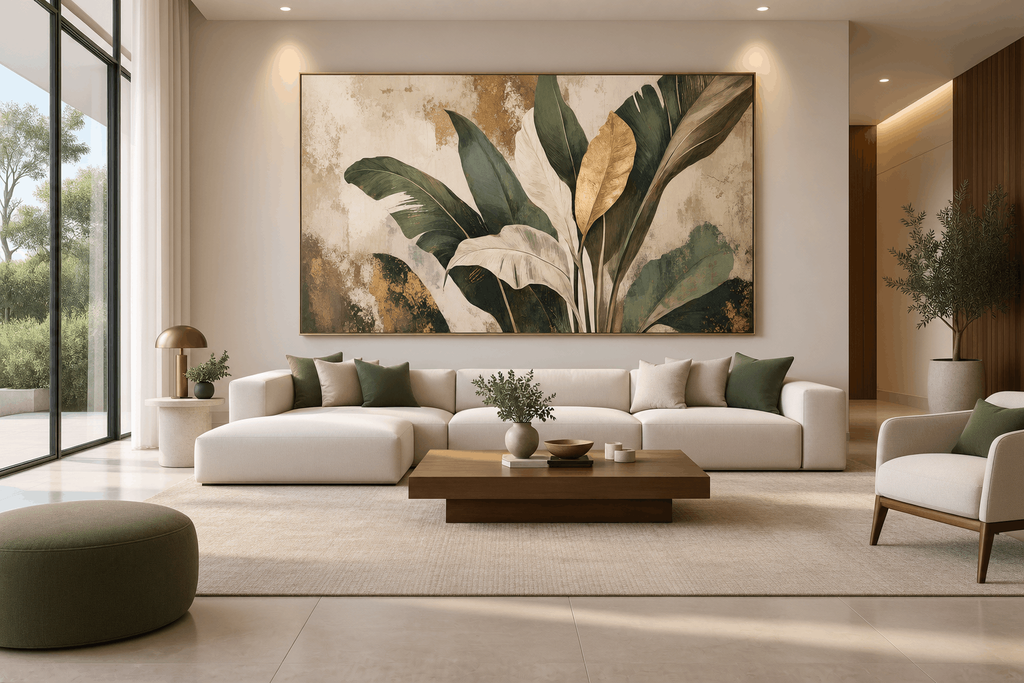
A large empty wall can sometimes make a living room feel unfinished. Instead of filling it with numerous small decorations, consider using one large statement painting.
A large abstract, landscape, botanical, or contemporary artwork can become the room’s focal point.
This works especially well when the rest of the room has relatively simple furniture and neutral colors. The artwork can introduce color, texture, and personality without overwhelming the space.
If you’re still deciding what type of artwork would work best in your room, explore our guide to paintings for your living room for ideas on choosing artwork based on size, style, color, and interior design.
Use a Gallery Wall for Multiple Paintings
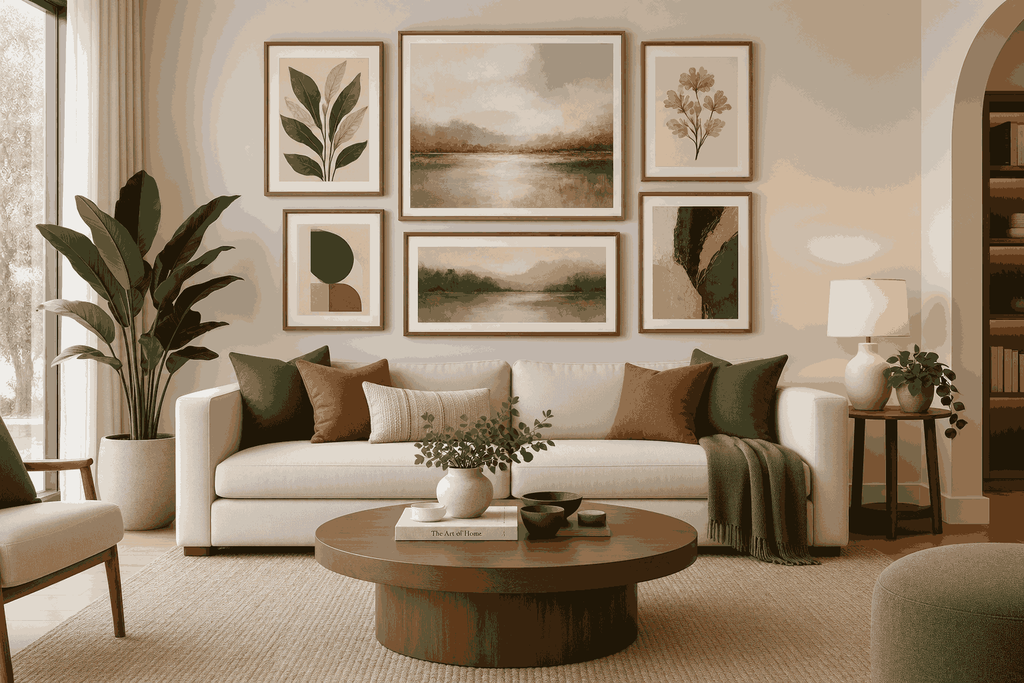
You don’t have to limit yourself to one painting. A collection of smaller artworks can create an attractive gallery wall.
Gallery walls work particularly well on large walls, above sofas, stairway-adjacent walls, or areas where a single painting may look too small.
There are several ways to arrange a gallery wall:
- Grid arrangement: Align paintings in rows and columns for a clean appearance.
- Symmetrical arrangement: Use balanced artwork on both sides of a central piece.
- Organic arrangement: Mix different sizes and orientations for a more relaxed look.
- Statement-center arrangement: Place a larger painting in the center and smaller artworks around it.
Keep the spacing between individual pieces relatively consistent. Before hanging anything permanently, arrange the artwork on the floor or create paper templates on the wall.
Consider the Wall Behind the TV
The TV wall can be a challenging area for artwork because the television naturally becomes the room’s focal point. However, you can still incorporate art around the TV.
Instead of placing a painting directly behind the television, consider using smaller artworks on either side or creating a balanced arrangement around the screen.
Choose artwork that complements rather than competes with the TV. Neutral abstract pieces, minimalist artwork, or simple framed prints can work particularly well.
Avoid overcrowding the wall. The goal is to make the entertainment area feel integrated into the overall interior design.
Don’t Ignore Empty Corners and Smaller Walls
Not every painting needs to occupy the largest wall in your living room.
Smaller artworks can work beautifully on narrow walls, beside windows, near doorways, or above small cabinets and side tables.
If you have an awkward or unused wall, a vertically oriented painting can help fill the space without making it feel crowded.
You can also coordinate your living room artwork with other areas of your home. For example, artwork themes and colors can transition from the living room into Bedroom Art Decor, creating a more cohesive visual style throughout the home.
Match Artwork Placement With Your Interior Style
The position of a painting matters, but so does its relationship with the overall interior.
For a minimalist living room, one carefully positioned statement artwork may be more effective than a crowded gallery wall.
For a contemporary interior, consider abstract or geometric artwork.
For a traditional room, landscapes, portraits, or classic artwork can complement existing furniture.
If you’re decorating a home office or professional workspace as well, you can extend the same principles of scale, spacing, and visual balance to Workplace Art.
For modern interiors, Abstract Art can be particularly effective because its colors, shapes, and textures can become a strong visual feature without relying on a literal subject.
Balance the Painting With the Rest of the Room
A painting should not look like an isolated object on the wall. Consider how its colors, proportions, and visual weight relate to the sofa, curtains, rugs, cushions, lighting, and other decorative elements.
For example, if your living room already contains several bold colors, a neutral artwork may create balance. On the other hand, a neutral room can benefit from artwork with stronger colors or expressive patterns.
You can also coordinate artwork with other elements available in your Living Room Decor collection to create a more cohesive look.
Conclusion
Knowing where to hang paintings in a living room can make a significant difference to the overall appearance of your home. Start by identifying the room’s natural focal point, then consider the size of the wall, the furniture underneath it, viewing height, and the artwork’s relationship with the surrounding décor.
Whether you choose one large statement canvas, a carefully arranged gallery wall, or several smaller artworks throughout the room, the key is to maintain proportion, balance, and visual connection.
Most importantly, don’t be afraid to experiment. Use temporary paper templates or painter’s tape to test different positions before committing to a final arrangement.
When you’re ready to choose the artwork itself, refer to our ideas for decorating your living room walls for a more detailed guide to selecting the right style, size, color, and artwork for your space. For more ideas, you can visit our social media platforms, Pinterest and Instagram.
One Reply to