
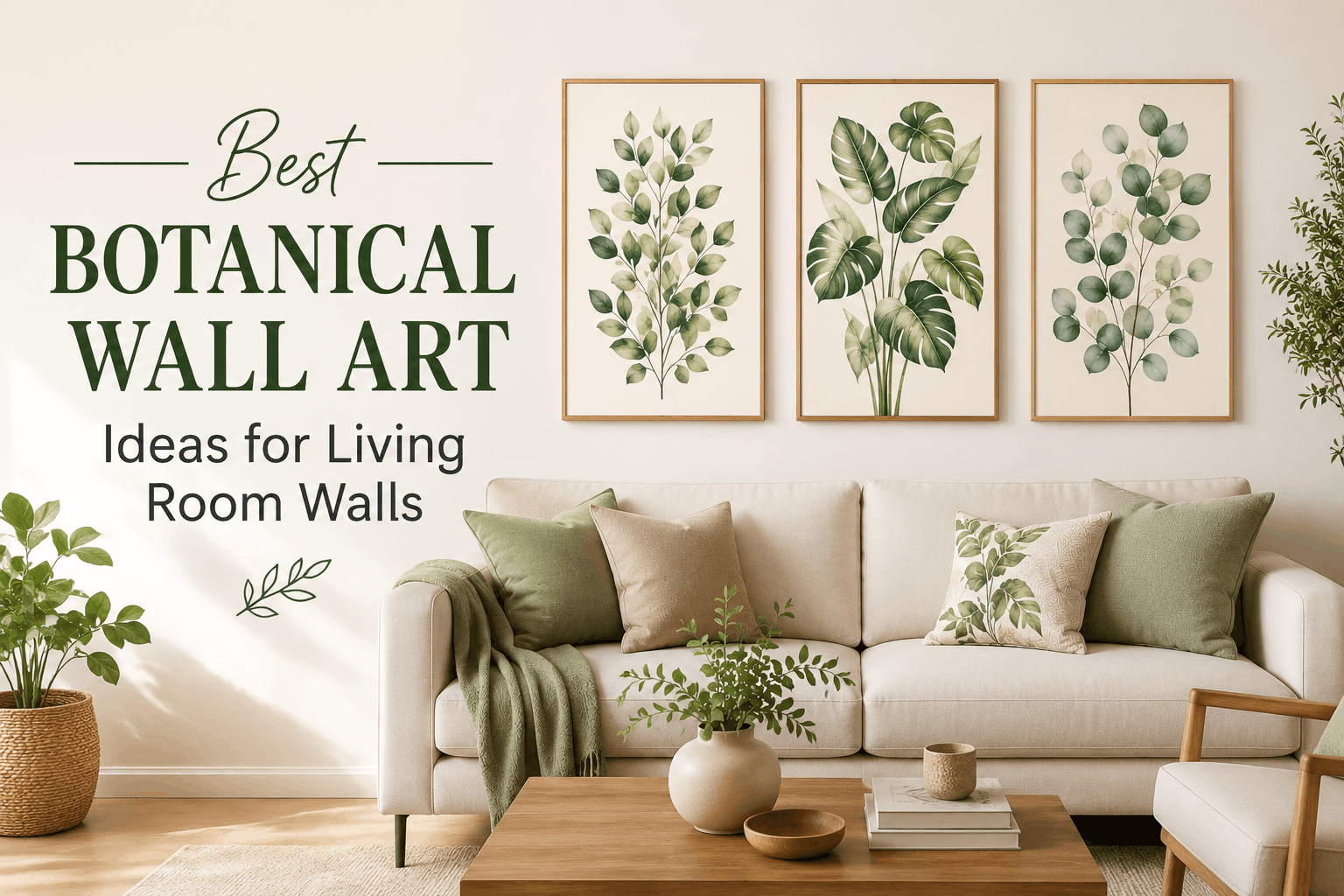
Botanical wall art is an easy way to bring the beauty of nature into your living room while adding color, character, and visual interest to empty walls. From simple botanical prints to floral artwork sets, the right piece can complement your furniture and make the entire room feel more finished.
However, choosing wall art is not only about finding a beautiful print. The size of the wall, sofa, room style, existing colors, lighting, and arrangement all influence whether the artwork will look balanced.
In this guide, we’ll explore some of the best botanical wall art ideas for living room walls and explain how to choose the right artwork for your space.
What Is Botanical Wall Art?
Botanical wall art is artwork inspired by plants, flowers, leaves, trees, and other natural elements. It can range from detailed botanical illustrations and floral prints to modern abstract designs inspired by nature.
Botanical artwork works particularly well in living rooms because natural patterns can add visual interest without making the space feel too busy. Depending on the design, botanical wall decor can create a modern, minimalist, traditional, tropical, boho, or relaxed atmosphere.
The important thing is to choose artwork that works with the overall design of your living room, rather than treating the wall as a separate part of the room.
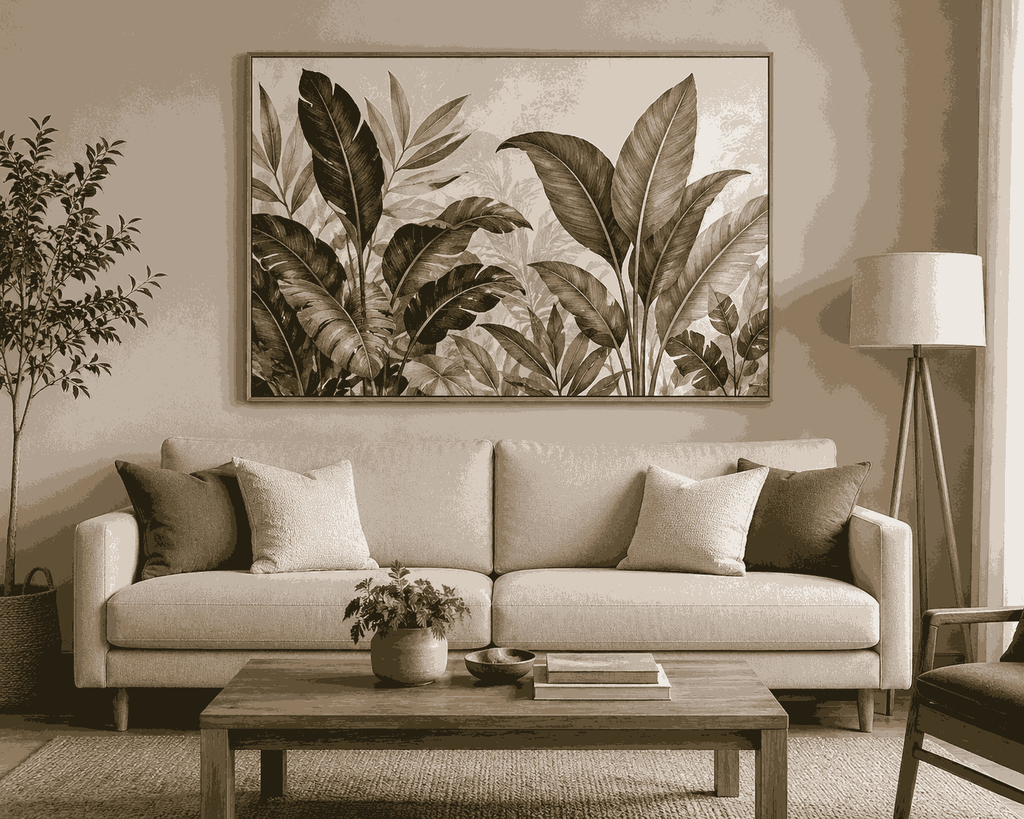
1. Create a Focal Point With Large Botanical Wall Art
If you have a large empty wall, one large botanical print can create a strong focal point.
A large artwork works particularly well above a sofa, console table, or large sideboard. Instead of filling the wall with many small decorative pieces, one substantial botanical artwork can give the room a cleaner and more sophisticated appearance.
Look at the furniture underneath the artwork before choosing its size. A very small print above a large sofa can look disconnected, while an appropriately sized artwork can visually connect the wall with the furniture.
Best for: Large living rooms, spacious walls, contemporary interiors, and minimalist spaces.
2. Try a Botanical Wall Art Set of 3
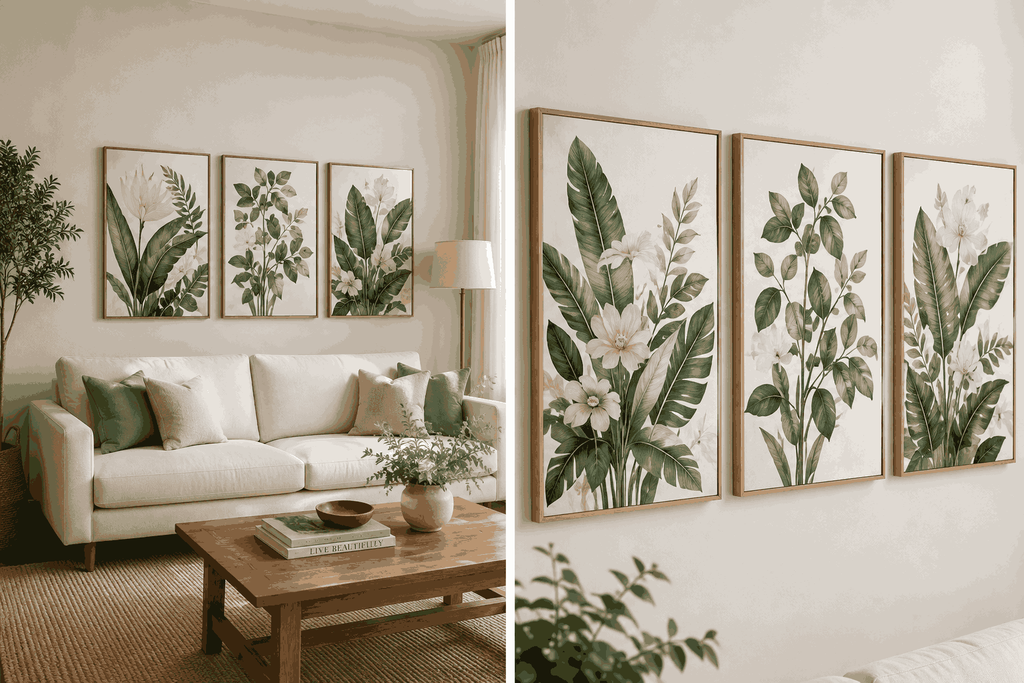
A botanical wall art set of 3 is a popular option when you want to create a wider decorative arrangement without designing a complete gallery wall.
Three coordinated floral or botanical prints can be arranged horizontally above a sofa or sideboard. They can also be arranged vertically when the available wall space is taller than it is wide.
A set of three works particularly well when the artwork shares a common color palette, subject, or visual style. The individual prints do not necessarily need to be identical, but they should feel connected as a collection.
For example, three botanical prints using similar green, beige, cream, and earthy tones can create a cohesive natural look.
Best for: Sofa walls, medium-to-large walls, modern homes, and coordinated interiors.
3. Add Floral and Botanical Wall Art for a Softer Look
If you want your living room to feel warm and inviting, consider combining floral elements with botanical artwork.
Floral and botanical wall art can introduce soft shapes, natural colors, and organic patterns to an otherwise simple interior. This style works especially well when your furniture has neutral colors such as white, beige, cream, grey, or light brown.
You can choose artwork featuring flowers, leaves, stems, branches, or a combination of different botanical elements.
For a balanced appearance, look at the colors already present in your room. If your sofa is neutral, botanical artwork can provide a subtle accent color without requiring you to change the rest of your decor.
4. Use Minimalist Botanical Prints in Modern Living Rooms
Modern living rooms often benefit from artwork that is visually simple.
Minimalist botanical prints can feature line drawings, simple leaves, delicate stems, or limited color palettes. They add a natural element while maintaining the clean appearance associated with modern interiors.
If your room already contains several patterns, a simple botanical design may be a better choice than highly detailed floral artwork.
For a particularly clean look, consider black-and-white botanical illustrations or artwork using muted neutral colors.
Best for: Modern, minimalist, Scandinavian, and contemporary interiors.
5. Choose Botanical Wall Art for a Neutral Living Room
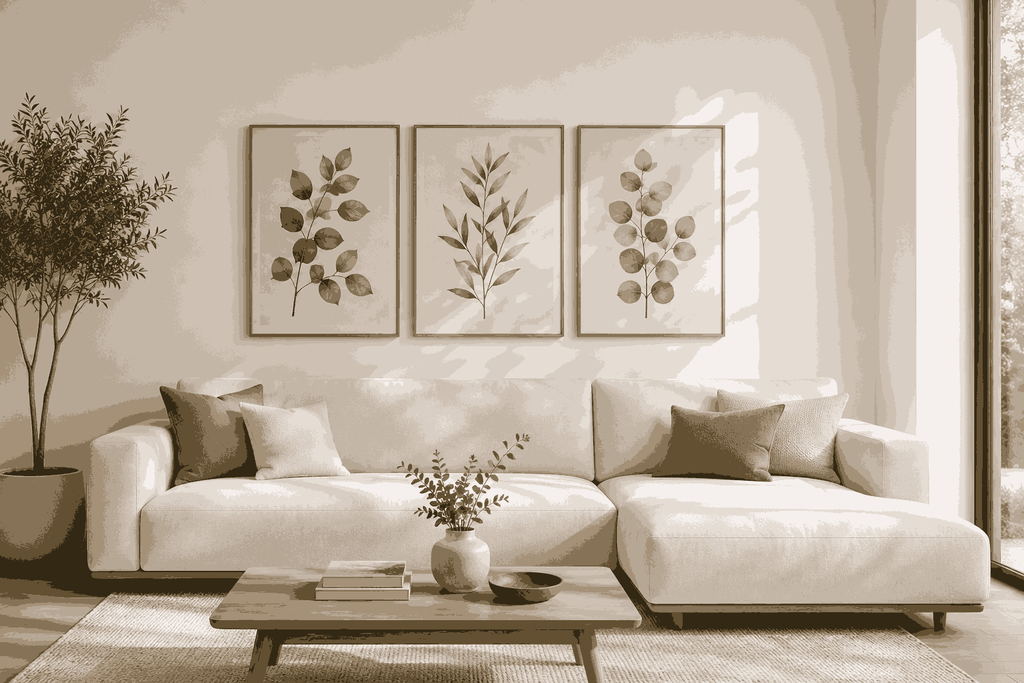
Neutral interiors can sometimes feel visually flat when the walls are completely empty. Botanical artwork can introduce color and texture without changing the overall neutral character of the room.
For example, green botanical prints can complement beige sofas, wooden furniture, cream walls, and natural fabrics.
You can also choose botanical artwork with earthy colors such as:
- Olive green
- Sage green
- Beige
- Brown
- Cream
- Terracotta
- Muted blue
The goal is not necessarily to introduce a strong contrasting color. Instead, choose shades that connect naturally with the existing palette.
6. Create a Botanical Gallery Wall
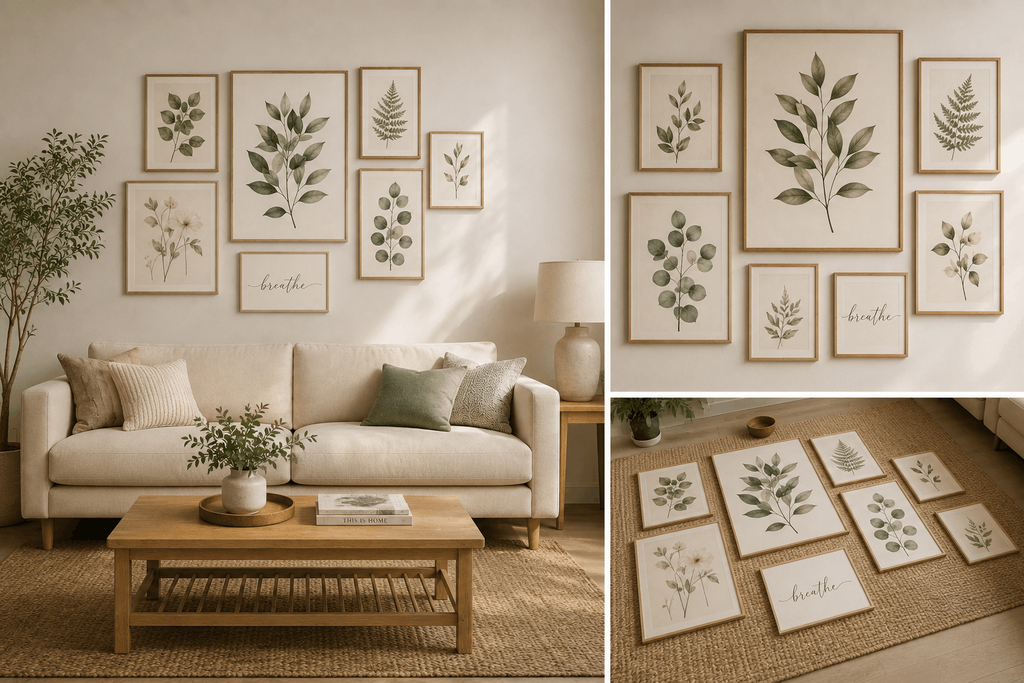
If you enjoy collecting artwork, a botanical gallery wall can turn an empty living-room wall into a personalized display.
You can combine different botanical prints with:
- Floral illustrations
- Leaf prints
- Nature photography
- Small decorative artwork
- Botanical sketches
- Simple typography
The key is to establish a visual connection between the pieces. A consistent frame style, similar color palette, or common botanical theme can help the collection feel intentional.
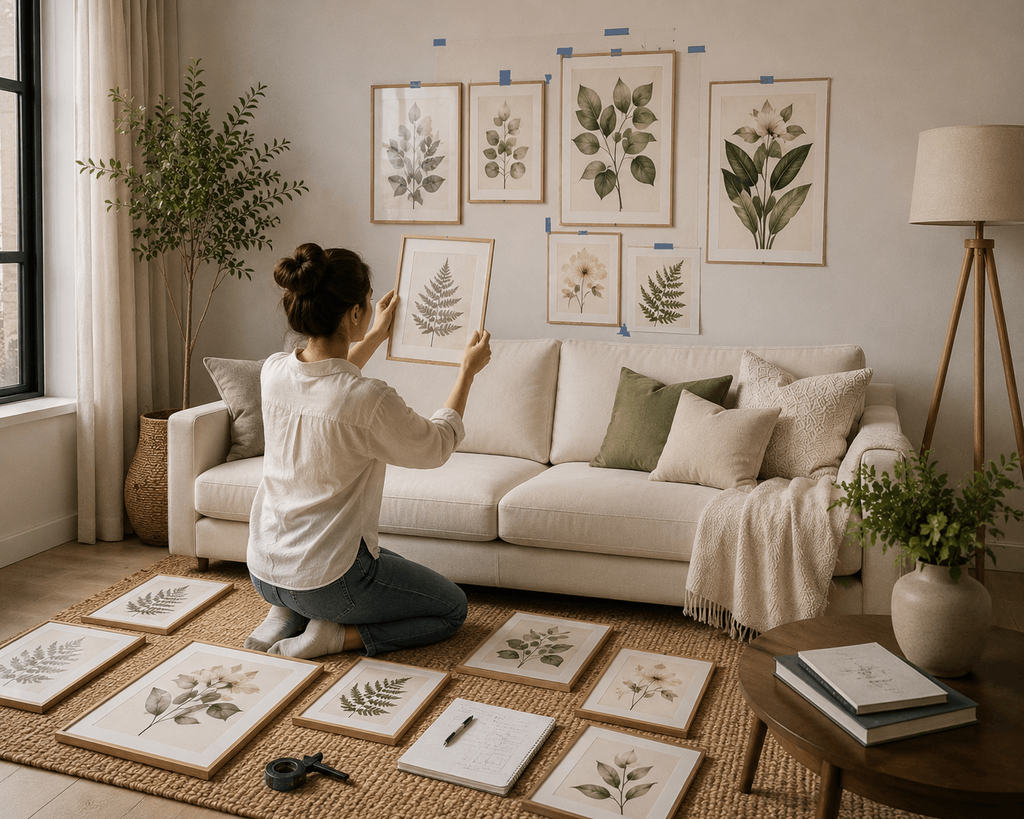
Before putting nails into the wall, arrange the artwork on the floor or create a digital layout. This allows you to experiment with spacing and positioning before making the final arrangement.
7. Match Botanical Artwork With Your Living Room Style
The best botanical wall art is not necessarily the most detailed or colorful option. It is the artwork that works with your existing interior style.
Modern Living Room
Choose clean botanical illustrations, abstract leaves, or simple floral designs with a controlled color palette.
Boho Living Room
Look for organic botanical patterns, earthy colors, tropical leaves, and natural-looking artwork.
Scandinavian Living Room
Simple botanical illustrations with neutral or muted colors can complement light wood furniture and uncluttered interiors.
Traditional Living Room
Detailed floral illustrations, vintage botanical prints, and classic frames can work particularly well.
Contemporary Living Room
Try oversized botanical artwork, abstract floral designs, or coordinated sets with stronger visual contrast.
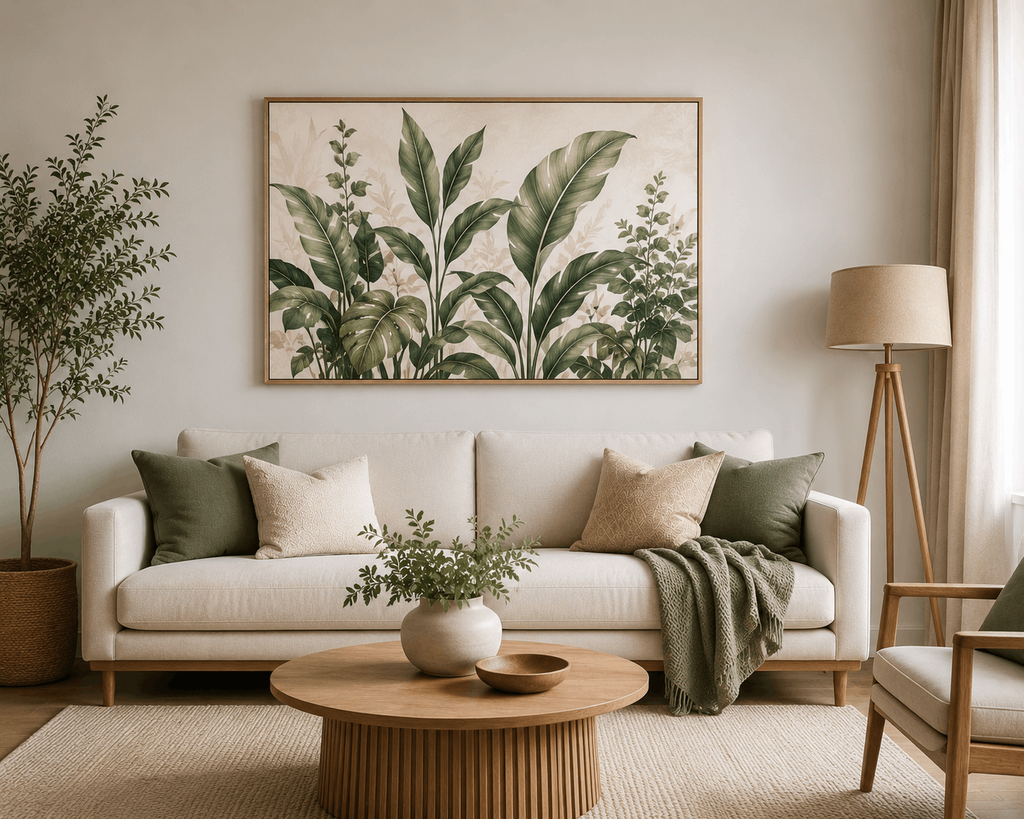
8. Consider the Wall Behind Your Sofa
The wall behind the sofa is one of the most common locations for living-room artwork.
Before choosing a print, consider the sofa’s width, height, and color. The artwork should feel connected to the furniture rather than appearing as a small object floating above it.
A horizontal set of botanical prints can work well when you have a wide sofa. A vertically oriented print may be more suitable for a narrow wall or a taller section of available space.
Also consider other objects around the sofa, including lamps, shelves, plants, mirrors, and side tables. Too many competing elements can make the wall feel crowded.
9. Use Botanical Artwork to Introduce Natural Colors
One of the biggest advantages of botanical wall decor is its ability to introduce natural colors into an interior.
Green is an obvious choice, but botanical artwork does not have to be green. Floral and nature-inspired designs can include:
- Warm beige
- Deep blue
- Soft pink
- Terracotta
- Mustard
- Brown
- Cream
- Olive
- Sage
When selecting artwork, look at your existing room palette and choose one or two colors that can connect the artwork with your cushions, rug, curtains, furniture, or other accessories.
This creates a more coordinated appearance than choosing artwork based only on the colors you personally like.
10. Think About Artwork Size Before Buying
One of the most common mistakes when decorating a wall is choosing artwork without considering the available space.
Before purchasing botanical wall art, measure:
- The width of the wall.
- The width of the furniture below it.
- The available height.
- The distance between the furniture and ceiling.
- The space occupied by nearby objects.
These measurements help you decide whether you need one large print, two pieces, three coordinated prints, or a larger gallery arrangement.
If you are unsure, create a simple paper template using the approximate dimensions of the artwork and place it on the wall. This gives you a better idea of how the finished arrangement will look.
Common Botanical Wall Art Mistakes to Avoid
Choosing Artwork That Is Too Small
A small print can disappear visually on a large wall. Consider the surrounding furniture and available wall space before choosing the artwork size.
Ignoring Your Existing Color Palette
Beautiful artwork can still look disconnected if its colors clash with the rest of the room.
Mixing Too Many Styles
Combining several unrelated botanical styles can make a gallery wall feel random. Try to maintain a common theme, color palette, or framing style.
Hanging Everything Too High
Artwork that is positioned too far above the furniture can make the arrangement feel disconnected. Always consider the relationship between the artwork and the furniture underneath it.
Filling Every Empty Space
Not every empty section of a wall needs artwork. Leaving some negative space can make your room feel more balanced and visually comfortable.
How We Choose Botanical Wall Art for Different Living Rooms
When selecting botanical and floral wall art, we recommend looking at the room as a whole rather than choosing artwork in isolation.
Our basic approach is:
First, look at the wall.
Consider its size, shape, and available space.
Next, look at the furniture.
The sofa, console table, sideboard, and other major furniture pieces help determine the appropriate artwork scale.
Then, consider the colors.
Identify the main colors already present in the room and choose artwork that complements them.
After that, choose the style.
A minimalist room may need simple botanical artwork, while a traditional or boho interior may support more detailed floral designs.
Finally, decide on the arrangement.
Choose between a single statement piece, a pair, a set of three, or a gallery wall depending on the space.
This approach makes choosing wall art more practical and helps ensure that the final artwork feels like part of the room rather than an afterthought. More explore you can visit our Pinterest profile.
Frequently Asked Questions
What botanical wall art looks best above a sofa?
The best option depends on the sofa size, wall dimensions, and interior style. A large botanical print or coordinated set of three can work particularly well on a wide sofa wall.
Is a set of 3 botanical prints good for a living room?
Yes. A coordinated set of three can create a balanced gallery-style arrangement while making a larger wall feel more complete.
Should botanical wall art match the sofa?
It does not need to match exactly. Instead, look for complementary colors and visual styles that work with the sofa and other elements in the room.
What botanical wall art is best for a small living room?
For smaller rooms, consider medium-sized prints, simple botanical illustrations, or a carefully arranged pair of prints. Avoid overcrowding the wall with too many pieces.
Can botanical wall art work with modern interiors?
Absolutely. Minimal botanical illustrations, abstract floral artwork, and clean three-piece sets can work particularly well with modern and contemporary interiors.
Conclusion
The best botanical wall art ideas for living room walls are not simply about choosing the prettiest print. The right artwork should work with the room’s size, furniture, colors, lighting, and overall design style.
Whether you choose a large botanical statement piece, a botanical wall art set of 3, minimalist floral prints, or a complete botanical gallery wall, start by considering the space you are decorating.
Measure the wall, look at the furniture, identify your existing colors, and then choose artwork that complements the room. With the right combination of size, style, color, and arrangement, botanical wall art can turn an empty living-room wall into a natural and visually balanced focal point.
One Reply to