
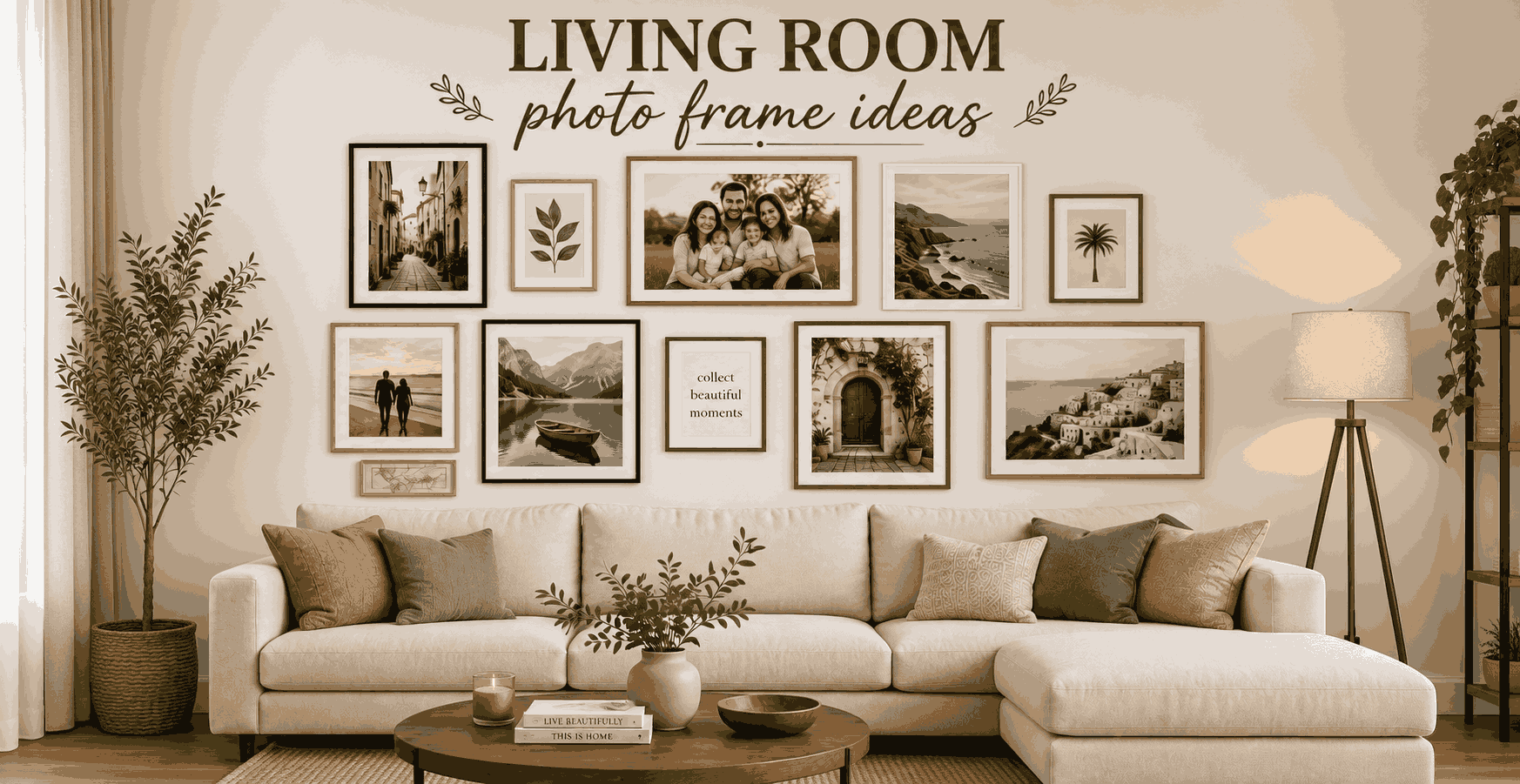
Your living room is often the heart of your home, so the walls should feel just as personal and inviting as the rest of the space. One of the easiest ways to add personality to an empty wall is by using photographs in beautiful frames.
Whether you want to display family memories, travel photographs, wedding pictures, artwork, or a combination of different images, the right living room photo frame ideas can completely change the look of your space.
You don’t need a large collection of expensive décor to create an attractive photo wall. A few well-chosen frames, the right arrangement, and some attention to spacing can turn a simple wall into a beautiful focal point.
In this guide, we’ll explore 15+ photo frame ideas for living rooms, along with practical tips to help you choose frames, arrange photographs, and create a display that works with your interior style.
Why Use Photo Frames in Your Living Room?
An empty living-room wall can sometimes feel unfinished. Photo frames provide a simple way to add colour, personality, and visual interest without changing the entire room.
Photos also make your décor more meaningful because they represent real memories and experiences.
You can use framed photographs to:
- Create a focal point above the sofa
- Fill a large empty wall
- Display family memories
- Showcase travel photographs
- Decorate a console wall
- Add personality to a minimalist room
- Create a gallery wall
- Combine photographs with artwork
The key is to choose an arrangement that complements your wall size and the furniture around it.
Create a Gallery Wall Above the Sofa
The wall above the sofa is one of the most popular places for photo frames.
Instead of hanging one small frame, create a collection of photographs that works as one large visual display.
You can use matching frames for a clean appearance or mix different sizes for a more creative look.
For a balanced arrangement, make sure the complete frame group relates visually to the sofa’s width.
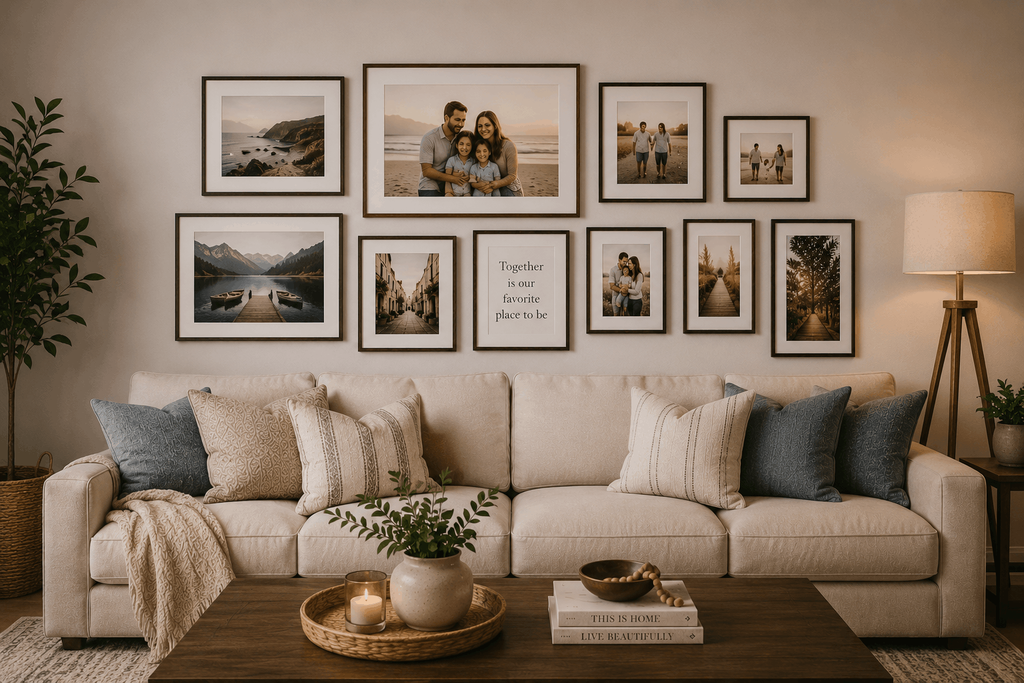
Use a Classic Grid Layout
If you prefer a clean and organised appearance, a grid layout is a great option.
Use six, nine, or twelve frames of the same size and arrange them in straight rows and columns.
A grid works particularly well with:
- Family portraits
- Black-and-white photographs
- Wedding photographs
- Similar travel images
Keeping the frames and photographs visually consistent makes the wall look sophisticated and intentional.
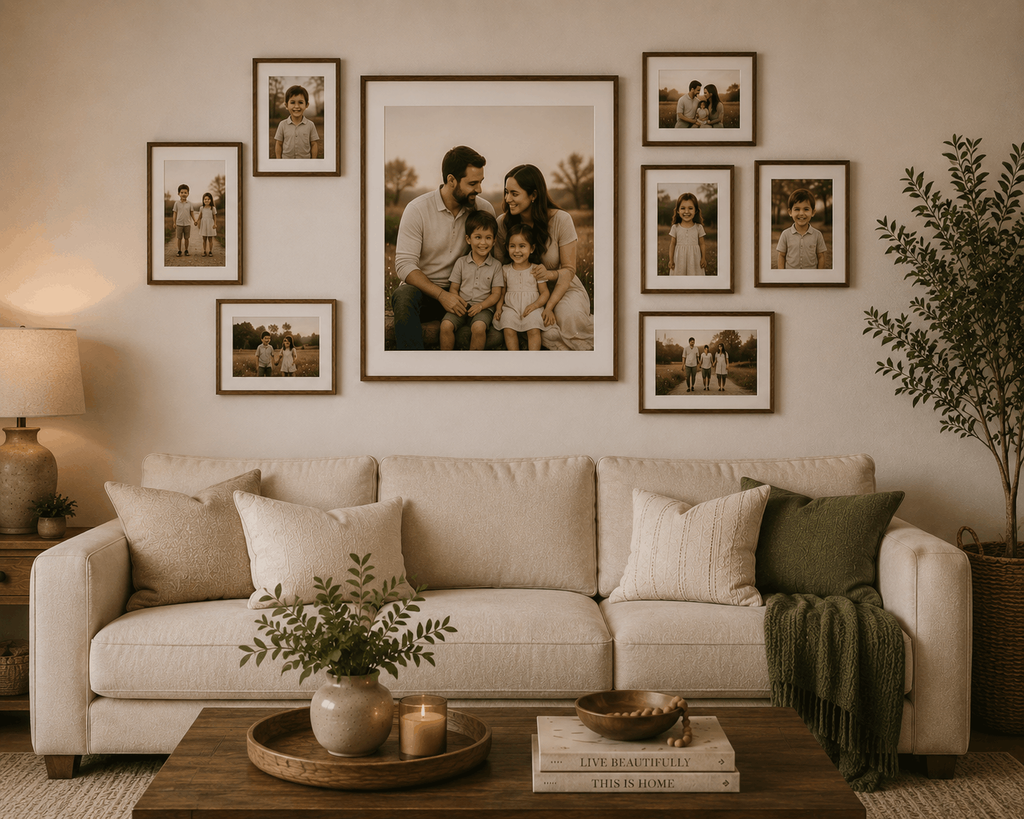
Mix Different Frame Sizes
You don’t have to use frames of the same size.
A mixed-size arrangement can make your living room feel more relaxed and creative.
For example, start with one large photograph as the main focal point and surround it with smaller frames.
This works especially well on larger walls where a uniform arrangement might look too rigid.
Choose Black Frames for a Modern Look
Black photo frames can create a strong contrast against a white, beige, cream, or light-grey wall.
They are particularly effective in modern and minimalist living rooms.
For a sophisticated appearance, consider using black-and-white photographs inside the frames.
You can also mix different black frame shapes and sizes while keeping the colour consistent.
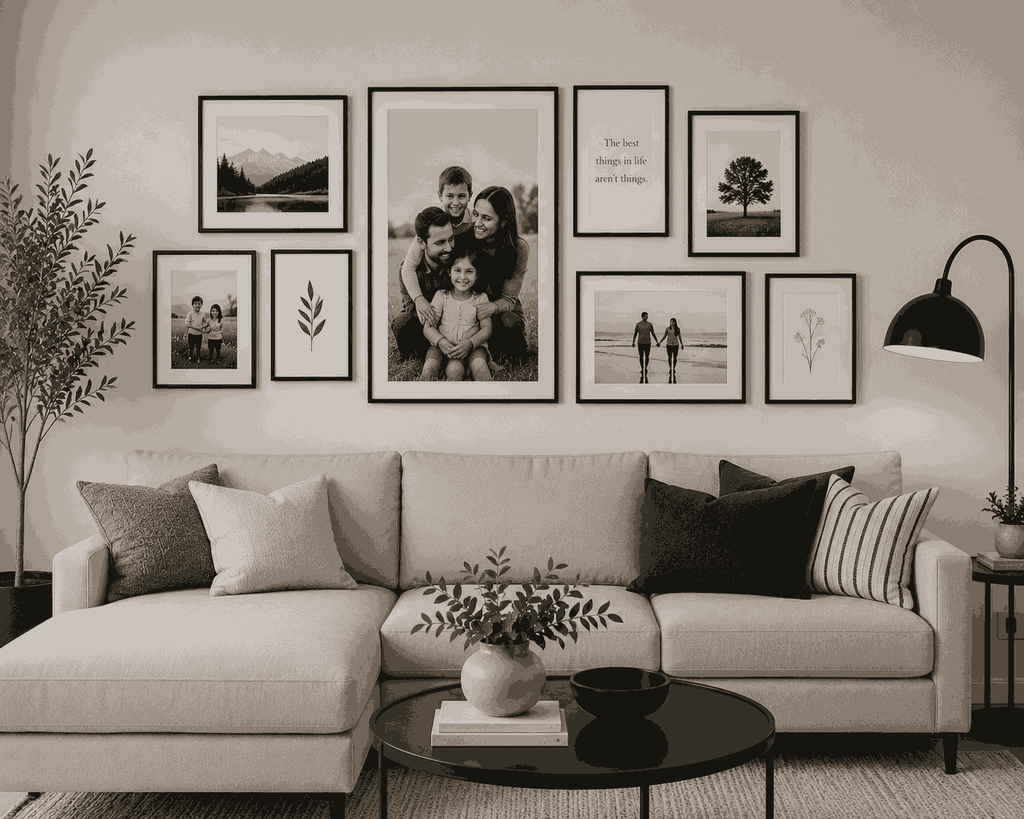
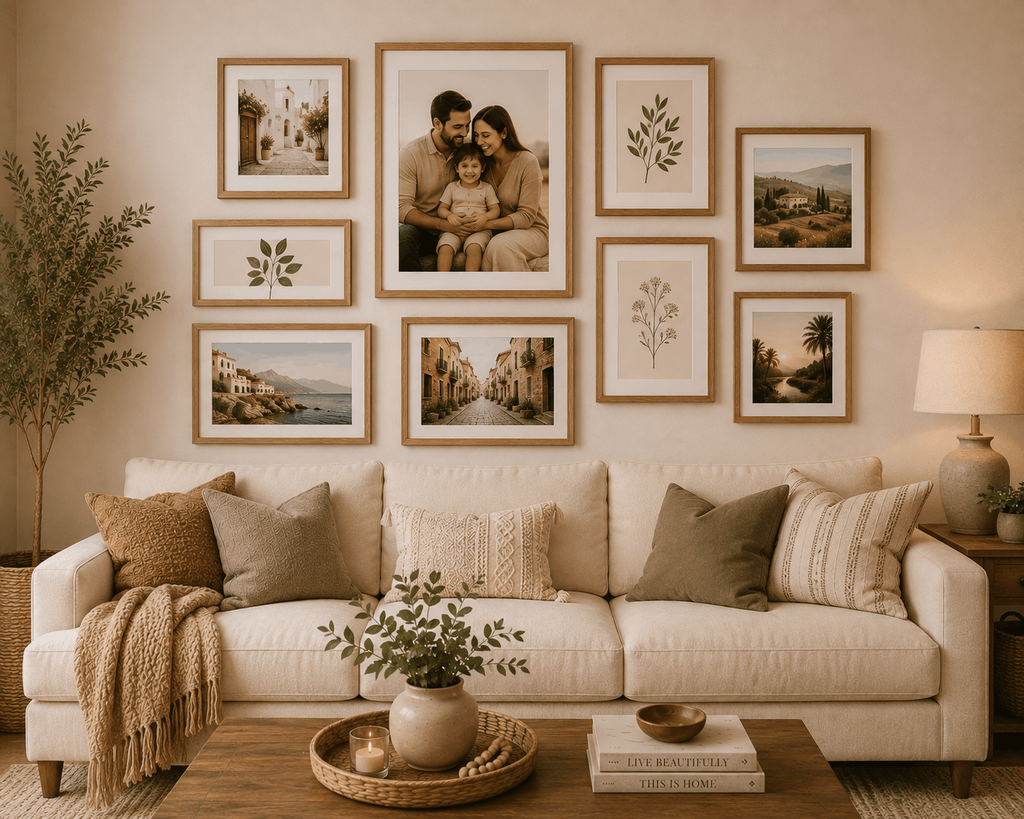
Add Warmth With Wooden Frames
Wooden frames are ideal if you want your living room to feel warm and natural.
They work beautifully with:
- Beige furniture
- Natural wood furniture
- Plants
- Neutral walls
- Earthy décor
You can use family photographs, landscapes, travel images, or botanical prints inside wooden frames.
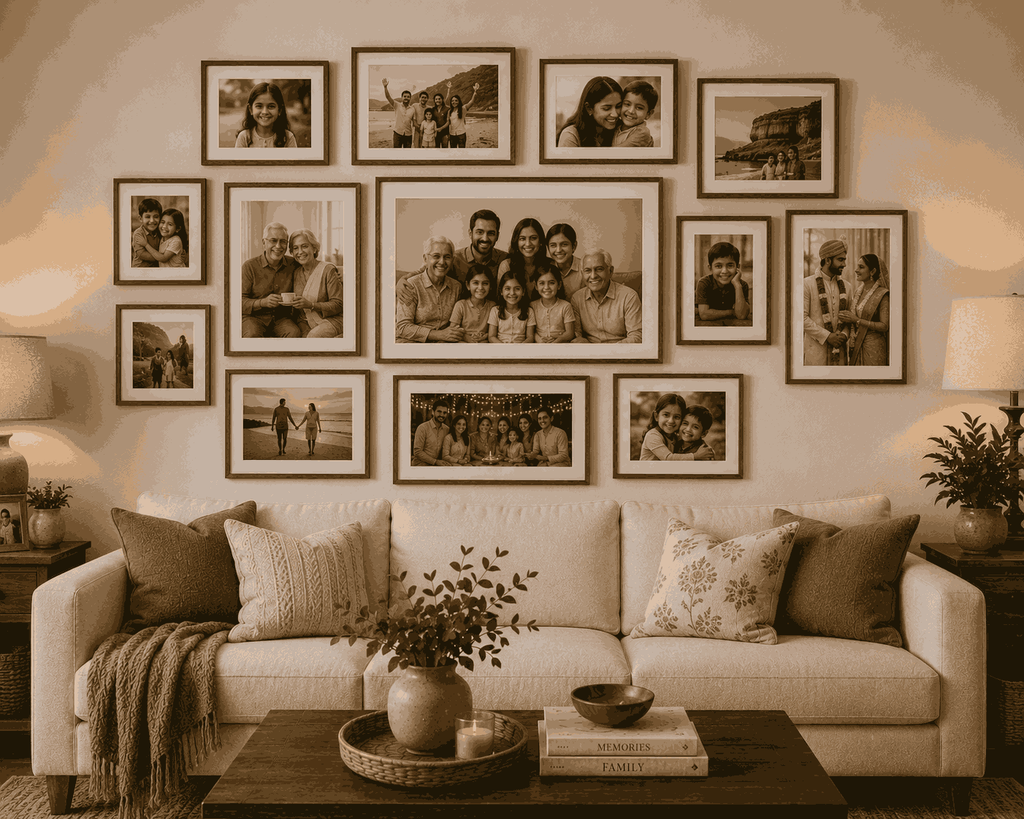
Display Family Memories
A family photo wall can make your living room feel much more personal.
Instead of using only formal portraits, combine different types of photographs.
For example, include:
- Family celebrations
- Birthdays
- Vacations
- Candid moments
- Childhood photographs
- Special occasions
Using matching frames can help photographs from different periods feel like part of one collection.
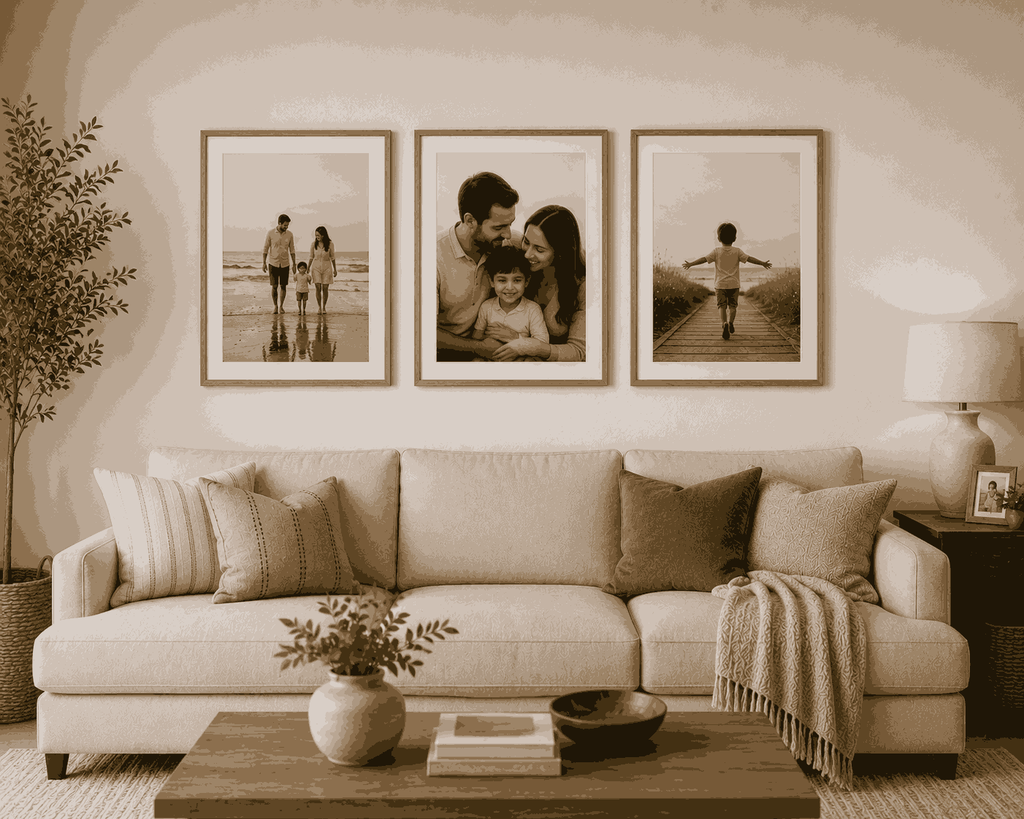
Try a Three-Frame Arrangement
Sometimes simple is better.
Three matching frames arranged horizontally can create an elegant display without covering the entire wall.
This arrangement works particularly well above:
- A sofa
- A console table
- A sideboard
- A low cabinet
Choose photographs that share a similar colour palette to make the three-frame arrangement feel connected.
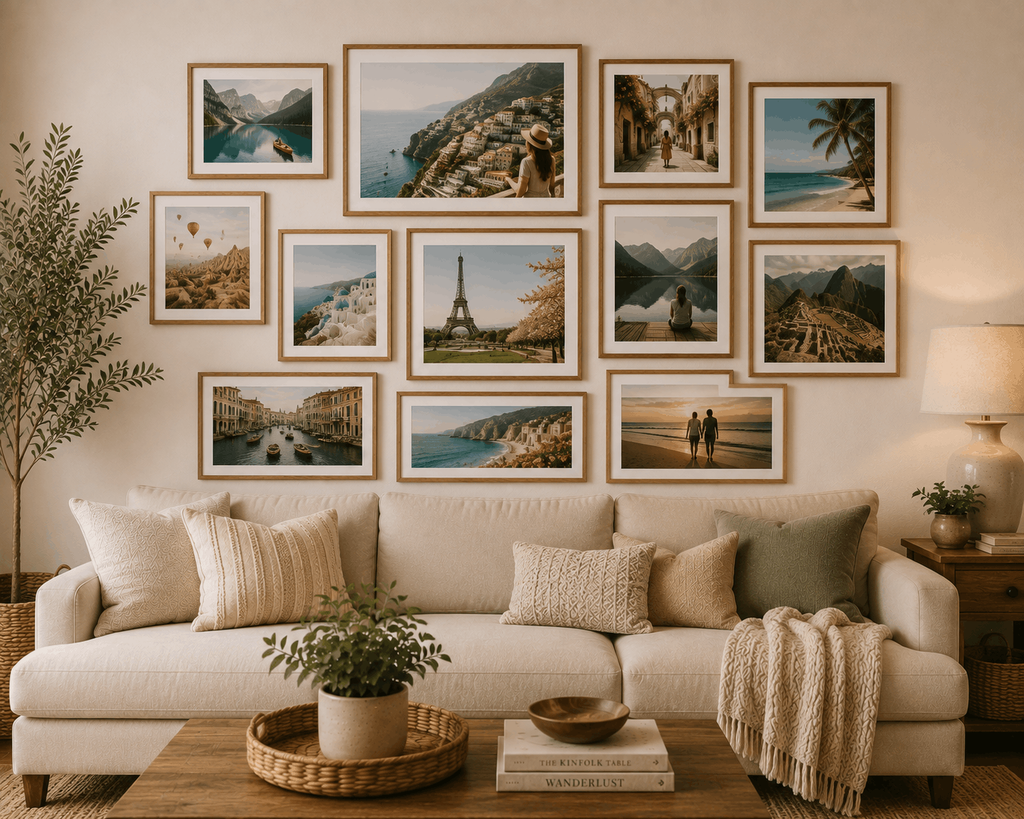
Create a Travel Memory Wall
If you love travelling, use your living-room wall to display your favourite destinations.
Combine photographs of:
- Landscapes
- Cities
- Architecture
- Beaches
- Local experiences
- Travel companions
You can use the same frame style while allowing the photographs to provide the visual variety.
Use Black-and-White Photographs
Black-and-white photographs are an excellent option when you want a timeless photo wall.
They also solve a common problem: photographs taken at different times often have completely different colours.
Converting them to black and white can create a more consistent appearance.
Pair them with black, white, or natural wooden frames depending on your interior style.
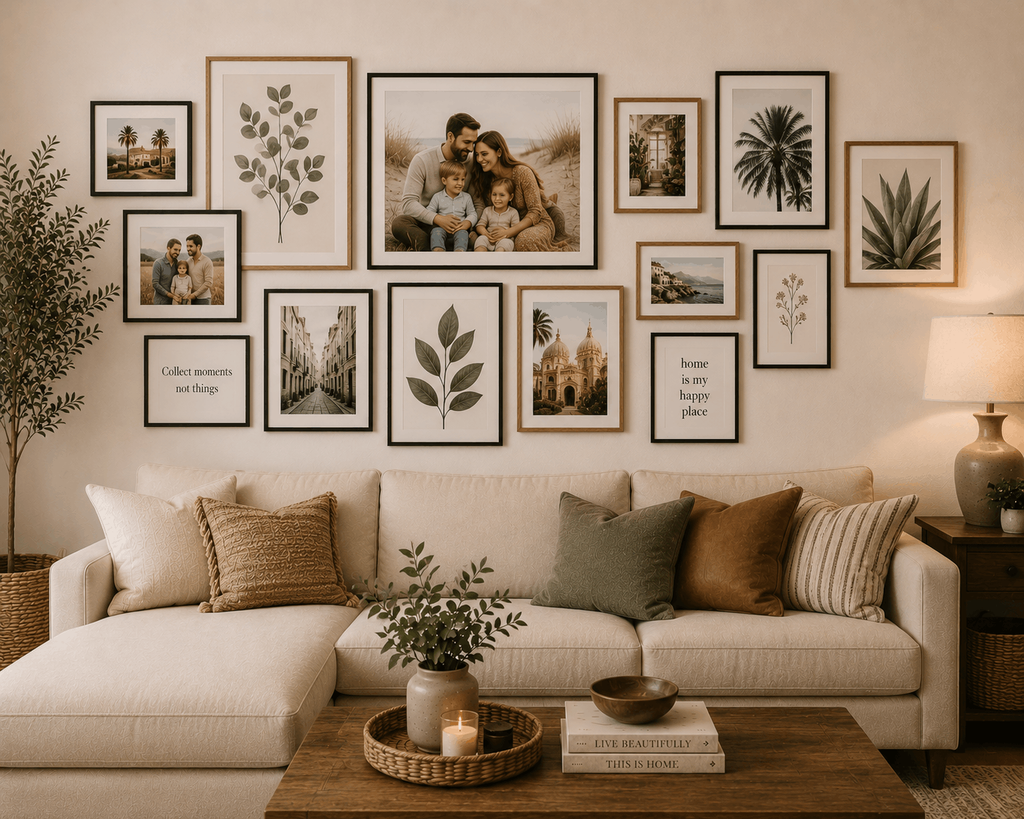
Combine Photos With Artwork
Your gallery wall doesn’t have to contain photographs only.
Mix your favourite photos with:
- Botanical prints
- Abstract artwork
- Quotes
- Illustrations
- Minimalist prints
- Landscape artwork
This creates a more artistic and collected appearance.
The easiest way to make the combination look cohesive is to repeat one element, such as the frame colour or overall colour palette.
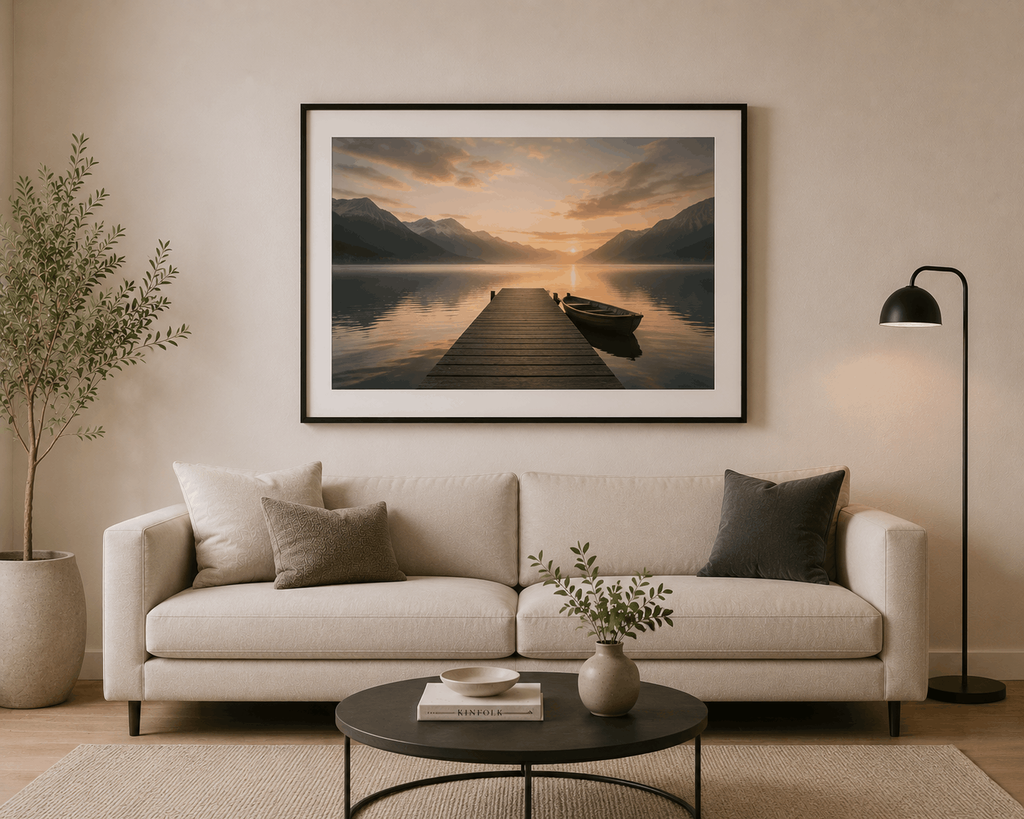
Create a Large Statement Frame
If you prefer minimalist décor, consider using one large photograph instead of several small frames.
A large family portrait, wedding photograph, travel image, or artistic photograph can become the main focal point of your living room.
This approach works especially well when the rest of your décor is simple.
Decorate a Console Wall
A console table creates another excellent opportunity for displaying photo frames.
You can place a gallery wall above the console and complement it with:
- Plants
- Table lamps
- Vases
- Books
- Decorative objects
Keep the frame arrangement visually connected to the console so the wall and furniture feel like one composition.
Use a Neutral Colour Palette
If your living room already contains many colours, consider using photographs and frames in a neutral palette.
Beige, white, cream, brown, black, and natural wood can create a calm and sophisticated appearance.
A consistent colour palette also makes it easier to mix different frame sizes.
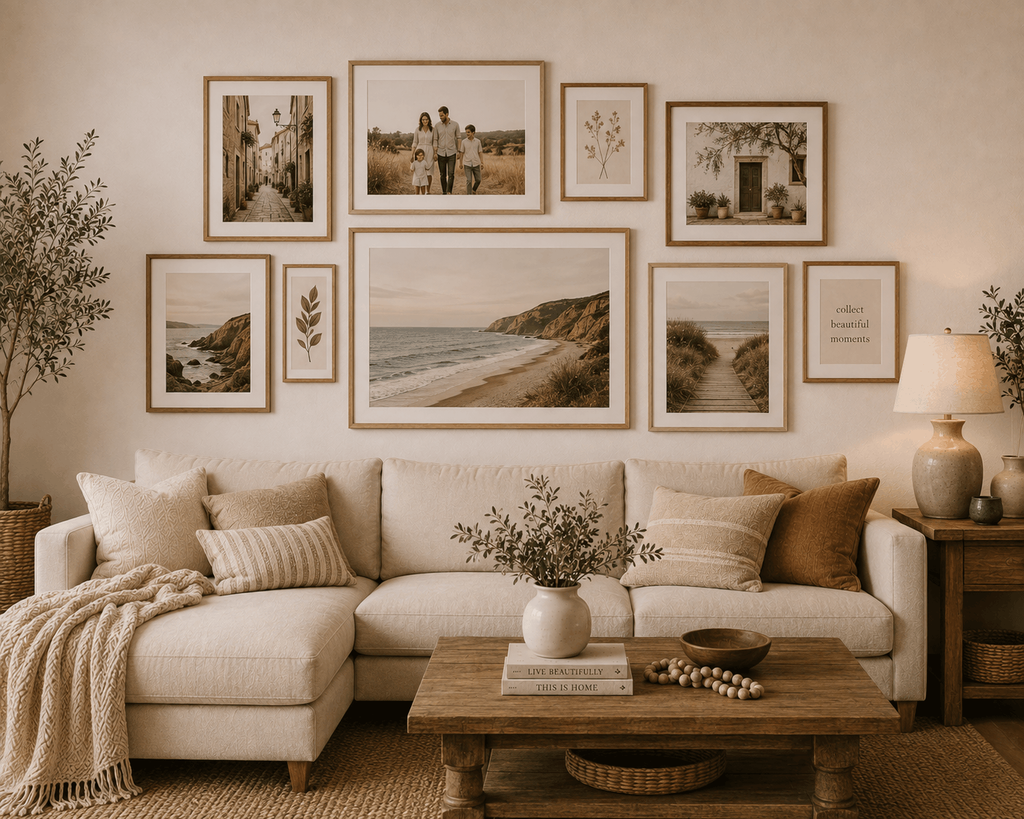
14. Create a Couple or Wedding Memory Wall
Your living room can also become a place to celebrate important relationship memories.
Create a collection featuring:
- First photograph together
- Engagement
- Wedding
- Travel memories
- Anniversaries
- Everyday moments
Use coordinated frames to give the collection a polished appearance.
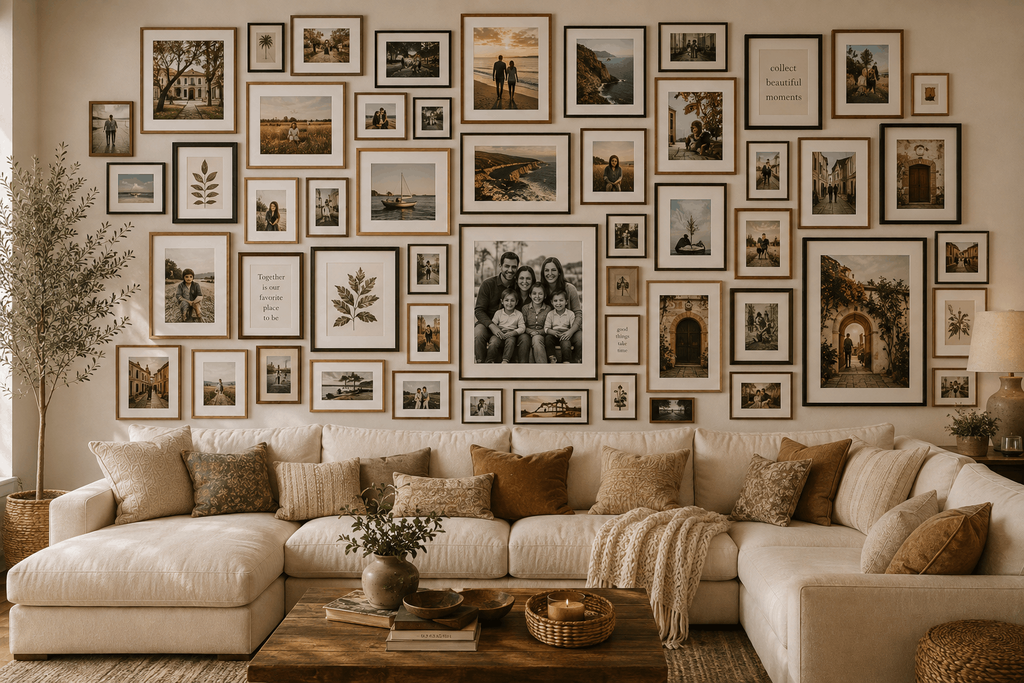
15. Decorate a Large Feature Wall
If you have a large empty wall, consider creating a larger gallery arrangement.
Instead of spreading small frames randomly across the wall, start with a central photograph and build the arrangement outward.
Mix large, medium, and small frames while maintaining visual balance.
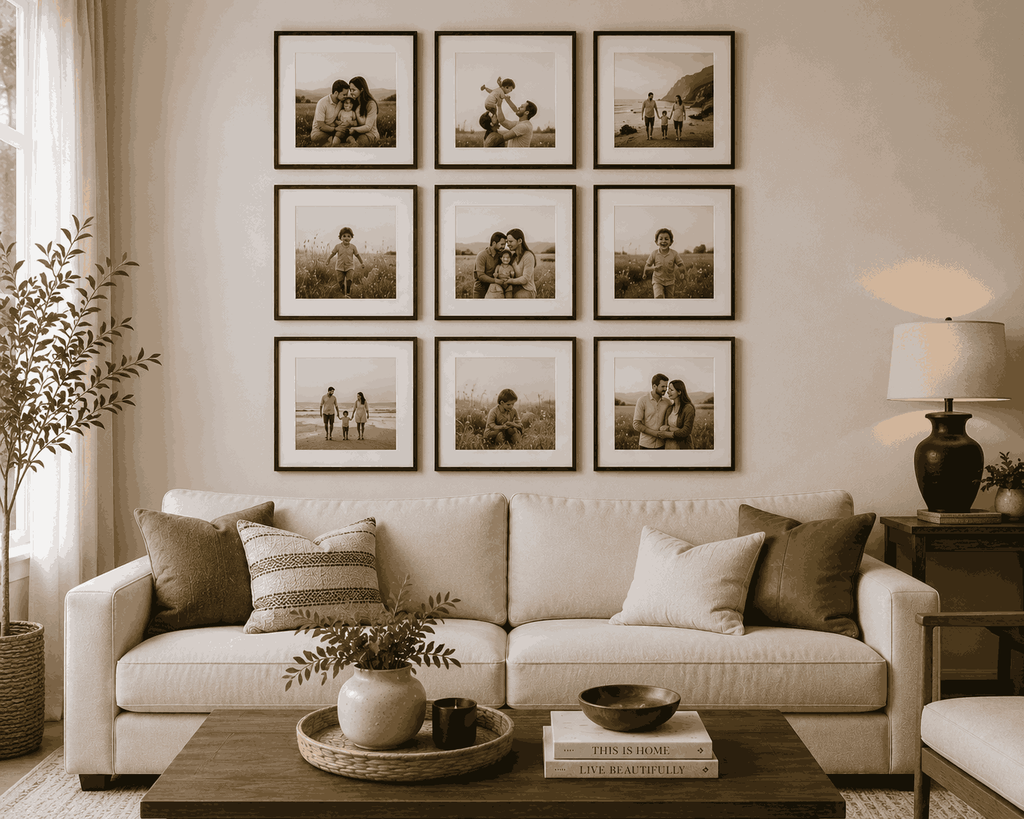
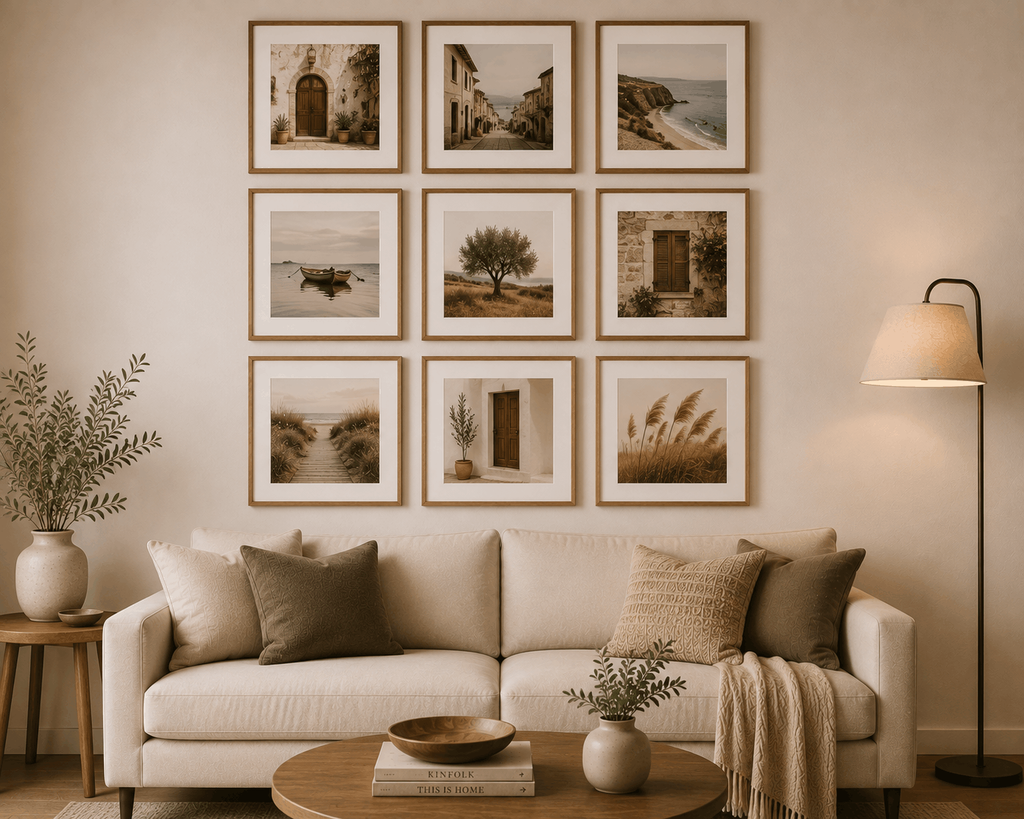
16. Create a Minimalist Three-by-Three Gallery
A three-by-three gallery combines the simplicity of a grid with enough photographs to make the wall feel substantial.
Use nine matching frames and similar photographs for the most organised appearance.
This is particularly suitable for people who want a gallery wall without an overly decorative or cluttered look.
How to Choose the Right Photo Frame for Your Living Room
Before purchasing frames, consider the existing style of your room.
For Modern Living Rooms
Choose simple black, white, metallic, or slim wooden frames.
For Warm and Rustic Interiors
Natural wooden frames work particularly well.
For Minimalist Interiors
Choose fewer frames with consistent sizes and generous spacing.
For Traditional Interiors
Decorative or classic frames can add character.
For Eclectic Interiors
Mix different frame sizes while keeping a common colour or material.
The goal isn’t necessarily to make every frame identical. The goal is to make the complete arrangement feel connected.
How to Arrange Photo Frames Above a Sofa
When decorating above a sofa, consider the sofa as the visual foundation of your gallery wall.
A frame arrangement that is too narrow may look disconnected, while one that is excessively wide can overwhelm the room.
Before hanging your frames:
- Measure the available wall space.
- Select your frame sizes.
- Arrange the frames on the floor.
- Experiment with different layouts.
- Keep the spacing visually consistent.
- Mark the wall before drilling.
- Hang the central or largest frame first.
- Build the arrangement outward.
A useful starting point is to leave roughly 2–3 inches between frames, then adjust based on frame size and the overall composition.
How Many Photo Frames Should You Use?
There is no fixed number that works for every living room.
The right number depends on:
- Wall size
- Frame size
- Sofa width
- Interior style
- Desired visual density
For a small arrangement, three to five frames may be enough.
For a medium gallery wall, five to nine frames can work well.
For a large feature wall, you may need ten or more frames.
Rather than choosing a number first, start with the wall and work out the arrangement from there. For more, explore click here.
Conclusion
Before you finish your photo wall, keep these tips in mind:
Choose a clear style: Decide whether you want modern, minimalist, rustic, classic, or eclectic décor.
Keep the arrangement balanced: Different frame sizes can work together when the overall visual weight is balanced.
Don’t overcrowd the wall: Empty space around your gallery can make the arrangement feel more sophisticated.
Consider your furniture: The photo wall should visually relate to the sofa, console, or other furniture beneath it.
Choose meaningful photographs: Your gallery wall should tell a story rather than simply fill an empty wall.
Repeat colours or materials: This helps different frames and photographs feel connected.
Plan before hanging: Lay everything out first so you can experiment with different arrangements.
Turn Your Living Room Wall Into a Collection of Memories
The best living room photo frame ideas combine style with personal meaning.
You can create a simple three-frame display, a structured grid, a large family gallery, a travel memory wall, or an eclectic combination of photographs and artwork.
There is no single perfect layout. The right design depends on your wall, furniture, interior style, and the memories you want to display.
Start with the space you have, choose photographs that matter to you, select frames that complement your décor, and build an arrangement that feels like a natural part of your home.
A thoughtfully designed photo wall doesn’t just decorate your living room—it gives your favourite memories a place to be seen every day.
Frequently Asked Questions
What are the best photo frame ideas for a living room?
Popular options include gallery walls above the sofa, three-frame arrangements, three-by-three grids, mixed-size galleries, family photo walls, travel displays, and large statement frames.
How many photo frames should I put above my sofa?
The number depends on the size of your sofa, wall, and frames. Three to five frames can work for smaller arrangements, while larger walls may need seven, nine, or more frames.
Should photo frames above a sofa match?
They don’t have to. Matching frames create a clean and organised look, while complementary frame styles can create a more creative appearance.
What colour photo frames look best in a living room?
Black, white, natural wood, and neutral frames are versatile choices. The best option depends on your existing furniture, wall colour, and interior style.
How do I arrange different-size photo frames?
Start with your largest frame as an anchor, then place smaller frames around it. Maintain consistent visual spacing and balance the heavier and lighter areas of the arrangement.
What should I put in a living-room photo frame?
You can display family photographs, wedding memories, travel pictures, portraits, children’s photographs, artwork, botanical prints, or meaningful quotes.
One Reply to