

The dining room is more than a place to enjoy meals. It is where families gather, friends share conversations, and special occasions become lasting memories. Decorating the walls with photo frames and framed artwork can make this space feel more welcoming, personal, and visually appealing.
Whether you have a separate dining room, a compact dining corner, or an open-plan dining area connected to your living room, the right framed artwork can complement your furniture and create a cohesive interior.
From family photographs and nature-inspired prints to modern abstract artwork and coordinated frame arrangements, there are many ways to decorate a dining room wall without making the space feel crowded.
In this guide, you will discover practical dining room wall decoration ideas with photo frames, along with tips for choosing artwork, coordinating colours, selecting frame sizes, and placing frames effectively.
Why Decorate Dining Room Walls with Photo Frames?
Dining room walls often have unused space that can benefit from a thoughtful decorative arrangement. Dining room Photo frames offer a simple way to introduce personality and connect the room’s colours, furniture, and overall interior style.
Here are a few reasons to consider framed artwork for your dining room:
- Create a welcoming atmosphere: Family photographs and meaningful artwork can make the dining area feel more personal.
- Enhance the dining table area: A carefully selected piece of artwork can create a focal point around the table.
- Complement your furniture: Frame finishes can coordinate with dining chairs, tables, cabinets, and lighting.
- Express your personal style: Choose family memories, botanical illustrations, abstract prints, or traditional artwork.
- Connect open-plan spaces: Coordinated frames can help create visual continuity between dining and living areas.
For more room-by-room inspiration, explore our guide to home decor with photo frames.
Create a Focal Point Above the Dining Table
The wall above the dining table is one of the most natural places to display framed artwork. Because the table is often the central feature of the room, a well-chosen frame can help bring the surrounding area together.
You could display one large framed artwork, a pair of coordinated prints, or a small collection of photographs.
Suitable choices include abstract artwork, landscape photography, botanical prints, food-inspired illustrations, or a meaningful family photograph.
When choosing the size, consider the width of the table and the available wall space. Artwork that is too small may look disconnected from a large dining table, while an oversized piece can overwhelm a compact room.
Styling tip: Choose artwork that complements the dining table and chairs rather than competing with them for attention.

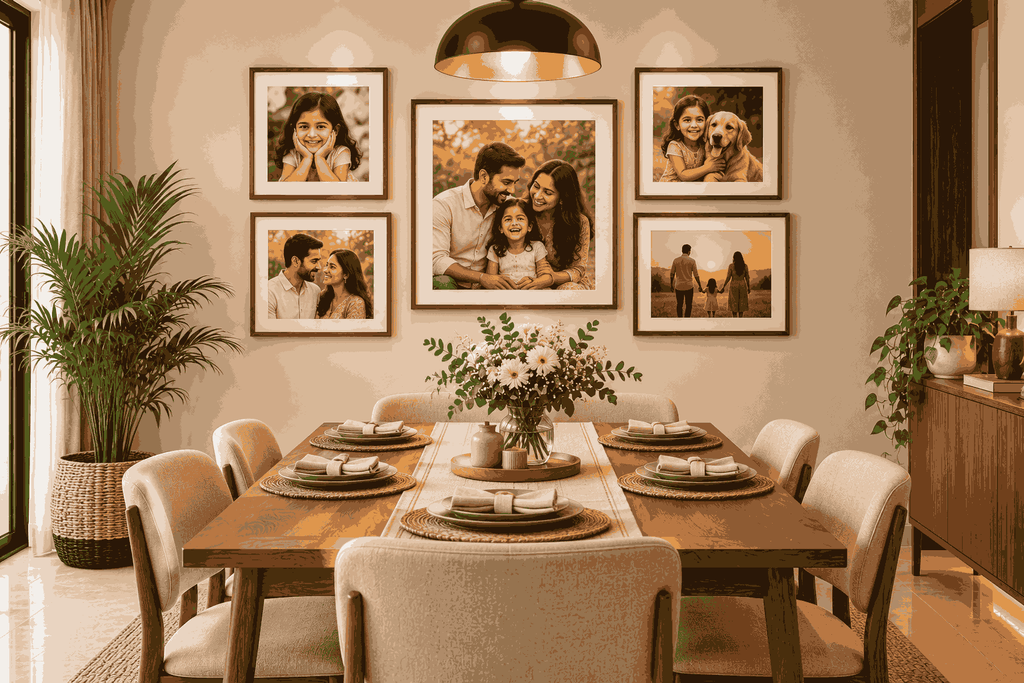
Display Family Photos for a Personal Dining Space
Family photographs can make a dining room feel warm and familiar. You can display wedding pictures, family portraits, holiday memories, or photographs from important celebrations.
For a coordinated appearance, use matching frames or select photographs with a similar editing style. Black-and-white images can create a timeless look, while colour photographs can introduce warmth and vibrancy.
You might arrange several family photographs together on one wall or use a single framed portrait as a focal point.
If your dining area is small, keep the display compact and leave enough empty wall space to avoid a crowded appearance.
Use a Gallery Wall for a Stylish Dining Room
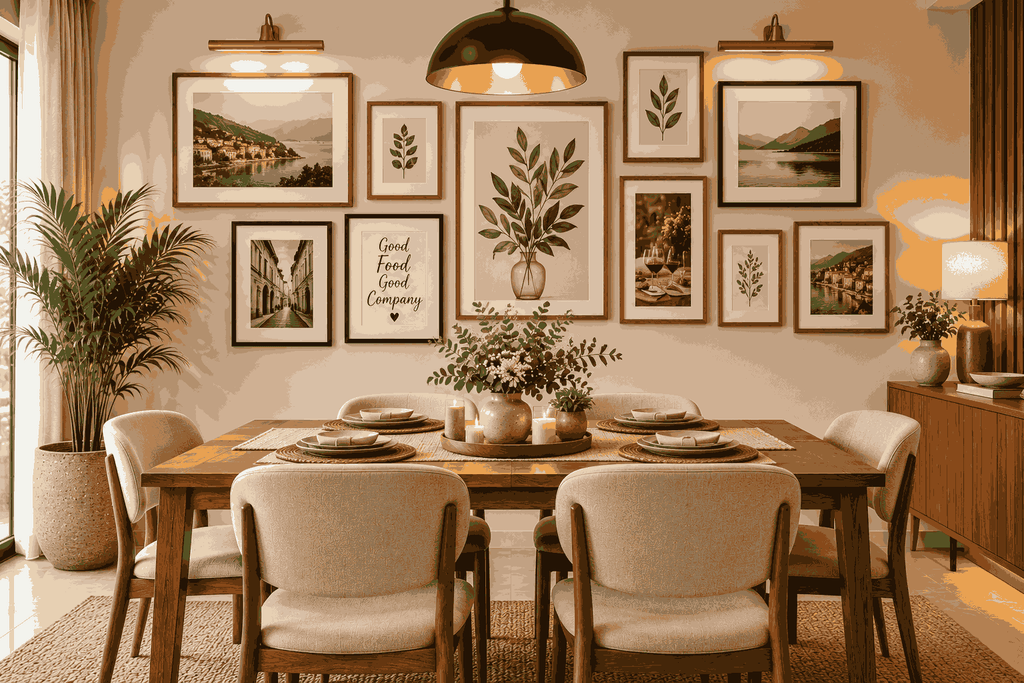
A gallery wall allows you to combine multiple framed photographs and artwork into one decorative arrangement. It works particularly well on a broad dining room wall that would otherwise look empty.
You can combine different image types, such as family photos, botanical illustrations, abstract prints, and landscape photography.
To make the arrangement look intentional:
- Choose a common frame colour or finish.
- Repeat one or two colours across the artwork.
- Balance larger frames with smaller pieces.
- Plan the layout before hanging the frames.
- Consider the dining table, lighting, and nearby furniture when positioning the collection.
A symmetrical arrangement can suit formal dining rooms, while a more relaxed composition can complement casual or contemporary interiors.
For detailed guidance on frame placement, spacing, and layouts, read our guide to how to arrange multiple photo frames on a wall.
Choose Modern Abstract Art for a Contemporary Dining Room
Abstract framed prints can add colour, movement, and visual interest to a modern dining room.
You might choose geometric shapes, soft colour gradients, expressive brushwork, or simple compositions that complement your interior palette.
For a neutral dining room, abstract artwork can introduce an accent colour without requiring changes to the furniture or wall paint. In a more colourful space, artwork with restrained tones can help maintain visual balance.
Consider using one large abstract print or two coordinated pieces rather than mixing too many unrelated designs.
Slim black frames often suit contemporary interiors, while natural wood frames can soften the look.

Decorate with Botanical and Nature-Inspired Prints
Botanical illustrations, floral prints, and landscape photographs can bring a natural feel to the dining room.
These designs work well with wooden dining tables, indoor plants, neutral walls, and natural-textured furnishings.
Popular choices include:
- Botanical illustrations of leaves and flowers.
- Framed landscape photography.
- Minimalist floral prints.
- Olive branch or herb illustrations.
- Nature-inspired artwork in muted green and earthy tones.
For a cohesive look, choose prints with a similar colour palette. A pair of botanical illustrations, for example, can create a balanced arrangement above a dining bench or sideboard.

Use Wooden Photo Frames for a Warm, Traditional Look
Wooden photo frames can complement dining rooms with classic furniture, wooden tables, traditional cabinets, or warm colour schemes.
Light wood frames often create a relaxed, natural appearance, while darker wood can give the room a more formal feel.
Use wooden frames to display family portraits, traditional artwork, landscape photography, or vintage-inspired prints.
You can match the frame tone to your dining table or sideboard, but an exact match is not necessary. Repeating warm wood tones across a few elements is often enough to connect the room visually.
For a more varied display, combine different frame sizes while keeping the overall finish consistent.
Decorate a Small Dining Room with Photo Frames
A small dining room does not need a large gallery wall to look attractive. The key is to choose artwork that fits the available wall space.
Consider these ideas:
- Use one medium-sized framed print above the dining table.
- Display two coordinated frames on a narrow wall.
- Choose simple artwork with a limited colour palette.
- Use slim frames for a lighter visual appearance.
- Coordinate frame colours with the dining furniture.
Avoid filling every empty wall with artwork. A small number of carefully selected frames can create a focal point without making the room feel busy.
In an apartment where the dining table sits close to the living room, consider artwork that complements both spaces.
Style the Wall Above a Dining Sideboard
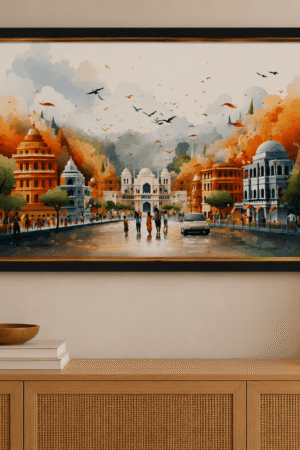
If your dining room includes a sideboard, buffet cabinet, or console table, the wall above it can be an ideal place for framed artwork.
A large framed print can create a clear focal point, while two or three smaller frames can produce a more layered appearance.
You can also coordinate the frames with a table lamp, vase, or other decorative objects placed on the sideboard. However, avoid overcrowding the surface or placing objects where they could easily fall.
When choosing artwork, consider the sideboard’s width and height so the overall arrangement feels balanced.
This approach works particularly well in dining rooms where the wall above the table is occupied by windows or lighting fixtures.
Match Photo Frames with Your Dining Room Colours
The colour of your frames can help connect your artwork with the dining table, chairs, wall paint, and other decorative elements.
Here are a few combinations to consider:
- White walls and light furniture: White or natural wood frames can create a soft, coordinated look.
- Dark dining furniture: Black or dark wood frames can complement the furniture, while lighter frames provide contrast.
- Neutral interiors: Botanical prints, muted landscapes, and abstract artwork can introduce subtle colour.
- Colourful dining chairs: Choose artwork that repeats one or two existing accent colours.
- Traditional interiors: Warm wooden or suitably toned metallic frames can complement classic furniture.
You do not need to match every frame to every piece of furniture. Instead, repeat a few colours or materials to create visual continuity.
Create a Symmetrical Arrangement for a Formal Dining Room
Symmetrical frame arrangements can suit formal dining rooms where the furniture and accessories follow a structured layout.
For example, you could hang two matching framed prints side by side above a dining bench or display a balanced collection of identical frames on a feature wall.
This approach creates a tidy, organised appearance and works particularly well with traditional interiors, matching dining chairs, and centrally positioned tables.
Before hanging the frames, check their alignment relative to the table and other architectural features. A symmetrical arrangement usually looks best when the spacing and frame dimensions are consistent.
Choose Artwork That Complements Your Dining Experience
Dining room artwork does not have to feature food or cooking. Choose images that suit the atmosphere you want to create.
- For a relaxed family dining room: Display family photographs, landscapes, or botanical prints.
- For a modern dining area: Choose abstract compositions, geometric prints, or monochrome photography.
- For a traditional dining room: Consider classic illustrations, landscapes, or framed photographs in wooden frames.
- For a bright, lively space: Use colourful artwork with a coordinated palette.
- For a minimalist dining area: Select one statement print or a small collection of simple designs.
The aim is to choose artwork that feels appropriate to your space and complements the way you use the dining room.
Consider Lighting and Frame Placement
Lighting can influence how framed artwork appears in a dining room. Natural light may make prints easier to appreciate, while poorly positioned artificial lighting can create reflections on glass or glossy coverings.
Before installing a frame, consider the position of windows, pendant lights, wall lights, and other reflective surfaces.
Keep these practical points in mind:
- Check for glare from common seating positions.
- Avoid placing delicate artwork in harsh direct sunlight.
- Use suitable wall fixings for the weight of each frame.
- Keep artwork clear of areas where chairs or people may regularly bump into it.
- Avoid locations exposed to excessive heat, steam, or moisture.
If the dining room is part of an open-plan space, check how the artwork looks from both the dining table and the adjoining living area.
Common Mistakes to Avoid When Decorating Dining Room Walls
Choosing artwork that is too small: A tiny frame may look disconnected from a large dining table or broad wall. Consider the scale of the furniture before choosing the frame.
Using too many unrelated designs: Mixing different colours, subjects, and frame finishes without a common element can make the room feel cluttered.
Ignoring the dining furniture: Artwork should complement the table, chairs, and other furnishings rather than compete with them.
Hanging frames without planning: Test the arrangement before drilling holes to avoid unnecessary adjustments.
Placing artwork where it may be damaged: Avoid locations exposed to direct sunlight, excessive moisture, heat, or frequent contact.
Overdecorating a small room: A compact dining area often benefits from fewer, well-chosen frames and sufficient empty wall space.
How to Decorate Your Dining Room with Photo Frames
Follow these steps to create a balanced and attractive display.
- Identify the main wall: Decide whether the artwork will go above the dining table, sideboard, or another suitable wall.
- Choose a theme: Select family photographs, botanical prints, abstract artwork, or a combination.
- Measure the available space: Consider the wall dimensions and the width of nearby furniture.
- Select frame colours: Choose finishes that complement your existing interior.
- Plan the arrangement: Test the layout on the floor or use paper templates before hanging the frames.
- Check the lighting: Look for glare and consider how the artwork appears from seated positions.
- Install securely: Use suitable fixings and ensure the display does not obstruct movement.
Planning the arrangement first can help you create a dining room that feels cohesive without requiring major changes to the interior.
Frequently Asked Questions
What should I hang on the wall above a dining table?
You can display a large framed artwork, family photograph, botanical print, abstract design, or a coordinated pair of framed prints. Choose a piece that suits the size of the table and complements the dining room’s interior.
How many photo frames should I use in a dining room?
There is no fixed number. One large frame can work well in a small dining room, while a larger wall may accommodate a gallery wall. The best arrangement depends on the available space and the size of the furniture.
Which photo frame colours are best for dining room walls?
Black, white, natural wood, and dark wood are versatile options. Select a finish that complements your dining table, chairs, wall colour, and preferred interior style.
Are family photos suitable for dining room decoration?
Yes. Family photographs can make a dining room feel personal and welcoming. Use matching frames or a consistent photo style to create a coordinated display.
How can I decorate a small dining room wall?
Choose one or two appropriately sized framed prints and keep the arrangement simple. Avoid overcrowding the wall, and coordinate the frames with the existing furniture and colours.
Should dining room photo frames match the living room frames?
They do not have to match exactly. However, using similar frame finishes, colour palettes, or artwork styles can help create visual continuity, particularly in open-plan homes.
How do I arrange multiple frames above a dining table?
You can use a symmetrical row, a balanced grid, or an informal gallery wall. Measure the available space and plan the arrangement before hanging the frames. For more detailed guidance, consult our guide to arranging multiple photo frames on a wall.
Conclusion
Dining room wall decoration does not need to be complicated. Photo frames and framed prints can introduce personality, colour, and visual interest while complementing the furniture and overall interior style.
Whether you choose family photographs, botanical artwork, abstract prints, or a gallery wall, focus on the proportions of the space, a coordinated colour palette, and suitable frame placement.
Start with one wall and build your arrangement around the dining table or sideboard. With thoughtful choices, you can create a dining room that feels more welcoming and visually connected to the rest of your home.
For more inspiration, explore our complete guide to home decor full guide with photo frames and discover ways to style framed artwork in other rooms.
Explore our social media platforms Pinterest, Instagram, and Facebook to watch video content of our Photo Frame product.





Comments (2)