
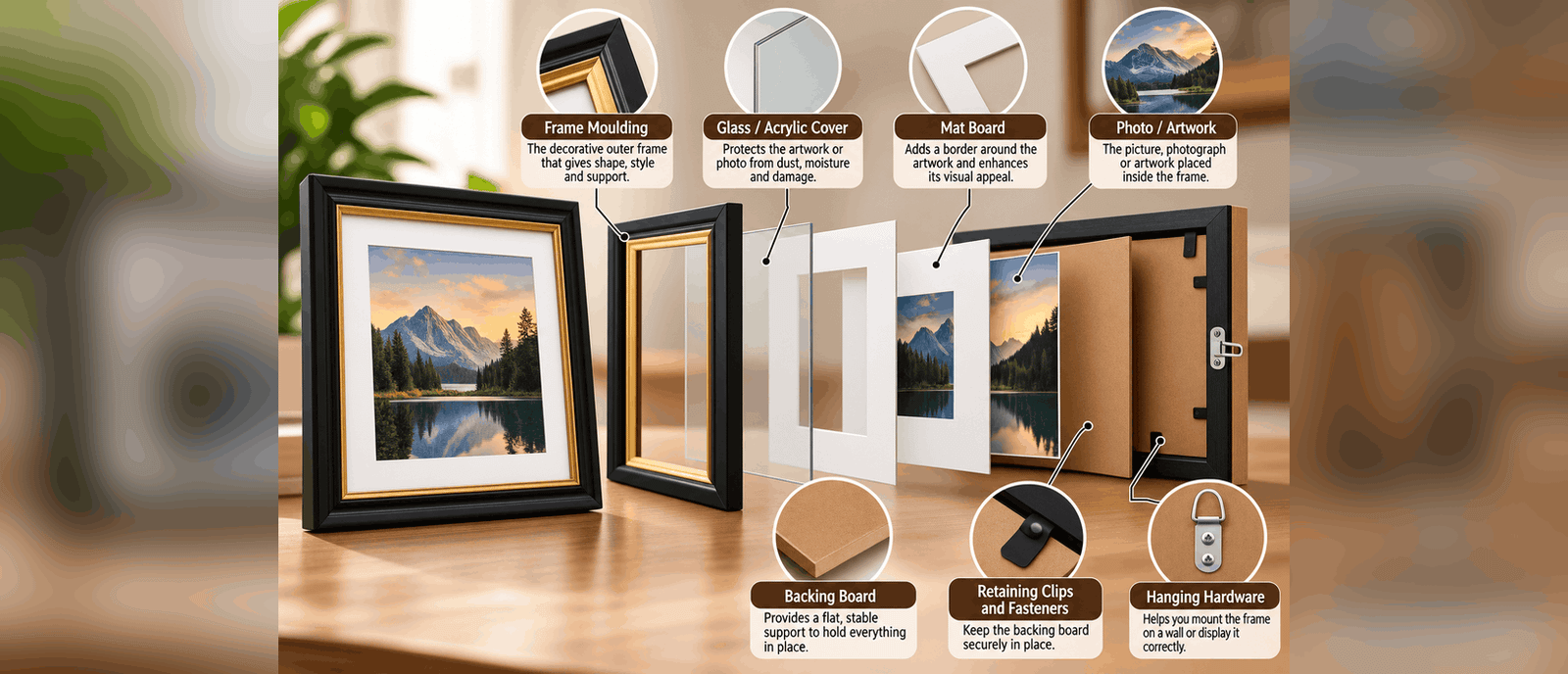
A picture frame is more than just a decorative border around a photograph or artwork. It consists of several components that work together to hold the image in place, protect it, and make it suitable for display on a wall, shelf, or tabletop.
Whether you are choosing a black plastic photo frame for your living room, displaying family photographs, or decorating your home with ready-made framed artwork, understanding the different parts of a picture frame can help you make a better choice.
In this guide, we will explain the main parts of a picture frame, including the frame border, glazing, backing board, mount board, easel back, and hanging hardware. If you want to know detailed information about a photo frame, you can explore our complete photo frame guide.
What Are the Main Parts of a Photo Frame?
A typical photo frame consists of several components. The exact design depends on the frame’s material, size, construction, and intended use.
The main parts of a picture frame include:
- Frame border or moulding: The outer structure that surrounds the photograph or artwork.
- Glazing: The transparent front layer, usually glass or acrylic, found in many frames.
- Backing board: The rear support that helps hold the image in position.
- Mount board: An optional border placed around the image to create visual spacing.
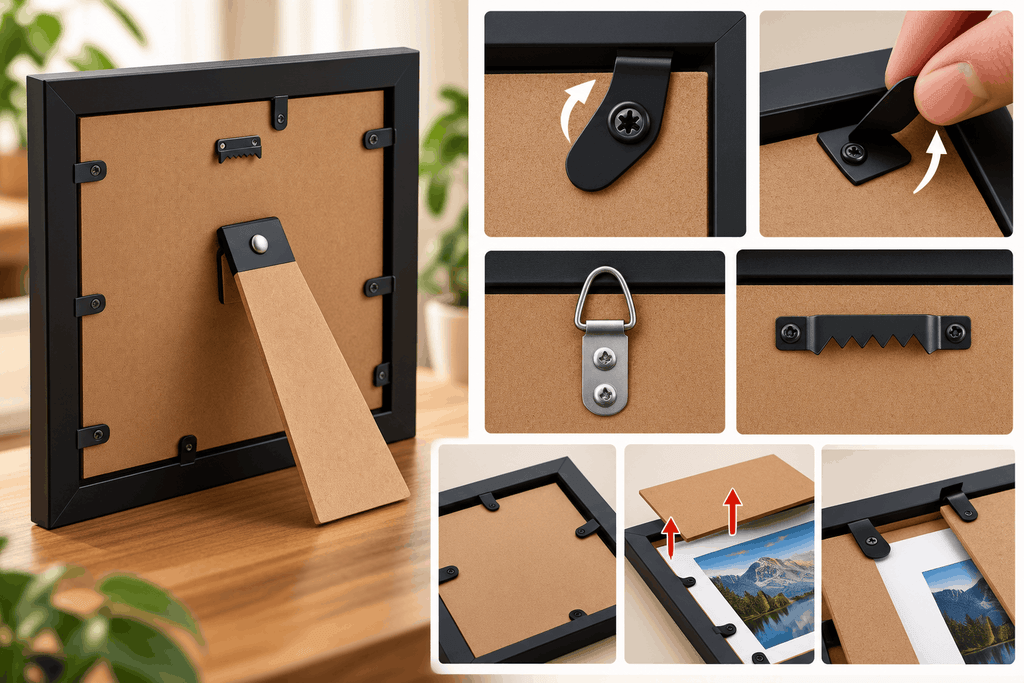
- Retaining clips or fasteners: Components that help secure the contents inside the frame.
- Easel back or tabletop stand: A support that allows certain frames to stand on a flat surface.
- Hanging hardware: Hooks, D-rings, or other fittings used to hang a frame on a wall.
Not every photo frame includes all these components. For example, a simple plastic frame may have an integrated backing and stand, while a larger wall frame may use separate backing, fasteners, and hanging fittings.
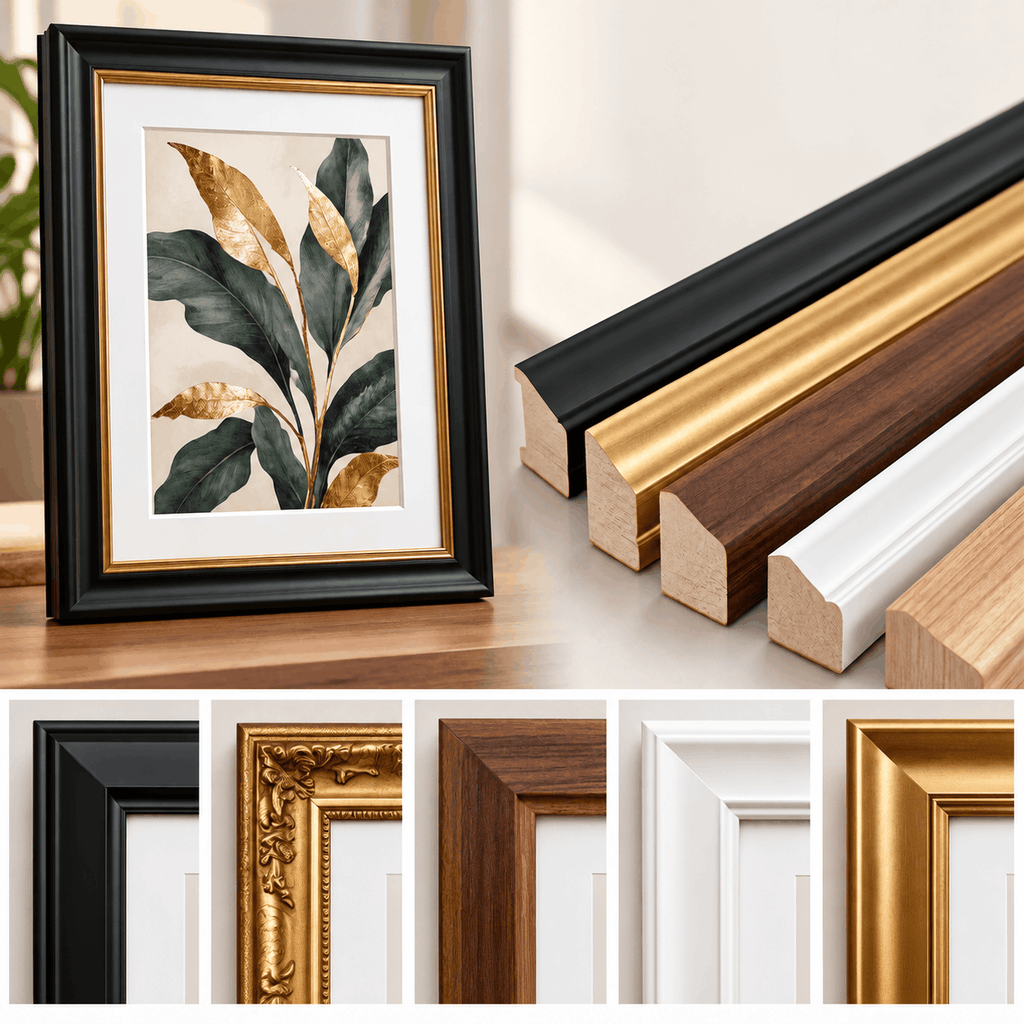
What Is a Photo Frame Border or Moulding?
The frame border, also known as the frame moulding, is the visible outer structure that surrounds the photograph, printed image, or artwork.
It provides the frame with its shape, width, profile, and overall appearance. The border can be simple and flat or feature a more decorative design.
What does a frame border do?
The frame border serves several purposes:
- Holds the frame’s components together.
- Creates a defined boundary around the image.
- Adds a decorative finish to the photograph or artwork.
- Helps the framed image complement the surrounding interior.
Common frame border materials
Picture frame borders are commonly made from plastic, wood, metal, or engineered wood products such as MDF.
Plastic borders are often lightweight and available in a variety of colours and finishes. Wooden borders offer natural grain and traditional or contemporary styles. Metal borders can provide a slim, modern appearance.
How does the border affect appearance?
The width and finish of the border influence how the image looks when displayed.
For example, a black photo frame can create a clear boundary around a colourful photograph, while a white frame may give the image a lighter appearance. A narrow border can look minimal, whereas a wider border can make the frame more prominent.
When choosing a frame, consider the artwork, wall colour, furniture, and overall decorating style.
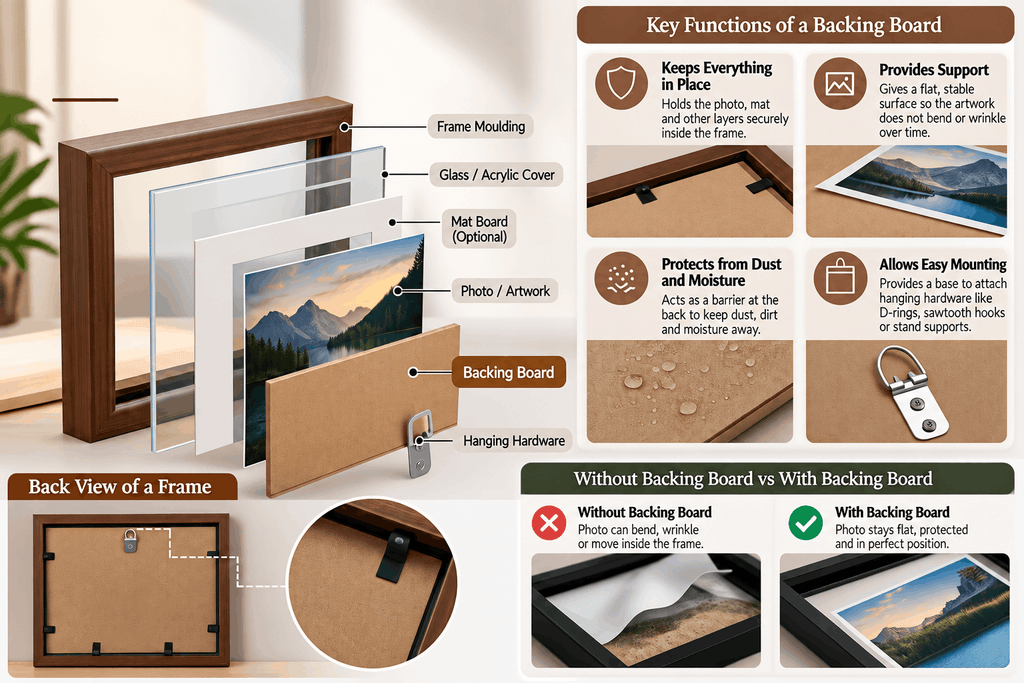
What Is a Photo Frame Backing Board?
The backing board is the rear component of a picture frame. It sits behind the photograph or artwork and helps keep the contents in position.
Depending on the design, the backing may be made from cardboard, fibreboard, MDF, plastic, or another suitable material.

What does a backing board do?
The backing board has several important functions:
- Supports the photograph or printed artwork from behind.
- Helps keep the image flat and properly positioned.
- Works with clips, tabs, or fasteners to secure the frame’s contents.
- Covers the rear of the frame for a neat appearance.
Some frames use a rigid backing board, while others have a combined backing-and-stand assembly.
Is a backing board the same as a frame cover?
Not always. The term “backing board” generally refers to the rear support. A complete rear assembly may also include a stand, retaining tabs, hanging fittings, or other components.
The exact construction depends on the frame design.
Why is the backing important?
A suitable backing helps the photograph or artwork remain securely positioned during everyday use. It is particularly important when a frame is moved, placed on a shelf, or hung on a wall.
However, an ordinary backing board does not automatically provide complete protection against moisture, dust, or environmental damage. Protection depends on the materials and overall construction of the frame.
What Is Glass or Acrylic Glazing in a Picture Frame?
Glazing is the transparent front layer used in many picture frames. It sits in front of the photograph or artwork, allowing people to see the image while providing a physical barrier.
The two common glazing materials are glass and acrylic.
Glass glazing
Glass is a traditional option for picture frames. It provides a smooth, clear surface and can be cleaned using an appropriate glass-cleaning method.
However, ordinary glass can break if dropped or struck. Special types, such as tempered glass, have different breakage characteristics.
Acrylic glazing
Acrylic is a transparent plastic material commonly used as a lightweight alternative to glass.
Its lower weight can be useful for larger frames or situations where reducing the overall load matters. However, standard acrylic can scratch more easily than glass, so it requires suitable cleaning and handling.
Glass vs acrylic: What is the difference?
The best choice depends on the frame size, location, handling requirements, and desired features.
Glass may suit people who prefer a traditional glazing material and a hard surface. Acrylic may be useful when lighter weight and reduced risk of shattering are priorities.
Some glazing products also offer additional features, such as UV filtering or reduced reflections. These features should not be assumed to be present in every glass or acrylic sheet.

Do all photo frames have glazing?
No. Some frames include a transparent front cover, while others are designed without glazing. The construction depends on the product and the type of artwork being displayed.
For ready-made framed artwork, check whether the product includes glass, acrylic, or another protective front layer before purchasing.
What Is a Mount Board in a Picture Frame?
A mount board, sometimes called a mat board, is a flat piece of board placed around an image inside the frame. It creates a visible border between the photograph or artwork and the frame itself.
Unlike the outer frame border, which forms the structure around the image, the mount board sits inside the frame.
What does a mount board do?
A mount board can:
- Create additional visual space around an image.
- Separate the artwork visually from the frame border.
- Make a small image appear more prominent within a larger frame.
- Add contrast or coordination through its colour and texture.
For example, a photograph surrounded by a white mount board and a black outer frame can have a clean, balanced appearance.
Is a mount board necessary?
No. A mount board is optional. Many ready-made photo frames hold the image directly inside the frame without a separate mount.
Frames without a mount can provide a simple, compact look. Frames with a mount may be preferred when additional visual spacing is desirable.
Does a mount board change the photo frame size?
It can affect the amount of the image visible through the frame opening. The overall outside dimensions of the frame, however, depend on the frame’s construction.
When choosing a framed product, check the image size, visible opening, and outside frame dimensions rather than relying on just one measurement.

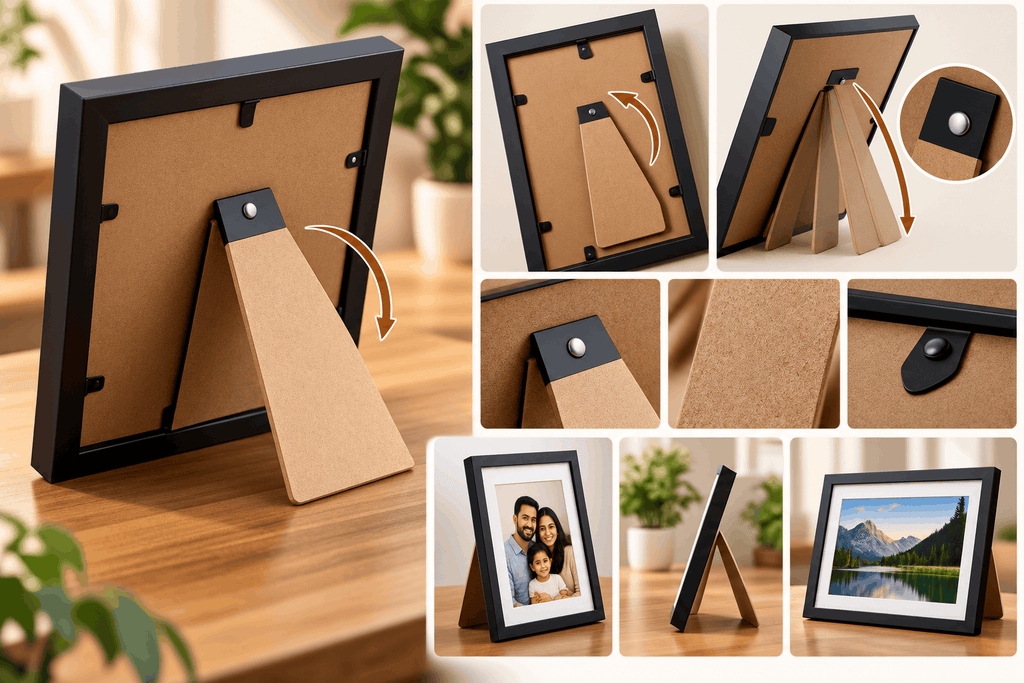
What Is an Easel Back on a Photo Frame?
An easel back is a fold-out or attached support that allows a picture frame to stand upright on a flat surface, such as a table, desk, shelf, or bedside cabinet.
It is commonly found on small and medium-sized tabletop photo frames.
How does an easel back work?
The support opens away from the rear of the frame, creating an angled position that helps the frame stand without being held.
Some easel backs are permanently attached, while others form part of a removable backing assembly.
What is an easel back used for?
An easel back is useful for displaying:
- Family photographs on a side table.
- Personal photographs on an office desk.
- Small framed artwork on a shelf.
- Decorative images on a bedside table.
Is an easel back the same as hanging hardware?
No. An easel back supports the frame on a flat surface, whereas hanging hardware helps attach a frame to a wall.
Some frames include both tabletop support and wall-hanging fittings, but this depends on the product.
Before buying a frame for a particular location, check whether it is designed for tabletop display, wall mounting, or both.
What Are Retaining Clips and Fasteners in a Picture Frame?
Retaining clips and fasteners are the small components that hold the photograph, glazing, and backing assembly inside the frame.
Their design varies according to the frame material and construction.
Common examples include:
- Turn buttons: Small rotating tabs that hold the backing in place.
- Metal tabs: Flexible tabs that secure the rear assembly.
- Spring clips: Components that help retain the contents of certain frames.
- Screws or other fasteners: Used in some frame designs to secure components.
These fittings help keep the contents together and may allow the frame to be opened when the photograph needs to be replaced.
In simple ready-made frames, the retaining mechanism may be integrated into the backing assembly rather than supplied as a separate component.
Always handle the rear fittings carefully when opening a frame, as some tabs and clips can have sharp edges.
What Is Picture Frame Hanging Hardware?
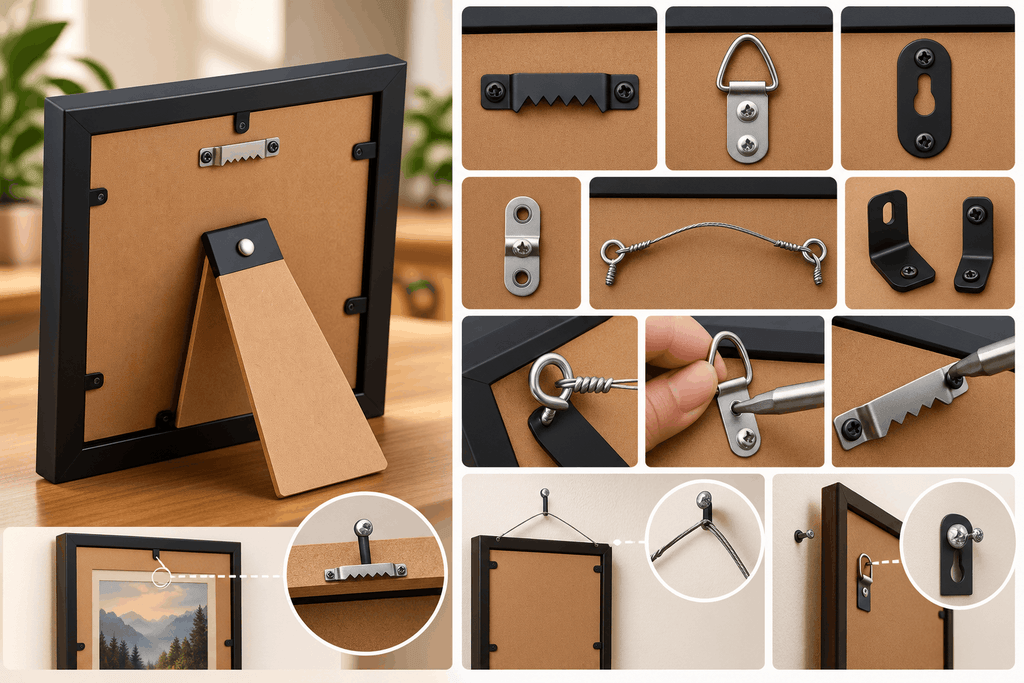
Hanging hardware refers to the fittings used to suspend a picture frame from a wall.
The type of hardware depends on the frame’s weight, dimensions, rear construction, and intended mounting method.
Common examples include:
- Sawtooth hangers: Small fittings with a toothed edge that can rest on a suitable wall fastener.
- D-rings: Metal rings attached to the rear of a frame, often used with appropriate screws or picture-hanging wire.
- Wire fittings: Components that allow a frame to hang from a suitable wall hook.
- Keyhole fittings: Specially shaped openings designed to fit over compatible screw heads.
Not every frame uses the same hanging system. Some smaller frames use a single hanger, while larger frames may need a different arrangement.
How do you choose suitable hanging hardware?
Consider the frame’s weight, the condition and material of the wall, and the type of wall fastener being used.
A frame’s included hanger does not necessarily mean it can be installed safely on every wall surface. Plasterboard, masonry, and other wall types may require different fixings.
Follow the frame manufacturer’s installation instructions and use appropriate wall anchors or fasteners where needed.
How Do the Parts of a Picture Frame Work Together?
Each component has a specific role, but the parts work together as one assembly.
The frame border creates the outer structure. The glazing, if included, sits in front of the image. The photograph or artwork rests inside the frame, sometimes with a mount board around it. The backing supports the contents from behind, while retaining clips or fasteners keep the assembly in position.
Finally, an easel back allows tabletop display, and hanging hardware supports wall display.
The exact arrangement differs across products. A simple plastic photo frame may combine several functions into a few integrated parts, while a more elaborate frame may use separate components.
Understanding this construction makes it easier to compare frame designs and select one suited to your display needs.
How to Identify the Right Picture Frame for Your Needs
When choosing a picture frame, consider the following factors:
1. Image size: Check the size of the photograph or artwork the frame is designed to hold.
2. Frame dimensions: Look at the visible opening and outside dimensions to understand how much space the frame will occupy.
3. Frame material: Consider plastic, wood, metal, or other materials based on appearance, weight, and intended use.
4. Front cover: Check whether the frame includes glass, acrylic, or no glazing.
5. Display method: Choose a tabletop frame with a suitable stand, a wall frame with appropriate hanging fittings, or a frame designed for both.
6. Design and finish: Consider how the frame colour, border width, and overall appearance will work with the photograph and surrounding décor.
7. Ease of replacement: If you plan to change photographs regularly, check how easily the frame can be opened and reassembled.
For a broader explanation of frame styles, dimensions, materials, and display options, read our [complete guide to photo frames].
Frequently Asked Questions
What are the main parts of a picture frame?
The main parts commonly include the outer frame border, glazing, image, backing board, and retaining fasteners. Some frames also include a mount board, easel back, or wall-hanging hardware.
What is the back of a picture frame called?
The rear support is generally called the backing board or frame backing. Depending on the design, it may also include a stand, retaining tabs, or hanging fittings.
What is the difference between a frame border and a mount board?
The frame border is the outer structure surrounding the image. A mount board sits inside the frame and creates additional visual spacing around the photograph or artwork.
Is acrylic better than glass for picture frames?
Neither is universally better. Acrylic is generally lighter and less prone to shattering, while glass offers a hard surface and is a traditional glazing choice. The right option depends on the frame, location, handling requirements, and product specifications.
What is the purpose of an easel back?
An easel back allows a frame to stand upright on a flat surface, such as a desk or shelf. It is mainly used for tabletop display rather than wall mounting.
Do all picture frames include hanging hardware?
No. Some frames are designed only for tabletop use, while others include wall-hanging fittings or support both display methods. Check the product specifications before purchasing.
Conclusion
The different parts of a picture frame work together to support, display, and finish a photograph or artwork. The frame border creates the outer structure, glazing provides a transparent front layer when included, the backing supports the image, and optional components such as mount boards, easel backs, and hanging hardware serve specific purposes.
Once you understand these components, it becomes easier to compare frame designs, check product specifications, and choose a frame that suits your image and display space.
Whether you prefer a simple plastic frame, a traditional wooden frame, or ready-made framed artwork, understanding the parts of a picture frame helps you make a more informed choice.
Explore our social media platforms Pinterest, Instagram, and Facebook to watch video content of our Photo Frame product.






Comment (1)