
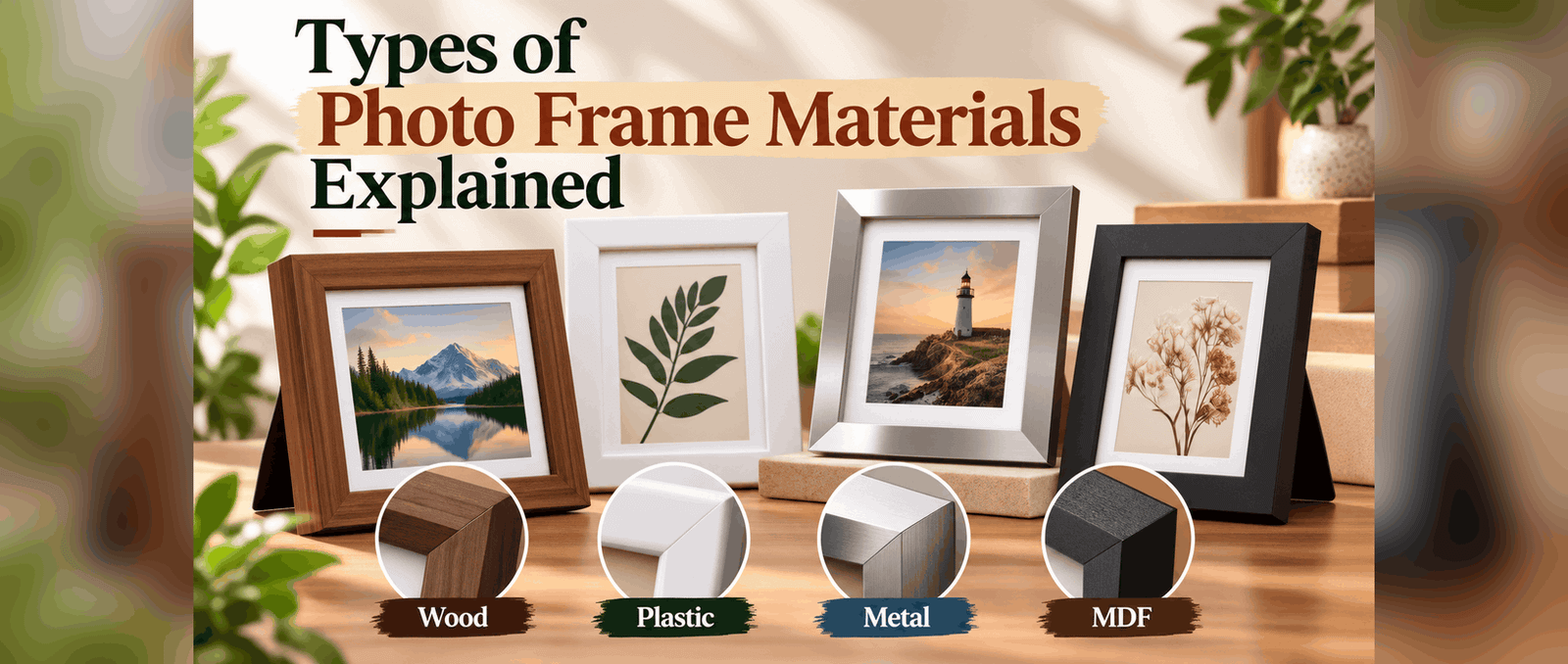
When choosing a photo frame for wall decor, the material is just as important as its colour, size, and design. The material affects how the frame looks, how much it weighs, how it feels, and how well it suits the space where you want to display it.
For example, a black plastic photo frame can create a simple, modern look, while a wooden frame may add warmth to a room. Metal frames often have a sleek appearance, and MDF frames can offer a smooth finish that complements different decorating styles.
Whether you want to display family photographs, decorate your living room, or showcase printed artwork, understanding the different photo frame materials can help you make the right choice.
In this guide, we will explore the most common types of photo frame materials, their advantages and limitations, and how to choose one that suits your photographs, home décor, and everyday needs. Explore our Photo Frame Complete Guide to get detailed information.
What Are the Different Types of Photo Frame Materials?
Photo frames are made from several materials, each offering a different appearance, weight, and set of practical characteristics.
The most common options include:
- Plastic photo frames
- Wooden photo frames
- Metal photo frames
- MDF photo frames
- Composite and other engineered-material frames
The transparent front cover is another important component. Many frames use glass or acrylic glazing, which affects the frame’s weight, scratch resistance, and handling requirements.
Remember that the frame material and the front-cover material are two separate things. For example, a plastic frame may use either glass or acrylic as its transparent front cover, depending on its design.
Let’s look at each material in detail.
Plastic Photo Frames
Plastic photo frames are a popular choice for people who want a lightweight frame with a simple, versatile appearance.
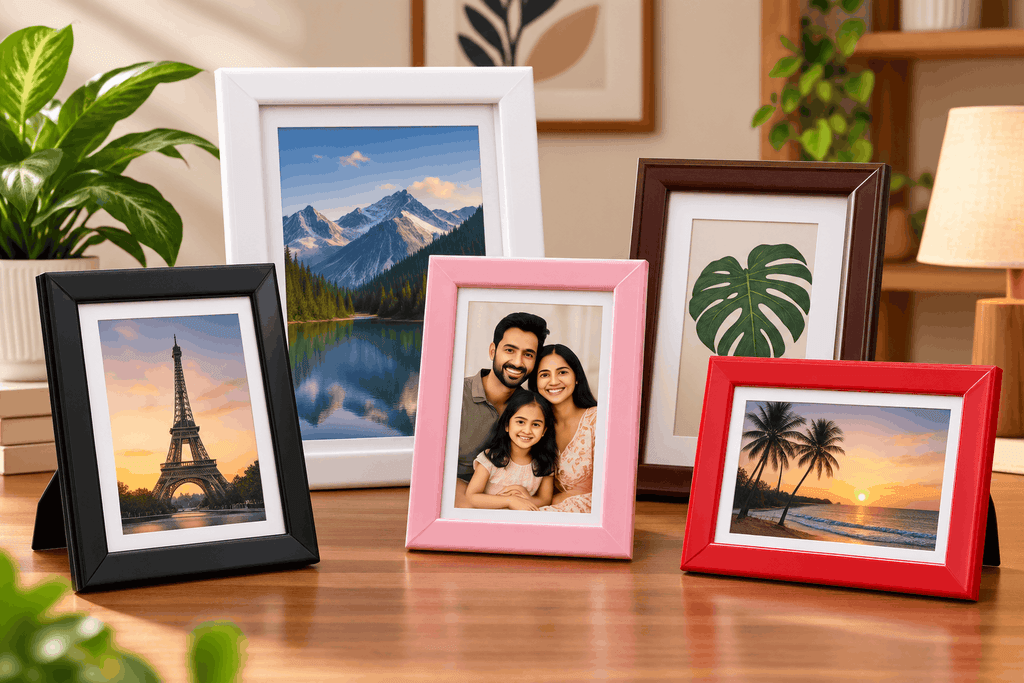
They are available in various colours, sizes, border styles, and finishes. Black plastic frames, in particular, can suit a wide range of photographs and decorative prints.
What are the benefits of plastic photo frames?
Lightweight design: Plastic frames are often easier to carry, move, and reposition than comparable frames made from heavier materials.
Variety of designs: They are available in simple, modern, decorative, and textured styles.
Easy to coordinate: A black or white plastic frame can complement many types of photographs and artwork.
Practical for everyday display: Plastic frames can work well on desks, shelves, bedside tables, and walls, provided the particular frame is designed for that use.
Straightforward maintenance: The frame border can generally be cleaned with a soft cloth and a suitable cleaning method.
What are the limitations of plastic frames?
The durability of a plastic frame depends on its material, thickness, and construction. Some plastic frames may bend, crack, or become damaged if handled roughly.
Their appearance also varies. A well-finished plastic frame can look clean and contemporary, but some designs may not provide the natural texture associated with real wood.
Where can you use plastic photo frames?
Plastic frames can be suitable for family photographs, personal portraits, decorative illustrations, and printed artwork.
A black plastic frame can create a clear border around a colourful photograph, while a white frame may give a lighter appearance to the same image.
If you want a straightforward frame for everyday home decoration, plastic is worth considering.
Wooden Photo Frames
Wooden photo frames are known for their natural texture, visible grain, and warm appearance. They can suit traditional interiors, contemporary homes, and decorative spaces that use natural materials.
Depending on the wood and finish, a wooden frame may look rustic, classic, minimalist, or luxurious.

What are the benefits of wooden photo frames?
Natural appearance: Wood has a distinctive grain and texture that can add warmth to a photograph or artwork.
Different finishes: Wooden frames may feature natural, stained, painted, matte, or glossy finishes.
Variety of styles: They can complement traditional portraits, landscape prints, family photographs, and decorative artwork.
Visual character: The frame can become part of the overall design rather than simply acting as a border around the image.
What are the limitations of wooden frames?
Wooden frames can be heavier than some plastic alternatives, depending on the type of wood and the frame’s construction.
They may also be affected by changes in humidity and temperature. Excessive moisture can damage certain finishes or contribute to warping, depending on the material and construction.
The quality and appearance of wooden frames vary according to the wood used, the finish, and the craftsmanship.
Where can you use wooden photo frames?
Wooden frames can suit living rooms, bedrooms, studies, and spaces with natural or traditional décor.
A natural wood finish may complement furniture made from similar tones, while a dark wooden frame can create a more formal appearance around a portrait.
Choose the finish according to the photograph, wall colour, and surrounding furniture.
Metal Photo Frames
Metal photo frames generally offer a sleek appearance, often with narrow borders and clean lines. They can be a good choice for contemporary interiors and photographs that benefit from a simple, defined frame.
Common finishes include black, silver, gold, and other metallic colours.
What are the benefits of metal photo frames?
Modern appearance: Metal frames often have a clean, streamlined look.
Slim profiles: Some designs use narrow borders that allow more attention to remain on the photograph or artwork.
Defined edges: The rigid frame structure can provide a crisp outline around an image.
Versatile finishes: Black and metallic finishes can complement modern furniture, neutral walls, and minimalist decorating styles.
What are the limitations of metal frames?
Metal frames may weigh more than certain plastic alternatives, depending on the metal, size, and construction.
Some finishes can become scratched or damaged, and certain metals may corrode if their protective finish is compromised and they are exposed to unsuitable conditions.
The appearance also depends on the design. A slim metal frame may suit a modern space but may feel less appropriate if you prefer a highly decorative or traditional style.

Where can you use metal photo frames?
Metal frames can work well in offices, modern living rooms, bedrooms, and gallery-style displays.
A black metal frame may complement monochrome photography, while a metallic finish can coordinate with other decorative details in the room.
MDF Photo Frames
MDF stands for medium-density fibreboard. It is an engineered wood product made by combining wood fibres with resin under heat and pressure.
MDF photo frames are often finished with paint, laminate, veneer, or decorative coatings to create different appearances.

What are the benefits of MDF photo frames?
Smooth finish: MDF can provide a uniform surface for painted or coated finishes.
Design flexibility: It can be shaped into different frame profiles and decorative styles.
Consistent appearance: Unlike natural wood, MDF generally does not have the same visible grain variations throughout the material.
Variety of finishes: MDF frames can imitate certain wood appearances or feature solid colours.
What are the limitations of MDF frames?
MDF can be sensitive to moisture, particularly when the edges are exposed or the protective finish is damaged.
Depending on its thickness and construction, an MDF frame may also be relatively heavy compared with a lightweight plastic frame.
The quality of the finished product depends on the board, coating, frame construction, and assembly.
Where can you use MDF photo frames?
MDF frames can be suitable for displaying portraits, printed artwork, and decorative images in living rooms, bedrooms, and offices.
They are worth considering if you like the appearance of a painted or wood-effect frame but prefer a uniform finish.
Composite and Other Engineered-Material Frames
Some photo frames use composite materials or combinations of different materials rather than relying on one material alone.
For example, a frame may combine engineered wood with a decorative laminate, or use a plastic structure with a coating designed to resemble another finish.
These materials allow manufacturers to create a variety of colours, textures, and decorative profiles.
What are the benefits?
- Different visual styles can be achieved with surface finishes.
- Some designs can imitate the appearance of wood or other materials.
- The weight and cost depend on the particular material combination.
- A wide variety of decorative profiles may be available.
What should you consider?
The term “composite” can describe different material combinations, so it does not guarantee a particular level of durability, weight, or moisture resistance.
Check the product description to understand what the frame is made from and how it should be maintained.
Glass vs Acrylic: The Material of the Front Cover
When comparing photo frame materials, it is important to distinguish the frame border from the transparent front cover.
The border may be plastic, wood, metal, or MDF, while the front cover may be made from glass or acrylic.
Glass front covers
Glass offers a hard surface that is generally more resistant to everyday scratches than standard acrylic. However, ordinary glass can crack or shatter if dropped or struck.
Glass is also heavier than acrylic of comparable dimensions.
Acrylic front covers
Acrylic is a transparent plastic material that weighs less than comparable glass and is less likely to shatter into sharp fragments.
However, standard acrylic can scratch more easily and requires careful cleaning.

Which should you choose?
Consider acrylic if reducing weight and the risk of shattering is important to you. Consider glass if surface scratch resistance and straightforward cleaning are higher priorities.
UV protection and glare reduction depend on the specific glazing product and its coatings, not simply whether the material is glass or acrylic.
For a more detailed comparison, read our guide to acrylic vs. glass photo frames.
Plastic vs Wooden vs Metal Photo Frames
If you are unsure which frame material to choose, comparing their main characteristics can make the decision easier.
| Feature | Plastic | Wood | Metal |
|---|---|---|---|
| Appearance | Simple, modern, or decorative | Natural, warm, or classic | Sleek and contemporary |
| Weight | Often lightweight | Varies by wood and construction | Varies by metal and construction |
| Finish options | Many colours and textures | Natural grain, painted, or stained | Black, metallic, and other finishes |
| Maintenance | Generally straightforward | Depends on finish and moisture exposure | Depends on metal and protective finish |
| Main consideration | Construction and finish quality | Weight, finish, and moisture sensitivity | Weight and finish durability |
| Often suits | Everyday photographs and simple décor | Warm or traditional interiors | Modern and minimalist interiors |
These are general characteristics. A particular frame’s performance depends on its dimensions, material quality, construction, and finish.
How to Choose a Photo Frame Material for Your Home
The best frame material is the one that suits your image, display location, and preferred appearance.
Consider the photograph or artwork
A colourful photograph may look striking inside a black frame, while a landscape print may complement a natural wood finish.
For simple artwork, a narrow metal border may keep attention on the image itself.
Match the frame to your interior
Think about the colours and materials already present in the room.
For example, a black frame can coordinate with dark furniture or create contrast against a light wall. A wooden frame may complement natural textures, while a metallic frame can suit contemporary decorative details.
Consider the frame’s weight
If you plan to hang a large frame, consider the total weight of the assembled product, not just the frame border.
The glazing, backing, and artwork also contribute to the total weight. Use appropriate wall fasteners for the wall type and frame.
Think about maintenance
If you want a frame that is easy to dust, consider its surface finish and decorative details.
Wood and MDF may require care around moisture, while acrylic front covers need gentler cleaning than glass to avoid scratches.
Check the display method
A frame intended for a wall may have different construction and hardware from one designed for a desk or shelf.
Make sure the frame is suitable for your intended location and that the included stand or hanging fittings meet your needs.
Check the complete product
Before purchasing, review the image size, outside dimensions, frame material, glazing, backing, and included display fittings.
The frame material alone does not determine how durable, safe, or suitable the complete product will be.
For a broader explanation of frame styles, dimensions, components, and display options, explore our complete guide to photo frames.
Which Photo Frame Material Is Best for Different Rooms?
Different rooms may call for different frame styles, depending on the photographs, available space, and overall décor.
Living room
Plastic, wood, metal, and MDF frames can all work in a living room.
Choose a material and finish that complements the furniture and wall colour. For a coordinated gallery wall, using the same frame material or colour across several images can create a consistent appearance.
Bedroom
A bedroom may suit simple plastic frames, warm wooden frames, or decorative MDF designs.
For bedside displays, consider the frame’s footprint and whether it has a stable tabletop stand.
Office or study
Metal and simple black plastic frames can complement clean, organised spaces. Wooden frames can also work well for personal photographs or certificates.
Consider the available desk space and the frame’s overall weight if you intend to mount it on a wall.
Hallways and narrow spaces
Slim frames can help maintain a clean appearance in narrow areas. Before hanging a frame, measure the available wall space and consider the frame’s outside dimensions.
Children’s rooms
If you are choosing a frame for a child’s room, consider the material of the front cover as well as the frame border. Acrylic glazing is less likely than ordinary glass to shatter into sharp fragments.
Secure placement and suitable mounting remain important regardless of the material.
Frequently Asked Questions
What is the best material for a photo frame?
There is no single best material for every situation. Plastic can be useful for lightweight everyday displays, wood offers a natural appearance, metal suits many contemporary interiors, and MDF provides a variety of smooth decorative finishes.
Are plastic photo frames durable?
They can be suitable for everyday use, but durability depends on the type of plastic, frame construction, thickness, and how the frame is handled.
Are wooden photo frames better than plastic frames?
Not necessarily. Wooden frames offer natural texture and warmth, while plastic frames are often lighter and available in many finishes. The better choice depends on your preferences and intended use.
Are metal photo frames heavy?
Their weight depends on the metal, dimensions, and construction. Some slim metal frames are relatively lightweight, while larger designs can be heavier.
What is an MDF photo frame?
An MDF photo frame uses medium-density fibreboard, an engineered wood product. The frame may have a painted, laminated, veneer, or decorative finish.
Which photo frame material is easiest to clean?
The answer depends on the frame’s finish and the material of its front cover. Smooth frame borders are generally easier to wipe, while glass is usually more resistant to scratches than standard acrylic glazing.
Can I use a black plastic photo frame for wall décor?
Yes. A black plastic frame can provide a simple border around photographs and printed artwork. Make sure the frame is designed for wall mounting and includes suitable hanging hardware.
Does the frame material affect the photograph’s protection?
The border material affects the frame’s structure and appearance, but protection also depends on the glazing, backing, assembly, and display environment. Neither a wooden nor a plastic border automatically provides UV protection.
Conclusion
Photo frame materials influence how a frame looks, how much it weighs, and how it suits your home décor.
Plastic frames can be a practical choice for lightweight everyday displays. Wooden frames offer natural texture and warmth, metal frames create a clean contemporary appearance, and MDF frames provide smooth finishes in a variety of styles. Composite frames offer additional design possibilities.
When choosing a frame, consider more than its material. Think about the photograph or artwork, frame dimensions, display location, transparent front cover, and maintenance requirements. By comparing these factors, you can select a photo frame that complements your image and fits naturally into your home.
Explore our social media platforms Pinterest, Instagram, and Facebook to watch video content of our Photo Frame product.






Comment (1)